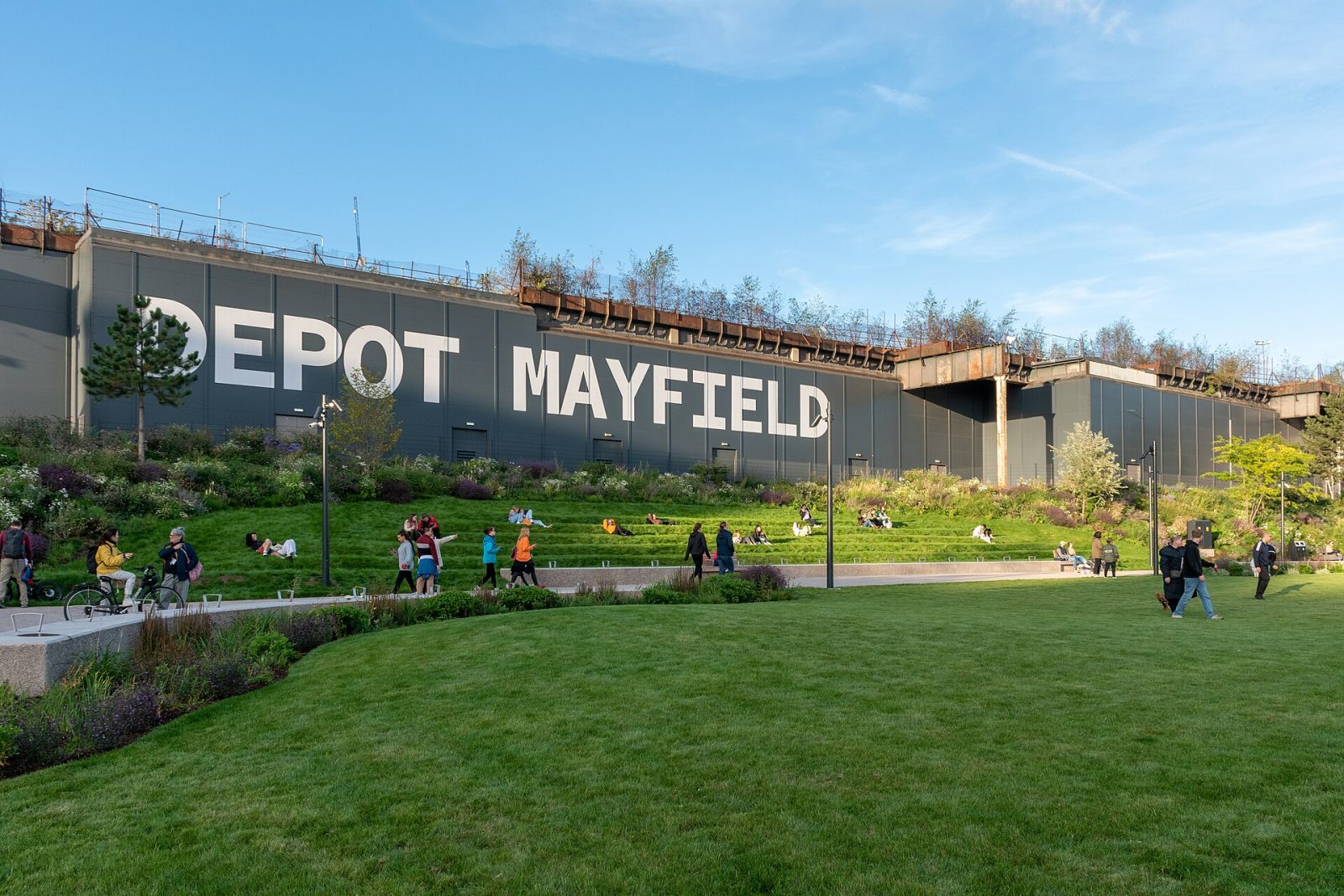
Manchester’s biggest new neighbourhood has decided not to have a brand. Mayfield, a 24-acre site a short walk from Piccadilly station that will eventually hold offices, 2,000 homes, a park and leisure space, has rejected the glossy identity-and-hoardings playbook every other development follows, in favour of an approach built on community and creativity, as Creative Review reports today.
The reasoning starts with a humbling number. When The Mayfield Partnership, which brings together Landsec, Transport for Greater Manchester, Manchester City Council and Platform4, surveyed the local community, only 2 per cent had heard of Mayfield. That is remarkable for a site with an industrial history going back to the 1700s and buildings in use until the mid-1980s, and it meant the job was awareness before it was anything else.
Rather than commission a name, a wordmark and a lifestyle render, the partnership has let the place introduce itself. Mayfield Park opened first, the city’s first new public park in a century, and the old Depot became a venue that Mancunians already know from events. The identity, such as it is, accretes from what happens there. Completion is pencilled for the mid-2030s, so there is time.
This is a genuinely contrarian call in a category that loves a brand launch. Property marketing usually front-loads the story, because the money needs pre-lets and off-plan sales long before anything exists. Mayfield is betting that a park people use is a better advertisement than a hoarding people ignore, and that the credibility of a place cannot be rendered.
It sits interestingly against Manchester City Women’s new identity earlier this month, which was the conventional route done well. Both are asking Mancunians to adopt something. Whether an unbranded neighbourhood can compete for attention with a branded one is the question the next decade will answer, and it is one our rebrand ranking will have to find a place for, one way or the other.