 63/100
Bisto ‘Aah Nights’: how a 1919 catchphrase became a night of the week
McCann Erickson took the Bisto Kids' hundred-year-old 'Aah' and turned it into a booked appointment. A review of the Bisto advert that sold an occasion, not gravy.

Thirty years on it still tests at the top of System1's scale and moves Coca-Cola's ad awareness nearly fourteen points in a month, but the one real risk it has taken, the AI rebuild, damaged the asset it was meant to honour.
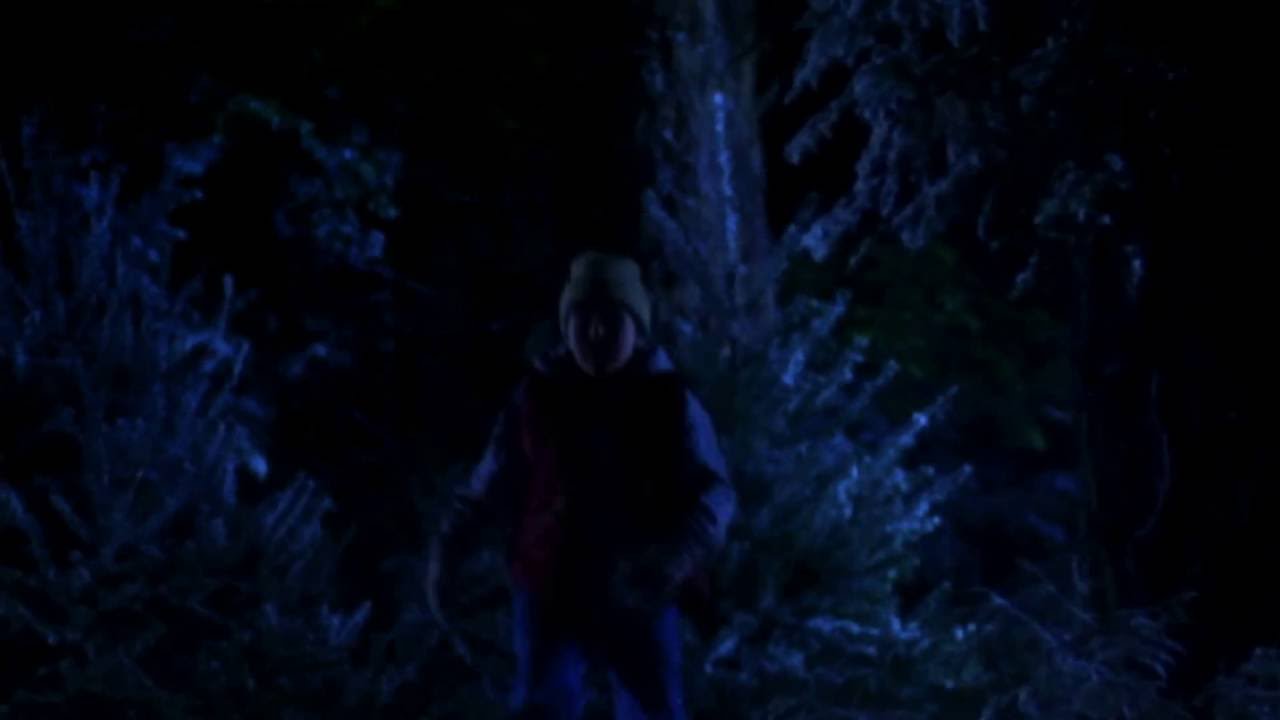
A child stands alone in a dark stand of firs, waiting for something. Then the treeline flares and the convoy arrives: three forty-foot lorries, two tonnes each, carrying more than thirty thousand bulbs apiece. Coca-Cola first put that thirty seconds on British screens in November 1995, and it has put a version of it out most winters since. Nothing else in advertising has run this long on so little plot.
Our take: “Holidays Are Coming” is the most efficient seasonal trigger in the business, a film whose entire job is to arrive. It is also the asset the industry now uses to argue about generative AI, because Coca-Cola handed it to three AI studios in 2024 and did it again in 2025.
Coca-Cola’s Christmas iconography is older than the film. The livery painted down the side of the trucks carries Haddon Sundblom’s Santa illustrations, the artwork the company has treated as its holiday signature for the better part of a century. What 1995 added was motion, sound and a date stamp. The work came from W.B. Doner, an agency in Southfield, Michigan, and went out under the internal name “Christmas Caravans”.
The commercial problem for a soft drink in December is not awareness. Everybody knows what Coca-Cola is, and everybody can picture the bottle. The problem is occasion, and specifically the occasion of a cold fizzy drink in the coldest, least fizzy month of the year. Doner’s answer was to stop selling the drink and start selling the calendar.
There is one thought here and a stranger can repeat it: the holidays are not here yet, they are coming, and this is the convoy that brings them. Everything in the film serves that single tense. The child is waiting. The road is empty. Then it is not.
That choice of tense is the whole trick, and it is why the ad has outlived every competitor that tried to depict Christmas itself. A film about Christmas has to compete with the viewer’s own Christmas. A film about the approach of Christmas has no competition, because anticipation is the one part of the season nobody has already had.
Note how little the film asks of you. There is no narrative, no joke, no reveal and no argument for the product. It is a light source moving through darkness towards a person who wants it, which is close to the minimum viable structure for an advertisement.
The convoy was not conjured. Three real forty-foot trucks were built and dressed, each weighing two tonnes and carrying more than thirty thousand bulbs, and Industrial Light & Magic handled the effects work that turned three vehicles into a caravan. The lighting rig is the performance. Take the bulbs away and there is no ad left.
The technique held as the campaign was reshot. The 1999 version, “Journey”, was filmed in snowbound Vancouver, again with three physical trucks multiplied out in post. Coca-Cola then did the obvious thing and built the trucks for real, sending them out on tour in the United States from 2001. An advert about a convoy arriving became a convoy that actually arrives.
The music is the other half of the asset, and it has a strange history. In 2001 the jingle was extended into a full vocal track, “Wonderful Dream (Holidays Are Coming)”, recorded by the American-German singer Melanie Thornton. It was released on 26 November 2001, two days after Thornton died in the Crossair Flight 3597 crash, and reached number three in Germany and Switzerland. The four-note motif that opens it now functions in Britain as a public announcement.
The usual problem with a thirty-year-old campaign is that the evidence is thirty years old too. Not here. System1 scored the film at 5.9 Stars, the top of its scale, in both the United States and the United Kingdom. Roughly one per cent of advertising tested by System1 reaches five Stars or above.
Kantar’s 2025 Christmas testing put “Holidays are coming” second overall for effectiveness and placed it in the top percentile of Kantar’s database for branding power. YouGov’s BrandIndex recorded Coca-Cola leading UK ad awareness growth in December 2025, climbing from 19.8 per cent on 26 November to 33.5 per cent on 25 December. That is a 13.7 point swing achieved by a film most of the audience has seen dozens of times.
Those are the numbers that should trouble anyone briefing a new Christmas idea. The most effective seasonal work in the market is not new. It is a distinctive asset run to destruction, and it beats fresh ideas annually. Our ranking of the best Christmas adverts keeps running into the same fact.
The UK truck tour started in 2010, and Coca-Cola Great Britain marked fifteen years of it in 2025 with fifteen locations, free entry and a FareShare partnership targeting a million meals. Between those two dates the tour became a political object. Health campaigners argued that a branded convoy handing out free sugary drinks in town centres was not a neutral piece of festive theatre.
The pressure worked. After an open letter signed by 83 organisations and individuals, including the Royal College of Paediatrics and Child Health, the Royal Society of Public Health and the Obesity Health Alliance, Coca-Cola cut the 2018 tour by 37 per cent, from 38 stops to 24. Carlisle, Liverpool, Glasgow, Waltham Forest, Plymouth, Greenwich and Bristol declined to host it on public land. Campaigners noted that 14 of the 19 English stops sat in areas with above-average excess weight among ten and eleven year olds. Nearly half the remaining stops moved onto supermarket car parks.
The tour was cancelled outright in 2020 under Covid restrictions, the only break in its run, while the television film went out as normal. That gap is instructive. The ad does not need the trucks. The trucks need the ad.
In 2024 Coca-Cola rebuilt the 1995 film with generative AI. Three studios were commissioned to produce their own versions: Secret Level in Los Angeles, The Wild Card in Kuala Lumpur and Silverside AI in San Francisco, with Accenture, Microsoft, Leonardo.ai, Mimic and OpenAI named as technology partners. Silverside AI is an innovation lab inside the agency Pereira O’Dell. Manolo Arroyo, Coca-Cola’s global chief marketing officer, called it “a great example of how we’re fusing human artistry with creative uses of artificial intelligence”.
The creative industry did not take it as intended. Alex Hirsch, creator of Gravity Falls, posted that Coca-Cola “is ‘red’ because it’s made from the blood of out-of-work artists”. Coca-Cola replied that the films were “crafted through a collaboration of human storytellers and the power of generative AI” and that it “will always remain dedicated to creating the highest level of work at the intersection of human creativity and technology”.
FUN FACT: @CocaCola is “red” because it’s made from the blood of out-of-work artists!
Alex Hirsch, creator of Gravity Falls, quoted by NBC News
The more damaging criticism was about craft rather than ethics. The Drum pointed out that the truck changes shape from shot to shot and that its wheels do not turn. For a campaign whose single asset is a specific vehicle, rendering that vehicle inconsistently is not a stylistic quirk. It is the one mistake the brief could not absorb.
Coca-Cola was unmoved, and the reason is in the data. The AI version scored the same 5.9 Stars with consumers, and System1’s assessment was that “AI hasn’t made much of an impact” on viewers, who largely read it as a charming animated ad. Pratik Thakar, the company’s global head of generative AI, told Adweek: “The genie’s out of the bottle. You either lead with it, or you keep crying about it.”
So it ran again. The 2025 campaign carried two AI reimaginings, from Secret Level and Silverside AI, alongside a new live-action film. The row, in other words, was settled by people who were never asked: the audience gave it full marks twice, and the industry’s objection turned out to have no purchase on the score. Whether that is a vindication or a warning depends on which side of the invoice you sit.
Thirty years on, a film with no story and no product argument still tests at the top of System1’s scale and moves Coca-Cola’s ad awareness by nearly fourteen points in a month, which is a rebuke to almost every Christmas brief written since. It loses marks for bravery, because running the same convoy for three decades is the safest decision in seasonal advertising, and the one genuine risk it took, the AI rebuild, damaged the asset it was meant to honour. On our scoring method that leaves a campaign of unmatched longevity and effectiveness with a craft record that is now going backwards.

He plans, buys and reviews advertising for a living, and helps score campaigns on the site against the same five Crown Score criteria alongside other authors and contributors.
63/100McCann Erickson took the Bisto Kids' hundred-year-old 'Aah' and turned it into a booked appointment. A review of the Bisto advert that sold an occasion, not gravy.
 73/100
One photograph of Heinz Beanz on two biscuits, no paid media, a day of brand replies and a debate in the House of Commons. Frank PR's Beanz on Bix, reviewed.
 79/100
BMP DDB gave the jokes to Rowan Atkinson and the product line to his assistant. Seventeen films, nine British Arrows, an IPA Gold and a cinema franchise later, a full review.