 63/100
Bisto ‘Aah Nights’: how a 1919 catchphrase became a night of the week
McCann Erickson took the Bisto Kids' hundred-year-old 'Aah' and turned it into a booked appointment. A review of the Bisto advert that sold an occasion, not gravy.
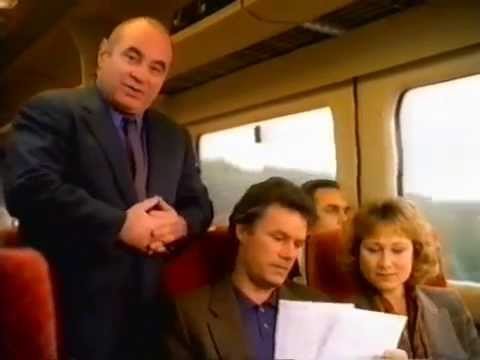

A ruthless market-growth strategy disguised as a friendly chat, proved with a control region rather than a claim, and killed off by a procurement review rather than by the public.
In 1994 BT stopped selling telephones and started selling permission. The IPA case study lists two aims for the work: reduce the perceived cost of a call, and get people to stay on the line longer. Bob Hoskins was hired to deliver both, and the four words he was given became the most quoted line in British advertising of that decade.
Our take: this is the cleanest example in the British archive of a campaign that grew a market rather than a share, and the effectiveness paper behind it is still the one to beat.
BT in 1994 was the clear market leader in UK telephony, which is a comfortable position and a strategic dead end. There was very little share left to win, so the only growth available was in the size of the market itself: more calls, and longer ones. That is a behavioural target rather than a commercial one, and it needed a behavioural argument.
The brand also had an image problem it had already half fixed. Adrian Hosford, then BT’s director of customer communication and brand marketing, told Marketing Week that BT was not a much-loved brand at the time, with a reputation for poor service and out-of-order phone boxes that the company had worked hard to solve. The advertising had to catch the public up with the repair job.
BT was not new to call stimulation. Maureen Lipman’s Beattie had done the job through the late 1980s, and the BT Group Archives hold the successive campaigns that followed. The difference this time, Hosford said, was that the work had to build the brand and stimulate calls at once, with every piece of communication pulling in the same direction.
The strategy came out of semiotic research into how Britain actually used the telephone, and it found a split down the middle of the country’s living rooms. The work was written up as a paper called “Big talk, small talk”, by Monty Alexander, Max Burt and Charlie Gower, and presented to the Market Research Society conference in March 1995. The Archive of Market and Social Research holds the record of it.
Big talk was information-bearing, serious and short, and was understood by everyone in the research as what men did. Small talk was discursive, trivial and long, and was understood as what women did. Both sexes agreed on the categories, and both sexes ranked big talk above small talk, which is precisely why BT’s revenue was capped.
The commercial insight follows in one step. Women were the heavy users, men were the gatekeepers who policed the bill, and no amount of tariff messaging would move a household where the person who pays disapproves of the person who talks. So the campaign set out to raise the status of small talk, in men’s eyes, by arguing that the trivial conversation is the valuable one.
Campaign’s report on the resulting IPA win puts the two halves plainly: the ads encouraged men to be less reticent and abrupt on the phone and to behave less like its gate-keepers, and encouraged women to feel less guilty about chatting. That is an unusually specific instruction to give a nation, and the films carry it without ever sounding like a lecture.
The casting is the campaign. A message about men being allowed to chat could have been delivered by a warm, unthreatening presenter, and it would have died on air, because the men being addressed would have dismissed the messenger. Hoskins was the opposite of unthreatening: the audience knew him as Harold Shand in The Long Good Friday, a London gangster with no small talk at all.
Putting the argument in his mouth removes the escape route. If the hardest man on British television says that talking is worth doing, the position is no longer soft. The Drum noted on his death in 2014 that the line had followed him for twenty years, which tells you how completely the casting fused with the idea.
The writing is built to be repeated rather than admired. “It’s good to talk” is four words, contains no product, no price and no brand claim, and works as an instruction, a defence and a joke depending on who says it. That is what a durable endline looks like, and it is a discipline we keep returning to in how we score.
The other half of the brief was handled somewhere else entirely. Campaign records a parallel poster and press campaign built to attack the perception that calls were expensive, by comparing BT’s charges with the price of everyday items. Television carried the emotional permission, print carried the arithmetic, and neither had to do both.
Three television campaigns starring Hoskins ran across 1994 and 1995. The IPA records a prolonged rise in call duration that correlates with the campaign, and, crucially, the use of the Central TV region as a control area, which turns a correlation into direct evidence of an advertising effect. Payback was calculated at £297 million.
The campaign won both Gold and the Grand Prix at the 1996 IPA Effectiveness Awards, in the category for new campaigns for previously advertised brands. Abbott Mead Vickers BBDO told Campaign that the £297 million of additional income represented a return on adspend of almost six to one. The paper was written by Max Burt and used econometric modelling.
This was an exemplary paper. It offered an excellent exposition of a bold and innovative strategy. The advertising tackled (negative) attitudes head on, and had a highly beneficial impact on attitude and usage.
IPA Effectiveness Awards judges’ citation, reported by Campaign, 1996
The IPA’s own summary of the work describes it as a piece of social engineering, which is an unusually honest thing for the industry to say about itself. It is also accurate. The campaign did not persuade anyone to switch supplier, it persuaded them to change a household habit, and then billed them for it.
The end came from procurement rather than from creative fatigue. In November 1998 Marketing Week reported that BT was putting its £160 million advertising account into review, and that the review would mean the end of the line. AMV BBDO had held the account for four years and its contract ran to March 1999, but under EU competition rules every BT supplier account had to be tendered.
A BT spokesman explained the logic with some candour, saying the agency would go for a different approach on repitch and that the line had had a good run. So the answer to how long it ran is about five years on air, 1994 to the 1998 review, which is short for a line that most of the country can still recite three decades later.
What survived is the phrase, which detached itself from BT and became a general purpose piece of English used by charities, therapists and anyone opening a difficult conversation. Very few campaigns manage that. It is the reason the work keeps appearing near the top of our best advertising campaigns ranking.
A strategically ruthless piece of work dressed as a friendly chat, built on research that was genuinely new, proved with a control region rather than a claim, and finished off by a procurement process rather than by the public. The casting of Hoskins is the single decision that makes the whole argument land, and it is why the line is still in the language while the tariffs it defended are long gone.

He plans, buys and reviews advertising for a living, and helps score campaigns on the site against the same five Crown Score criteria alongside other authors and contributors.
63/100McCann Erickson took the Bisto Kids' hundred-year-old 'Aah' and turned it into a booked appointment. A review of the Bisto advert that sold an occasion, not gravy.
 73/100
One photograph of Heinz Beanz on two biscuits, no paid media, a day of brand replies and a debate in the House of Commons. Frank PR's Beanz on Bix, reviewed.
 79/100
BMP DDB gave the jokes to Rowan Atkinson and the product line to his assistant. Seventeen films, nine British Arrows, an IPA Gold and a cinema franchise later, a full review.