 73/100
Weetabix beans: the tweet that started a 600-brand pile-on
One photograph of Heinz Beanz on two biscuits, no paid media, a day of brand replies and a debate in the House of Commons. Frank PR's Beanz on Bix, reviewed.
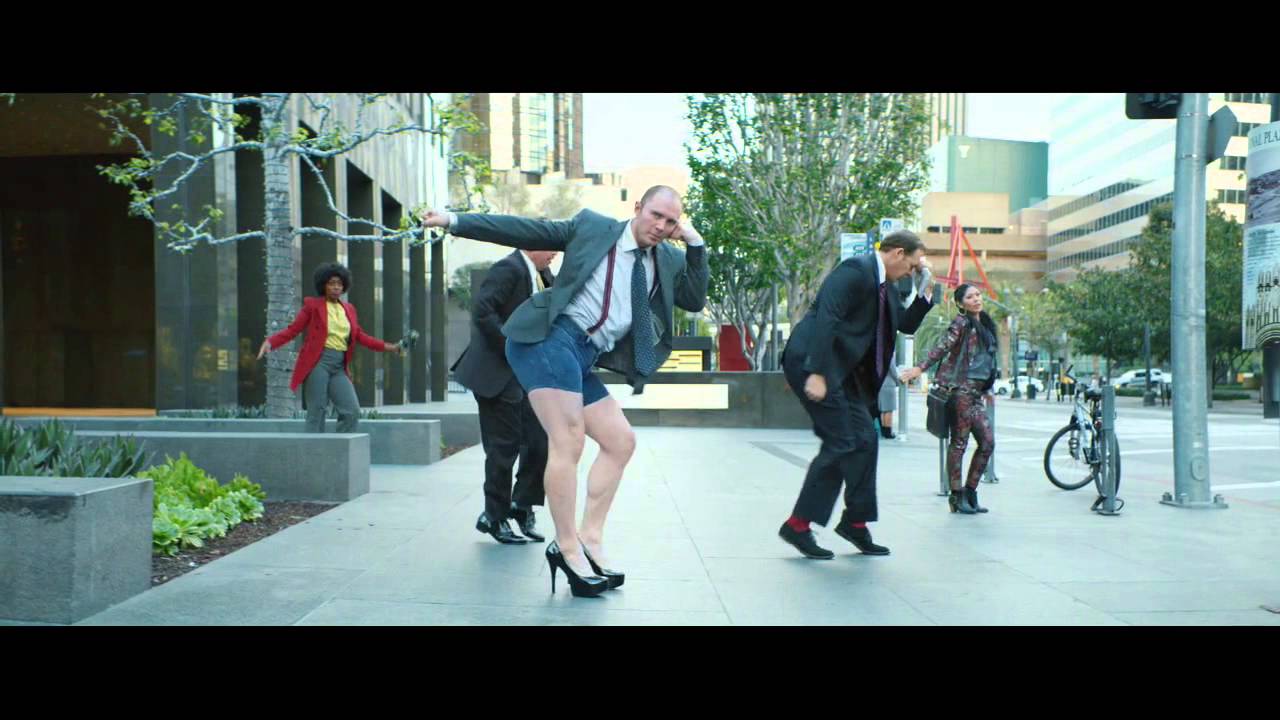

Feature-grade direction spent on one perfectly straight-faced gesture, durable enough to run for four years, but with no published effectiveness evidence to justify the reputation.
A man in a suit jacket, denim hot pants and heels struts down a Los Angeles street to The Pussycat Dolls while the neighbourhood loses its composure. It drew 1,513 complaints, more than any other advertisement in Britain that year, and the ASA cleared it. MoneySuperMarket then did the same thing three more times and topped the complaints table again the following year. This is what it looks like when a brand decides that the ASA’s most complained about list is a media plan rather than a warning.
The one-line take: a beautifully directed 60 seconds of nonsense that turned an abstract feeling, the small private swagger of having saved money, into a physical action the whole country could copy.
Price comparison sites all do the same thing, and by 2014 they had all reached the same conclusion about advertising it: hire a character, sing a song, repeat the name. Moneysupermarket had already tried celebrity, having put Snoop Dogg in a commercial in January 2014, and a man riding an elephant through Manhattan that August. The line “You’re so Moneysupermarket” was in place. What was missing was a reason for anyone to say it.
Mother’s answer was to stop advertising the saving and start advertising the after-effect. The insight is small and completely true: money saved does not feel like arithmetic, it feels like getting away with something. The brief became a behaviour rather than a message. Show a man who has just saved on his car insurance behaving like a man who thinks he is untouchable.
“Epic strut” is one joke held for a full minute. An ordinary middle-aged office worker walks out of a building and down a pavement, and from the waist down he is a different person entirely. The camera stays with him, the track is “Don’t Cha”, and nothing else happens.
What makes it an idea rather than a stunt is that the strut is transferable. It is a gesture, not a gag, so it can be handed to a builder, a bodyguard, a plastic action figure and a 1980s cartoon villain without the thought changing. That is the difference between a hit film and a campaign platform, and it is why “epic” ran for four years across a long run of films.
It is also, and this matters for what followed, a piece of work with no argument in it at all. There is no price, no proposition, no product demonstration. The only claim is emotional, which is precisely why the complaints that arrived were about taste rather than truth.
Fredrik Bond directed it through Sonny London, with the feature cinematographer Roman Vasyanov on camera. That is a serious film-making pairing spent on a man in shorts, and it shows. The Los Angeles light, the shallow depth of field and the tracking are all handled straight, with none of the winking coverage a British comedy director would have reached for.
The casting is the other decision that carries the film. Michael Van Schoick had not made a commercial before, and his face plays the whole thing deadpan while his body does something else entirely. Had the performer signalled the joke, the ad would have collapsed into a sketch. He does not, so the audience has to decide for itself what it is watching, which is exactly the ambiguity that generated the complaints and the fame.
The track choice is doing structural work too. “Don’t Cha” was a decade old in 2015, familiar enough to be instantly legible and dated enough to be funny, and its rhythm dictates the edit. The final beat, Sharon Osbourne telling Dave he is “so Moneysupermarket”, is the only branding in the film and arrives after the entertainment is over.
“Epic strut” was the most complained about advertisement of 2015, with 1,513 complaints from viewers who said a man dancing in denim shorts and high heels was offensive and overtly sexual. The ASA did not uphold a single one. It accepted that some viewers found the ad distasteful but concluded it did not breach the Code, and no restriction was imposed.
The following year Moneysupermarket topped the table for a second year running, and this time it filled three of the top four places. The 2016 list records 1,063 complaints about Gary the bodyguard, 895 about “Epic squads” and 503 about the Dave and Colin car park film. Objections ranged from sexual content and unsuitability for children to the charge that the Dave and Colin films were homophobic. None was upheld: the ASA judged the tone light-hearted and the behaviour too exaggerated to cause serious or widespread offence.
It is worth being precise about what those numbers are and are not. They are the largest complaint totals of their years, not a record in the history of the ASA, and a complaint total is a measure of reach and provocation rather than of wrongdoing. If you want the underlying framework the ASA applied here, we have set it out in our guide to the UK advertising rules.
This is where a famous campaign gets marked down. There is no published effectiveness case for “epic”: no IPA Effectiveness Award, no Cannes Creative Effectiveness Lion, no econometric study in the public domain. What exists is company reporting and cultural evidence, and it should be read as circumstantial rather than causal.
On the company side, Moneysupermarket.com Group’s preliminary results for 2015, the year “epic strut” launched, show group revenue up 14% to £281.7m with adjusted operating profit up 15%. Revenue rose again in 2016, up 12% to £316.4m. Neither statement attributes any of that to the advertising, and the insurance vertical, the one the ad was selling, grew only 2% in 2015.
On the cultural side, the evidence is stronger. In 2015 J Walter Thompson research for ITV’s sixtieth anniversary voted “epic strut” the second most love-to-hate advertisement in Britain, behind GoCompare’s opera singer. For a brand whose only job is to be the site people think of at renewal, being the second most argued-about ad in the country is not a bad place to end up.
Mother kept extending the platform rather than replacing it: Colin the builder in July 2015, Gary the bodyguard in January 2016, the dance-off that premiered in the first break of Britain’s Got Talent in April 2016, then Skeletor and He-Man in 2017 and Action Man in 2018. Licensing 1980s toy properties was a smart late move, because it swapped the ambiguity that generated complaints for nostalgia that generated none. By 2019 the account had moved to Engine and the brand had reverted to a calmer proposition with the “Money calm bull”.
The wider legacy is a regulatory one. “Epic strut” is the clearest modern demonstration that in UK broadcast advertising, offence is not the same as breach, and that a large complaint total carries no sanction if the Code is not broken. Every brand that has since run a deliberately divisive film is working in the space this campaign proved was legally empty.
As craft, “epic strut” is close to the top of the decade’s British television output, a feature-quality minute built on one perfectly held performance. As an idea it is durable enough to have carried four years of executions without fatigue, and it settled a useful question about how much offence the Code will absorb. It loses marks only where it should, on effectiveness: there is no published evidence isolating what the campaign did to the business, and group revenue growth in a growing category is not proof. We score famous work on what has been demonstrated rather than what is assumed, as set out in how we score, which is why it sits below the strut’s reputation on our all-time ranking.

He plans, buys and reviews advertising for a living, and helps score campaigns on the site against the same five Crown Score criteria alongside other authors and contributors.
73/100One photograph of Heinz Beanz on two biscuits, no paid media, a day of brand replies and a debate in the House of Commons. Frank PR's Beanz on Bix, reviewed.
 79/100
BMP DDB gave the jokes to Rowan Atkinson and the product line to his assistant. Seventeen films, nine British Arrows, an IPA Gold and a cinema franchise later, a full review.
 75/100
The ASA did not ban Iceland's 2018 Christmas film. Clearcast declined to clear it because Greenpeace made it. The difference is the whole story, and it handed Iceland 70 million views.