 63/100
Bisto ‘Aah Nights’: how a 1919 catchphrase became a night of the week
McCann Erickson took the Bisto Kids' hundred-year-old 'Aah' and turned it into a booked appointment. A review of the Bisto advert that sold an occasion, not gravy.

Not a clever idea but a superbly kept one, with an IPA second prize and a line extension that doubled its forecast to prove that sixteen years of consistency beat sixteen good ideas.
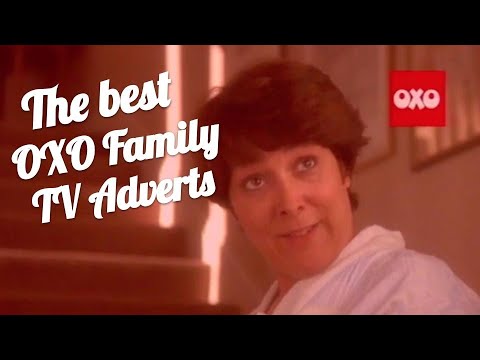
Between 1983 and 1999 the British public watched a family grow up in thirty second instalments. Lynda Bellingham made 42 television commercials as the mother of the Oxo family, all of them out of JWT, and by the end her children had left home and the house had been sold. Almost no advertising campaign in this country has ever been allowed to age in public like that. Our take: the idea is ordinary, the discipline is extraordinary, and the discipline is what made the money.
Oxo was not the market leader in gravy. It was the brand with the best characters in it, which is not the same thing and for sixteen years was almost as useful.
Oxo had done this before, and knew exactly how strange it gets. From 1958 the brand ran Life with Katie, with Mary Holland as Katie and a husband called Philip, and it ran until 1976. Viewers took it so literally that when Philip once spoke sharply to Katie, women at an electronics factory walked out.
Complaints in the 1960s included Philip mopping up gravy with bread and Katie cooking without washing her hands first. That is not brand affection, it is surveillance. The 1983 brief was to build a second household that a nation would police in the same way, without simply remaking the first one.
The commercial problem behind it was plainer. Stock cubes are cheap, undifferentiated and easy to copy, and own label was coming. A brand in that position needs a reason to be chosen that has nothing to do with the cube.
JWT’s move was to make the family realistic rather than aspirational. The Oxo family bickers. The daughter is a know all, the boys are a nuisance, the father is frequently in the way, and the mother is holding the whole thing together while being mildly insulted by everyone at the table.
Campaign’s history of the campaign makes the point that Bellingham’s mother was a modern one, eventually shown with a job outside the home. That single decision is what bought the campaign its second decade, because it let the family track social change instead of being overtaken by it.
The product’s role is deliberately small. Oxo is the thing that makes the meal happen, not the thing anyone discusses, and the cube usually gets less screen time than the argument.
Watch a run of these back to back and the writing does something television advertising almost never attempts. It assumes prior knowledge. Individual films are barely self contained, because they rely on you already knowing who talks over whom and who will be sulking by the end.
Meatballs to You Dear turns a row about nutrition between mother and teenage daughter into thirty seconds of dialogue. Close the Door is built entirely on the winter argument every British family has had about heating. A 1990 spot hands the cooking to the father, which in that decade counted as a plot development.
The performances carry the load because there is nothing else to carry it. There is no music cue doing the emotional work, no visual effect, no endline stunt. Bellingham’s timing, and Michael Redfern’s willingness to be the least competent person in the kitchen, are the entire production value.
Casting the children as actors who visibly grew up on camera was the riskiest craft decision and the best one. Blair MacKichan, Colin McCoy and Alison Reynolds aged across sixteen years of commercials, which no amount of scripting could fake.
This is the part where most heritage campaigns go quiet. Oxo does not. JWT took the campaign to the IPA Effectiveness Awards in 1992 for Brooke Bond Foods and won second prize, with a paper covering the cubes and the new gravy granules.
The findings are the ones a long running character campaign is supposed to produce. Brand share grew through the 1980s. The campaign protected Oxo against competitors over the long term rather than in bursts. Most usefully, it gave the brand a platform to extend from.
The vegetable cube arrived in 1989 and gravy granules in 1991, the latter launched with a new family commercial. The IPA paper records granules sales at twice the level predicted. That is the clearest possible argument for building an advertising asset before you need it.
Context matters for how much credit to give. By 2002 Oxo held 8 per cent of a £90m British gravy market against Bisto’s 62 per cent, so the family never made Oxo the leader. It made Oxo the brand that own label could not simply replace, which was the actual job.
The campaign was retired in 1999 and the last film, Empty Nest, showed the family eating a final meal before moving out of the house. It is an unusually honest ending for a commercial property, and it was the right call.
The reason is demographic rather than creative. More women were working, fewer households sat down together on weeknights, and a campaign whose entire staging was the family dinner table had run out of rooms to film in. Bellingham put it plainly in Campaign.
Life has changed so radically. It was about a different era.
Lynda Bellingham, quoted by Campaign
Bellingham died in October 2014. Oxo screened one of her commercials on Christmas Day that year as a tribute, which is not a thing brands do for actors they merely employed.
Seventeen years after Empty Nest, Premier Foods brought the family back with a £3m campaign and two films, again from JWT London and directed by Declan Lowney. The new household is two parents, three children and a rabbit, including a teenager who photographs the meal before eating it.
The structural change is the point. One film has the mother cooking, the other has the father sorting dinner for unexpected guests, and the brand was explicit about why. Premier Foods said advertisers must stop tying mums to ovens, which is a fair diagnosis of the thing its own most famous work had done for sixteen years.
The revival did not reach the cultural altitude of the original, and it was never going to. Its value is as proof that the asset survived, and the brand has kept working the same territory since, including a £2.7m stock pots push in autumn 2024.
The Oxo family is not a clever idea, it is a well kept one, and sixteen years of consistency turned a commodity cube into something own label could not copy. It has the receipts most nostalgia campaigns lack, in an IPA second prize and a granules launch that doubled its forecast, and it had the sense to stop when the dinner table stopped being where Britain ate. Judged by our scoring method it loses marks only for bravery, because nothing here ever risked anything beyond a mildly sharp line about meatballs. Among the campaigns we rank most highly it is the clearest argument in British advertising for simply not changing your mind.

He plans, buys and reviews advertising for a living, and helps score campaigns on the site against the same five Crown Score criteria alongside other authors and contributors.
63/100McCann Erickson took the Bisto Kids' hundred-year-old 'Aah' and turned it into a booked appointment. A review of the Bisto advert that sold an occasion, not gravy.
 73/100
One photograph of Heinz Beanz on two biscuits, no paid media, a day of brand replies and a debate in the House of Commons. Frank PR's Beanz on Bix, reviewed.
 79/100
BMP DDB gave the jokes to Rowan Atkinson and the product line to his assistant. Seventeen films, nine British Arrows, an IPA Gold and a cinema franchise later, a full review.