 63/100
Bisto ‘Aah Nights’: how a 1919 catchphrase became a night of the week
McCann Erickson took the Bisto Kids' hundred-year-old 'Aah' and turned it into a booked appointment. A review of the Bisto advert that sold an occasion, not gravy.
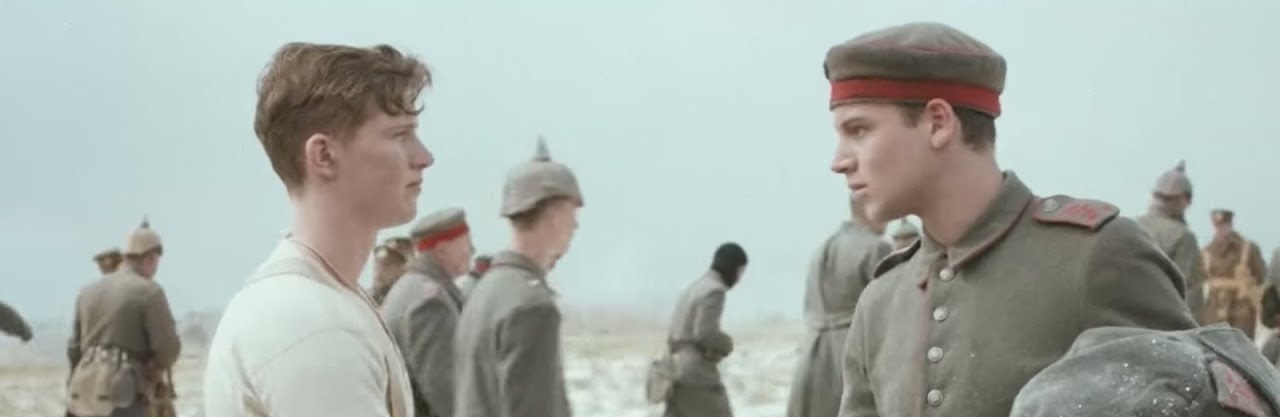

The high-water mark of British retail film-making, borrowing enormous moral credit against a quarter in which sales still fell.
The most argued-over three minutes in British Christmas advertising opens on a robin sitting on barbed wire. Sainsbury’s put the Western Front into the middle of a Coronation Street ad break on 12 November 2014, the evening after Armistice Day, in the centenary year of the war’s outbreak. The film is a re-staging of the Christmas truce of 1914, and it ends with a chocolate bar. Everything anyone has ever said for or against this Sainsbury’s Christmas advert sits in that last sentence.
Our take: the finest piece of direction any UK supermarket has ever paid for, attached to a commercial proposition that a lot of people were never going to forgive.
Sainsbury’s went into Christmas 2014 losing. The discounters were taking share, food price deflation was eating into every till receipt, and the retailer was heading for its fourth consecutive quarter of falling like-for-like sales. A conventional festive ad about turkey and twinkly lights would have been noise against John Lewis, which by then owned the tear-jerker slot outright.
What Sainsbury’s did have was a relationship with The Royal British Legion then in its twentieth year, and a national anniversary nobody could ignore. AMV BBDO’s answer was to stop competing on Christmas sentiment and compete on Christmas meaning instead. The retailer’s existing “Christmas is for sharing” line was already sitting there, waiting for a story big enough to justify it.
One thought, and a stranger could repeat it: the most famous act of sharing in modern British history happened in a trench, so tell that instead of an ad. Jim, a young British soldier, walks into no man’s land on Christmas Day. Otto, a German soldier, meets him. They swap a handshake, a football match breaks out, and Jim slips a bar of chocolate into Otto’s greatcoat pocket without him noticing.
The product placement is the emotional payload, which is either elegant or grubby depending on where you stand. Sainsbury’s sold a limited edition 100g Taste the Difference Belgian milk chocolate bar for £1, made in Ypres, in period wrapping, with all profits to The Royal British Legion. Sainsbury’s and the Legion built the script from soldiers’ letters and contemporary reports and took historians through development and production. The brand appears once, as a logo, in the final four seconds.
Ringan Ledwidge directs it like a short film that happens to have a client, and Rattling Stick’s production values are period-drama grade rather than commercial grade. Notice what he refuses to do. There is no swelling orchestral cue over the handshake, no slow-motion celebration when the football goes in, and no closing narration to tell you how to feel. The camera stays at eye level in the mud and lets the silence do the lifting.
The sound design carries the first two minutes on its own. A single voice starts Silent Night in the German trench, an English voice answers it, and the two lines of song meet somewhere over the wire before anybody has climbed out. Rich Orrick’s edit holds shots far longer than a supermarket normally permits, and the grade keeps the palette to mud, breath and one flare of red on the robin.
The casting is the least starry decision in the film and the most important one. Jim and Otto are unfamiliar faces of roughly the right age, which is to say boys, and neither is allowed a hero moment. D&AD gave the film a Graphite Pencil and three Wood Pencils in 2015, which for a supermarket Christmas ad is close to unheard of. If you want the benchmark for what a single sustained piece of direction can do for a brand, this and Cadbury’s Gorilla are the two British reference points.
The criticism arrived within a day, and it was not a matter of taste in the trivial sense. Writing in the Guardian, Ally Fogg called it a dangerous and disrespectful masterpiece, arguing that the film’s beauty is exactly the problem because it sands the horror off industrial slaughter. “Exploiting the first world war for commercial gain is tasteless,” he wrote, before asking whether we would accept a comparable Christmas scene set on the way to the gas chambers at Auschwitz.
That is the charge, and it does not go away because the craft is good. A brand chose to spend the war dead’s most humane moment on a chocolate bar and a share of Christmas trade, and it did so knowing the goodwill would flow both ways. The Legion’s involvement and the donated profits are a defence, not an acquittal. Any planner reaching for a national tragedy should read the Fogg column before the case study.
The regulator took a narrower view. The Advertising Standards Authority received 727 complaints and decided on 27 November 2014 not to investigate. Its reasoning is worth quoting in full, because it is the line every subsequent brand has leaned on.
While we recognise that some have found the use of the First World War for advertising purposes to be distasteful, the ad is not likely to break the rules surrounding serious harm or offence.
Advertising Standards Authority, November 2014
On attention, it won outright. The film topped YouTube’s 2014 UK ad leaderboard, ahead of John Lewis, on a ranking that weighs paid views, organic views and audience retention. The chocolate bar sold hard enough to become a news story in its own right. As a piece of fame generation it did everything a Christmas ad is asked to do.
On the till, the picture is honest rather than flattering. Sainsbury’s third quarter like-for-like sales fell 1.7 per cent in the 14 weeks to 3 January 2015, though that beat a consensus expecting a 3.2 per cent drop, and the four weeks to 4 January grew against a very tough prior year. No published IPA or Effie case sets out an isolated commercial return for 1914. Anyone claiming a hard sales number for this ad is guessing, and we mark it accordingly under our scoring method.
1914 has no sequel and could not have one, which is its structural weakness as a platform and its dignity as a piece of work. Sainsbury’s spent the following years on Mog, Greg the gnome and animated singalongs, none of which needed a historian. The lasting influence is on ambition rather than subject: after 2014, three-minute supermarket films with real directors and no jokes became a normal line item, and the annual arms race in the Christmas ad rankings has never really cooled since.
Its other legacy is a precedent that has been used less carefully by others. The ASA’s non-ruling established that historical tragedy in advertising is a matter for public argument rather than regulation. That is a licence, and licences get abused.
As film-making, 1914 is the high-water mark of British retail advertising, and Ledwidge’s restraint is still teaching planners how much a brand can leave unsaid. As commerce, it borrowed enormous moral credit against a quarter in which sales still fell, with no published effectiveness case to settle the argument. It is a great advert and a fair question, and twelve years on the question has not been answered.

He plans, buys and reviews advertising for a living, and helps score campaigns on the site against the same five Crown Score criteria alongside other authors and contributors.
63/100McCann Erickson took the Bisto Kids' hundred-year-old 'Aah' and turned it into a booked appointment. A review of the Bisto advert that sold an occasion, not gravy.
 73/100
One photograph of Heinz Beanz on two biscuits, no paid media, a day of brand replies and a debate in the House of Commons. Frank PR's Beanz on Bix, reviewed.
 79/100
BMP DDB gave the jokes to Rowan Atkinson and the product line to his assistant. Seventeen films, nine British Arrows, an IPA Gold and a cinema franchise later, a full review.