
Aldi boss accuses rivals of using loyalty prices to ‘dupe’ shoppers
Aldi UK chief Giles Hurley says some loyalty promotions start from unrealistic prices and dupe customers, as Aldi reports £19bn sales and plans a record £900m investment.
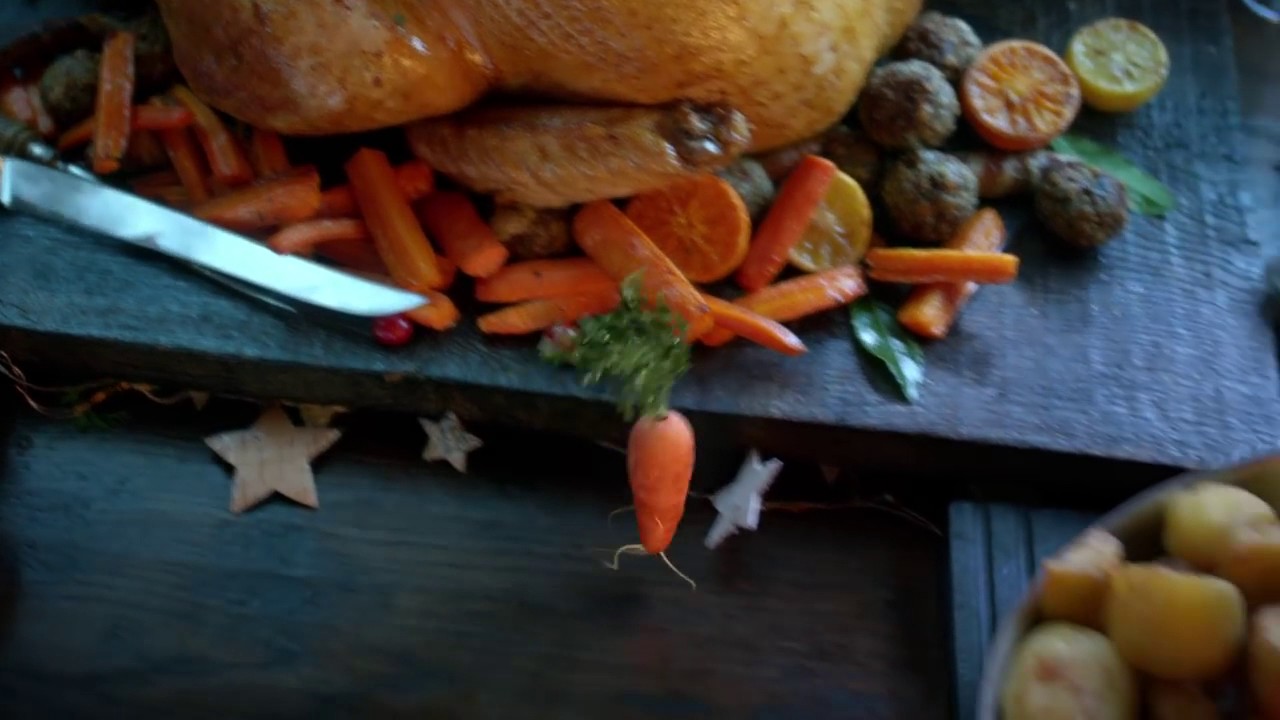

Not the bravest or most beautiful film in the Christmas break, but on published evidence the most effective British Christmas campaign of the past decade.
A discount supermarket with no heritage in emotional storytelling built the most durable character in British Christmas advertising out of a root vegetable. Kevin the Carrot arrived on 7 November 2016 in a 30-second film narrated by Jim Broadbent, in which a small carrot crosses a laid dinner table to meet Father Christmas. Ten Christmases later he has a wife, a marriage, a franchise of spin-off characters and a queue outside the shop.
Our take: the least fashionable idea in the category and comfortably the most profitable one.
Aldi’s Christmas problem in 2016 was not awareness, it was permission. Shoppers were happy to buy the weekly basics from a discounter and then defect to a big four supermarket for the festive shop, because Christmas is the one week of the year when British households want to feel they have not economised. The IPA case study submitted by McCann Manchester puts it plainly: Aldi’s own core shoppers were spending disproportionately more on Christmas somewhere else.
The brand’s established “Like brands. Only cheaper.” swap ads were built for rational comparison, which is the wrong instrument for December. Aldi also had a fraction of the media weight of the retailers it needed to beat. It needed something that would be remembered on a tenth of the spend, and remembered again next year.
Give the category’s cheapest item the starring role. A carrot costs pennies, it is the vegetable children leave out for the reindeer, and it belongs to nobody, which is exactly why it works for a discounter. The strategic sleight of hand is that a story about a carrot on a Christmas table is also a tour of the Christmas table, so the range gets sold while nobody feels sold to.
The second decision matters more than the first. Aldi did not treat Kevin as a one-year execution, it treated him as an asset with a life. Speaking to The Drum’s oral history of the campaign, McCann’s creative partners Clive Davis and Andy Fenton describe a character built to be recast every year rather than repeated, and Davis has voiced him throughout. That is the difference between a mascot and a franchise.
The through-line is pastiche, executed with more discipline than the format usually gets. The Drum’s decade round-up lists the run as The Amazing Christmas Carrot in 2016, Kevin the Carrot and Katie in 2017, Kevin the Carrot and the Wicked Parsnip in 2018, Kevin the Carrot’s Amazing Christmas Show in 2019, Kevin’s Out in the Cold in 2020, A Christmas Carrot in 2021, Home Alone in 2022, Kevin and the Christmas Factory in 2023, Christmas Mission in 2024 and 24 Carrot Christmas in 2025. Each borrows a piece of Christmas furniture the audience already owns, from the Coca-Cola truck to Dickens to Willy Wonka. None of them requires you to have seen the previous film.
Animation quality has risen steadily as the budgets have. Recent instalments have been animated by Psyop in association with Riff Raff Films, directed by Todd Mueller and Kylie Matulick, and the lighting and cloth work now stand comparison with feature animation. What has not changed is the writing register: short, silly, no sentiment held longer than a beat.
The consistency shows up in testing. Kevin scored three stars in System1’s Test Your Ad in his debut year, hit five stars from 2019, and the 2022 Home Alone film reached 5.9, the highest Christmas score System1 had recorded at the time. Aldi became the first Christmas advertiser to run five-star films four years running. Very few campaigns in our Christmas rankings hold that line for a decade.
The plush toys are the part most reviews treat as a footnote, and they are actually the mechanism. Kevin soft toys sell as Specialbuys at around £3.99, they are deliberately under-supplied, and they sell out in hours. That has produced morning queues outside stores, a digital queueing system on aldi.co.uk, and resale listings at many times the shelf price.
Aldi now builds the scarcity into the announcement. Its 2025 release capped the Caulidog and polar bear plushes at two per customer because of expected demand, with the range landing on 27 November. A television character that turns into a physical queue is doing a job no amount of reach can buy: it converts watching into going.
This is the rare Christmas character with an audited paper trail. The launch work took two trophies at the 2017 Euro Effie Awards including the Grand Effie, and the Effie case records 15.1 per cent year-on-year growth, the highest of any grocery retailer, with in-store plush toys clearing in half an hour. The 2016 and 2017 work then took a Silver at the IPA Effectiveness Awards 2018, where the case argues Aldi cut its habitual Christmas dip in market share and became the fastest-growing supermarket of both Christmases.
The trading numbers have kept moving in the same direction. Aldi reported record Christmas sales of £1.65bn in the four weeks to Christmas Eve 2025, up 3 per cent on the previous year, across 57 million transactions, with around £500m of it spent in the final week. Chief executive Giles Hurley framed it as proof that “a great quality Christmas can still be affordable”. Attribution across a decade of price investment and store openings is never clean, but no serious analyst reads Aldi’s December without reading Kevin.
The 2025 campaign ran as a three-part serial ending in Kevin and Katie’s wedding, which is the clearest signal yet that Aldi is running a soap rather than an ad. That is a smart way to buy multiple bursts of attention in a season where most brands get one. It also raises the obvious question of what you do after the wedding episode.
The other open question is the agency. McCann Manchester has held Aldi UK since 2005 and kept it through a 2016 pitch against Saatchi & Saatchi, Mother, Havas Worldwide London and J Walter Thompson London. In March 2026 the Aldi South Group put its creative accounts across markets including the UK, US, Germany, Italy, Australia and China into review. Whoever ends up holding the pen, the asset is now worth more than the roster.
Kevin is not the bravest or the most beautiful thing in the Christmas break, and any creative department could have written the first film in an afternoon. What almost none of them would have done is run it for ten years, keep the tone light, and turn the character into a stock-controlled product people set an alarm for. On the evidence available, and judged against our scoring method, it is the most effective British Christmas campaign of the past decade.

He plans, buys and reviews advertising for a living, and helps score campaigns on the site against the same five Crown Score criteria alongside other authors and contributors.
Aldi UK chief Giles Hurley says some loyalty promotions start from unrealistic prices and dupe customers, as Aldi reports £19bn sales and plans a record £900m investment.
 63/100
McCann Erickson took the Bisto Kids' hundred-year-old 'Aah' and turned it into a booked appointment. A review of the Bisto advert that sold an occasion, not gravy.
 73/100
One photograph of Heinz Beanz on two biscuits, no paid media, a day of brand replies and a debate in the House of Commons. Frank PR's Beanz on Bix, reviewed.