 63/100
Bisto ‘Aah Nights’: how a 1919 catchphrase became a night of the week
McCann Erickson took the Bisto Kids' hundred-year-old 'Aah' and turned it into a booked appointment. A review of the Bisto advert that sold an occasion, not gravy.
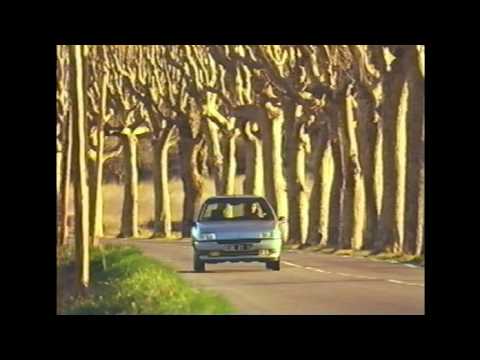

The benchmark for serialised brand storytelling in Britain, sustained across seven years and eight films and validated by a car that sold more in its final year than in any before it, marked down only because the individual films are charming rather than formally daring.
Two words, said twice, in a Provençal courtyard. “Papa?” “Nicole?” Renault ran that exchange in Britain for seven years, and by the end an estimated 23 million people sat through a car advert to find out who a fictional French woman was going to marry. Our take: the most sustained piece of narrative advertising British television has produced, and still the clearest proof that a running story beats a running slogan.
Renault in Britain at the end of the 1980s was, in the words of the company’s own global chief marketing officer Arnaud Belloni, “a nobody brand”. The Clio arrived in 1990 as a genuinely good car, European Car of the Year in 1991, into a market where French superminis carried a reliability reputation they could not shift by talking about engineering.
Publicis solved it by refusing to argue. The UK launch campaign began on 1 April 1991 with a film called “Interesting”, set around a Provençal chateau, in which the car is barely the subject at all. Renault’s own 25th anniversary account of the Clio describes the strategy plainly: the hinted-at afternoon activities of a father and daughter sprinkle some continental flair over the new car.
That is a positioning decision disguised as a joke. If British buyers were suspicious of French cars, the answer was to sell them French-ness itself, as something desirable rather than something to be excused.
The mechanic is beautifully simple. Nicole tells Papa she is going out, and Papa tells Nicole he is staying in. Both are lying, both are heading off to meet a lover, and both take a Clio. The car is the alibi.
The two-word exchange that carries the whole thing was lifted, not invented. As the record of the campaign notes, the “Papa?” “Nicole?” call and response is adapted from a scene between Audrey Hepburn’s Nicole Bonnet and her father in the 1966 film How to Steal a Million. Advertising rarely admits to a source this cleanly, and the theft is a good one, because it arrives already sounding like something you have heard before.
What turns a good film into a campaign is the decision to make it serial. Instalments ran roughly annually: “Interesting” in 1991, “The Date” in 1992 with a red Clio 16v, then skiing in 1993, a transformation in 1994, Maman in 1995, a move away in 1996, parallel lives in 1997 and the wedding in 1998. Viewers were not being sold a car once a year. They were being given the next episode.
Estelle Skornik and Max Douchin play the relationship absolutely straight, which is why the conspiracy is funny rather than smug. Neither character ever acknowledges the audience. The comedy sits entirely in what the viewer knows and the other character does not.
The sound design is a masterclass in continuity. Robert Palmer’s “Johnny and Mary” runs under every film but one, re-recorded and re-arranged each time, including Martin Taylor’s acoustic reading, so that seven years of work is stitched together by a melody rather than a logo. The single exception, the 1996 instalment, swaps in Soul II Soul’s “Keep On Movin'”, and the substitution is legible precisely because the rule had been kept for five years.
Dialogue is close to absent. Across a campaign built on two proper nouns, the writing discipline is in refusing to explain, which is the same restraint that makes minimal work like Volkswagen’s “Think Small” durable. The driving, incidentally, was done by Penny Mallory rather than by either lead.
By 1998 the question of whom Nicole would marry was being covered as entertainment news rather than advertising news. Publicis passed over the obvious A-list options and cast Vic Reeves as the groom and Bob Mortimer as the man Nicole actually wants, which is the bravest decision in the entire campaign.
The film is a straight lift of the closing sequence of The Graduate. It ran in a Coronation Street break on 29 May 1998, to an estimated 23 million viewers, and was then screened heavily through the 1998 World Cup. The Drum’s account records the agency’s own view of why the run lasted, in a line from the Publicis account director Douglas Thursby-Pelham in 1997.
“The public appetite for these characters is insatiable and there’s no sign of wear-out.”
Douglas Thursby-Pelham, Publicis account director, quoted in The Drum
The first-generation Clio sold more than 300,000 units in the UK across its seven-year production run, and Renault’s own account is candid that this exceeded the company’s loftiest expectations. The strongest year was the last one: 58,033 UK registrations in 1997, the final year of Clio I production, which is not how model life cycles normally behave.
The Clio also came to account for 49 per cent of Renault’s UK sales and pushed the brand into the top ten best sellers list. Publicis Groupe UK attributes 300,000 Clio sales to the seven-year run.
Then there is the fame evidence, which is unusual in its scale. A 1996 poll found Nicole was recognised by more Britons than the sitting prime minister, John Major. In the same year the name Nicole climbed from outside the top 100 to become the 36th most popular name for newborn girls in Britain, and more than 7,000 girls were given it between 1996 and 2000. Advertising that changes the birth register is doing something a tracking study will not capture.
Renault has been careful with the property. In June 2022 Publicis•Poke revived it for Father’s Day to launch the Megane E-Tech, replacing the fiction with documentary portraits of three real women called Nicole and their fathers, directed by Toby Dye through RSA Films. It is a sensible way to use a memory without embarrassing it.
The bigger move is still to come. In September 2025 Belloni told Autocar that the sixth-generation Clio will get a UK-specific campaign, a deliberate break from Renault’s own global-single-film policy, and that the Clio is the only model for which he would sanction the exception. Work with Renault’s UK leadership was due to begin in early 2026 ahead of the car’s launch about a year later.
Belloni’s reasoning is the sharpest brand-strategy line any car marketer has offered lately: Renault was good in the UK when it played pop culture rather than behaving like a French brand. Papa and Nicole is the case study he is citing back to himself.
Seven years, eight films, two words and a car that sold more in its final year than in any before it: this is the benchmark for serialised brand storytelling in Britain, and it is marked down only because the individual films are charming rather than formally daring. The scoring method is set out in how we score, and the campaign’s standing against the rest of the canon is argued in our best advertising campaigns ranking.

He plans, buys and reviews advertising for a living, and helps score campaigns on the site against the same five Crown Score criteria alongside other authors and contributors.
63/100McCann Erickson took the Bisto Kids' hundred-year-old 'Aah' and turned it into a booked appointment. A review of the Bisto advert that sold an occasion, not gravy.
 73/100
One photograph of Heinz Beanz on two biscuits, no paid media, a day of brand replies and a debate in the House of Commons. Frank PR's Beanz on Bix, reviewed.
 79/100
BMP DDB gave the jokes to Rowan Atkinson and the product line to his assistant. Seventeen films, nine British Arrows, an IPA Gold and a cinema franchise later, a full review.