 63/100
Bisto ‘Aah Nights’: how a 1919 catchphrase became a night of the week
McCann Erickson took the Bisto Kids' hundred-year-old 'Aah' and turned it into a booked appointment. A review of the Bisto advert that sold an occasion, not gravy.
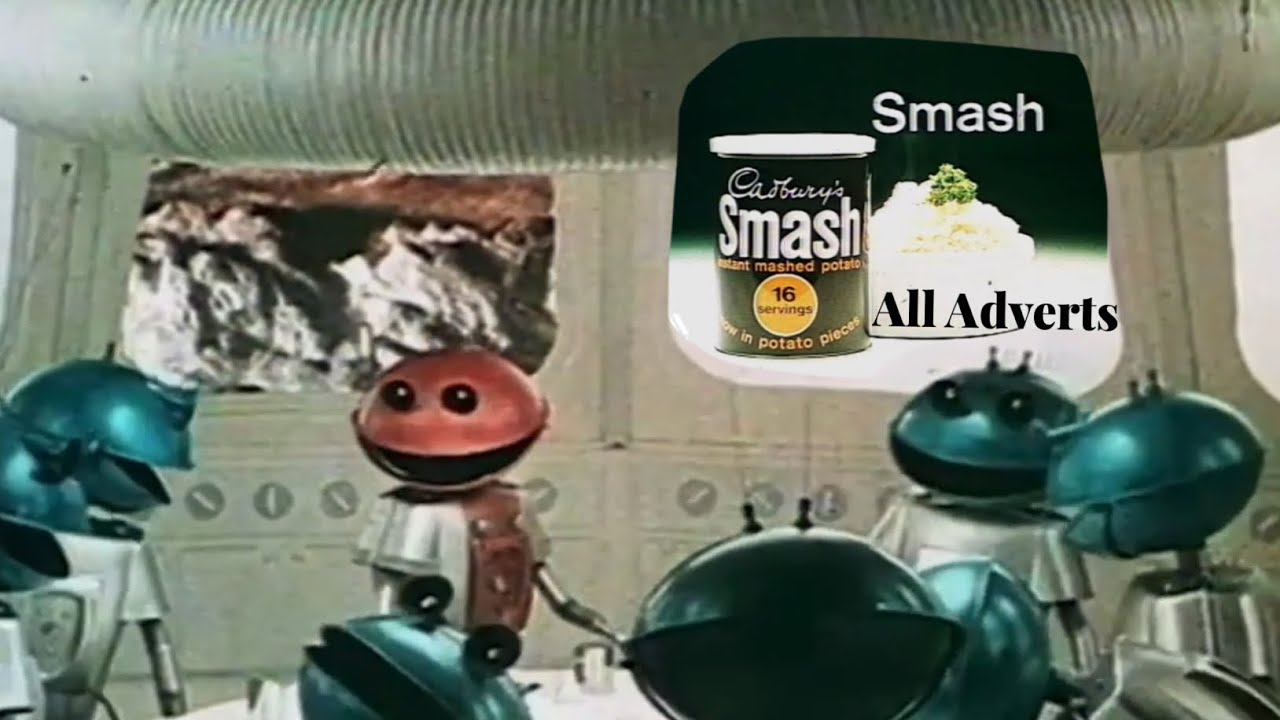

A perfectly built comic idea with rules strict enough to run for ten years, marked down on effectiveness only because no audited case for it exists in the public record.
A family of tin robots watches a film of humans peeling, boiling and mashing potatoes, then collapses into mechanical laughter. That is the entire 1974 commercial for Cadbury’s Smash, and British advertising has spent fifty years failing to better it. A panel assembled by Campaign voted it the television advertisement of the century. Our take: the strategy is a single act of reframing, and everything else on screen exists to sell that one thought.
Instant mash was a hard sell in 1974 because it asked people to admit that a domestic ritual was a waste of time. The Martians solved that by never arguing with the audience. They simply looked at the ritual from outside and found it hilarious.
Smash was launched in Britain by Cadbury in the 1960s and sold respectably without ever becoming a habit. The obstacle was not taste, it was pride. Making mash from real potatoes was a small daily proof that you cooked properly, and a packet of granules looked like an admission of defeat.
Attacking that head on was hopeless. Tell a cook that peeling potatoes is a waste of their evening and you have insulted them, not persuaded them. Boase Massimi Pollitt, then a young agency with a planning department that actually researched audiences, needed a way to make the argument without anyone in the room having to lose it.
The answer arrived in a pub. Creative chief John Webster put the thought to his copywriter in one sentence, and the campaign is simply that sentence dramatised.
If anyone came down from another planet and saw that we bothered to peel potatoes, boil them and mash them up when you can get it out of a packet, they’d think we were barmy.
John Webster, quoted by Campaign
The move is to hand the criticism to a character the audience does not have to agree with. The Martians laugh at human cooking, so the brand never has to. Nobody watching feels told off, because nobody watching is being addressed. You are simply invited to overhear an alien anthropology lecture about yourself.
The discipline around that idea is the part most modern work would get wrong. The Martians never meet a human being, and they never say the product tastes nice. Research at the agency established both rules, and both are load bearing: contact with earthlings would make them characters in a sitcom, and praising the flavour would turn them into salesmen.
What is left is a comedy of superiority aimed at a chore rather than at a person. The line does the rest of the work. “For Mash Get Smash” is four syllables of instruction with a rhyme holding it together, and it survived long after the films stopped running.
The Martians were designed by Sian Vickers and Chris Wilkins as squat, riveted, distinctly homemade machines. They look like something assembled in a shed, which is exactly right: a sleek alien would have been science fiction, and science fiction would have been about the future rather than about tea time. Their bodies barely move, so every performance beat has to come from the heads, the arms and the sound.
Direction came from Bob Brooks, an American who directed several thousand commercials in Britain, the United States and Europe, working through his own company Brooks Fulford Coutts Seresin. Brooks shoots the films like a documentary crew that has stumbled onto a briefing. The camera holds, the reveals are slow, and the laugh is allowed to build rather than being cut into.
The sound is the masterstroke. Peter Hawkins voiced the Martians, and his other credits include the Daleks and the Cybermen in Doctor Who, Captain Pugwash, and Bill and Ben. He gives the robots a clipped, metallic delivery that turns into a rattling cackle, and that cackle is the single most imitated noise in British advertising. Children reproduced it in playgrounds for a decade, which is a distribution channel no media plan can buy.
Note also what the films withhold. There is barely any product shot, no family around a table, and no appetite appeal of the kind food advertising was built on at the time. Webster had decided to break grocery advertising out of its own conventions, and the absence of those conventions is why the work still looks modern.
This is where a fifty year old campaign is at a disadvantage, and we mark it accordingly. Smash became a fixture of the British larder after 1974 and the campaign ran into the early 1980s, which is itself a commercial verdict: clients do not renew a decade of television for work that does not sell. What does not exist is the published, audited effectiveness case that a modern review can lean on, because the IPA Effectiveness Awards did not begin until 1980 and no Smash paper is in the public record.
What is documented is fame, and fame at an unusual scale. The Drum places the Martians among the best advertisements ever made anywhere. The campaign generated enough public affection that people built their own Martians, and workers at Ford’s Halewood plant near Liverpool made unauthorised replicas out of scrap car parts.
The poll record is close to unbeatable. Campaign’s panel named it the television advertisement of the century. It came second in the 2000 Channel 4 and Sunday Times poll of the hundred greatest television adverts, and first in ITV’s Best Ever Ads in 2005.
Three of the original puppets are held at the National Media Museum in Bradford, with further examples kept at the head office of Premier Foods, which owns the brand today. Very few commercials end up as museum objects. Fewer still are remembered by people who never bought the product.
The deeper legacy is structural. The Martians proved that a grocery brand could build a long running fictional world rather than a series of demonstrations, and Webster went on to do the same with the Cresta bear and the Honey Monster. Every British food brand that now leans on a character rather than a claim is working in a tradition this campaign established. Cadbury’s later Gorilla is a distant descendant of the same instinct, which is to entertain first and argue later.
It also set the template for planning led creative work in Britain. Boase Massimi Pollitt used research not to sand the edges off an idea but to find the two rules that would keep it sharp. That is why the campaign sits comfortably among the best advertising campaigns Britain has produced.
A perfectly built comic idea with rules strict enough to run for ten years, marked down on effectiveness only because no audited case for it exists in the public record, which is a gap in the archive rather than a flaw in the work. Our scoring is set out in how we score.

He plans, buys and reviews advertising for a living, and helps score campaigns on the site against the same five Crown Score criteria alongside other authors and contributors.
63/100McCann Erickson took the Bisto Kids' hundred-year-old 'Aah' and turned it into a booked appointment. A review of the Bisto advert that sold an occasion, not gravy.
 73/100
One photograph of Heinz Beanz on two biscuits, no paid media, a day of brand replies and a debate in the House of Commons. Frank PR's Beanz on Bix, reviewed.
 79/100
BMP DDB gave the jokes to Rowan Atkinson and the product line to his assistant. Seventeen films, nine British Arrows, an IPA Gold and a cinema franchise later, a full review.