Stella Artois “Reassuringly Expensive”: the line that sold the price, then lost the brand
Lowe turned a duty-driven price premium into a 25-year proposition and the most awarded advertising in the world in 2002. Then the drinkers it recruited renamed the beer.
81/100
8 min read
Stella Artois, Lowe Howard-Spink, later Lowe Lintas & Partners and Lowe London, 1982.
Crown Score
81/100
Idea9
Craft9
Bravery8
Effectiveness7
Legs5
A line good enough to enter the language and a body of film work that beat the entire world in 2002, marked down only on legs because the campaign's own success at selling strength and price built an audience that gave the brand a nickname it had to run away from, taking the line with it.
Most advertising exists to make you forget the price. For 25 years, Stella Artois put the price in the endline and dared you to object. “Reassuringly Expensive” ran in Britain from 1982 to 2007, funded some of the most beautifully made television this country has produced, and then died because the drinkers it recruited gave the brand a nickname no amount of Provençal cinematography could scrub off. Our take: one of the two or three best strategic lines in British advertising, attached to a cautionary tale about what a premium price actually buys you.
Credits
Client: Whitbread Beer Company, UK licensee from 1976; later Interbrew UK, then InBev
Agency: Lowe, through its successive names, Lowe Howard-Spink, Lowe Lintas & Partners and Lowe London
Directors across the series: Michael Seresin, Vaughan Arnell and Anthea Benton, Jonathan Glazer, Frank Budgen, Ivan Zacharias
Production companies: Academy on the Glazer films, Stink on “Good Doctor”
Writer, “Good Doctor” and “Devil’s Island”: Vince Squibb
Music: the theme from Jean de Florette, itself drawn from Verdi’s La forza del destino
TV series launched: 1991, with “Jacques de Florette”
The problem: a beer that cost too much
Whitbread took a licence to brew Stella Artois in Britain in 1976, and immediately had an arithmetic problem. British duty is levied on alcoholic strength, and Stella was strong, so it landed on the bar costing more than the lagers next to it. Whitbread’s first answer was to sell the strength directly, with the line “Stella’s for the fellas who take their lager strong”, which is a sentence that reads very differently now than it did then.
Frank Lowe had worked on Stella at Collett Dickenson Pearce in the 1970s, writing press ads including “My shout, he whispered”. He left CDP in 1981 to start his own agency and took the account with him. Campaign’s report of the eventual break-up records that the “reassuringly expensive” endline was first conceived in 1981, before Lowe quit, and the campaign launched the following year.
The idea: sell the thing you were apologising for
The move is the simplest and hardest one in strategy. Take the biggest objection to the product and restate it as the reason to buy. Stella cost more because duty punished its strength, so the advertising declared that costing more was the point, and that a lager you paid extra for was a lager worth paying extra for.
The word doing the work is “reassuringly”. “Expensive” on its own is a boast. “Reassuringly expensive” tells the drinker that the price is not a penalty but a guarantee, and quietly flatters him for being the sort of person who understands that. It is a two-word positioning statement, a price justification and a piece of social permission at once.
What makes it exceptional is that it survived a change of medium. It ran for nine years as a press line before it ever reached television, and the record of the campaign credits a chance viewing of Jean de Florette in 1990 with producing the script that became the first film. Lines that outlive their original format are rare. This one outlived three agency names and three owners.
The craft: French cinema, made in Britain, sold to lager drinkers
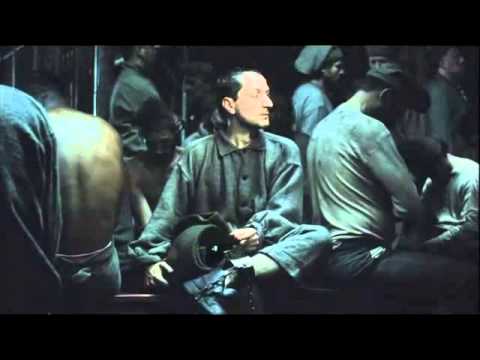
The television work is the reason this campaign is still taught. Each film is a self-contained short in the register of European art cinema, shot in French, set in a vaguely nineteenth-century rural France, resolved by a punchline in which somebody gives up something enormous for a glass of beer. Verdi’s La forza del destino, by way of the Jean de Florette theme, carries the continuity so that the brand never has to.
The director list is absurd for a lager account. Michael Seresin, cinematographer on Bugsy Malone and Midnight Express, shot the 1991 opener. Vaughan Arnell and Anthea Benton took a British Arrows Bronze for “Les Nouvelles Chaussures” in 1997, Jonathan Glazer won Silver for “Last Orders” in 1999 through Academy, and Frank Budgen’s “Hero’s Return” took Silver in 2001 with Craft Golds for Sam Sneade’s editing and Jaleh Falk’s costume.
“Devil’s Island”, written by Vince Squibb and directed by Glazer through Academy, took Arrows Gold in 2003 and a Cinema Silver alongside it. It is the campaign’s method in its purest state: a prisoner, an escape, and a decision no rational person would make, all played dead straight so the joke lands as a surprise rather than a wink.
The peak is “Good Doctor”, from 2002. A cholera doctor is shunned by an entire village until the priest orders him a Stella, and the villagers’ fear of contamination is defeated, sip by sip, by their greater desire for the beer. Squibb wrote it, Ivan Zacharias directed it through Stink over six days in the south of France, Anne Dudley scored it, and Sarah Hallatt produced. Three separately graded copies of the film stock were composited to build the weathered look, which is the sort of thing you do when the budget is not the constraint.
The British Arrows record for “Doctor” lists Arrows Gold, Craft Gold, Best Direction for Zacharias and the ITV Award for Best Television Commercial of the Year. It ran 100 seconds in cinema and 60 or 70 on television, which tells you how confident everyone was.
The run did not stop there. “Ice Skating Priests” in 2005, Glazer again, collected Arrows Gold, Best Crafted Commercial of the Year, Best Direction, Casting, Best Over 60 Second Commercial and Best Use of Recorded Music for Peter Raeburn at Soundtree. Six major honours for one beer commercial is not a campaign in good form. It is a campaign operating in a different category from its competitors.
The results
“Good Doctor” was the most awarded advertising in the world in 2002 according to the Gunn Report, taking a Cannes Gold Lion, an Epica Gold, a D&AD Silver with three further nominations and Best Direction at the British Television Craft Awards. It was shortlisted for the Cannes Grand Prix against Xbox’s “Champagne” and the eventual winner, Levi’s “Odyssey”. The Cannes audience booed the Gold, as it had booed earlier Stella wins, which is usually a sign that a jury has rewarded something the room wishes it had made.
Commercially, Stella Artois sales rose 18.3 per cent over the year, placing the brand fifth in ACNielsen’s annual survey for sales increases in the UK and confirming its command of the premium lager market. The campaign also took a Bronze at the 2002 IPA Effectiveness Awards. That is a genuine result, though a Bronze rather than a Gold is worth noting against work this celebrated, and the campaign’s most-cited numbers come from trade reporting rather than a published effectiveness paper.
The other half: a nickname the advertising could not outrun
While Lowe was collecting Craft Golds, Stella Artois was acquiring a second name in British pubs. It became known as “wife beater”, a nickname the Independent attributes to the beer’s high alcohol content and its perceived connection with aggression and binge drinking. No advertising campaign has ever been asked to carry that.
The strategy had worked too well in one direction. A line about strength and price recruits people who want strength and price, and the beautiful films did nothing to change who was buying or why. Premium positioning had bought the brand a reputation for potency, and potency is not a quality you can revoke in a script.
By November 2007 the Argus was reporting Sussex landlords taking Stella off the pumps, after a judge linked the brand to binge drinking and alcohol-fuelled violence. A Stella Artois spokesman’s response was that one brand should not be held responsible for alcohol misuse. That is a reasonable argument and it was also, commercially, beside the point.
The line went in 2007, and the advertising began avoiding the word “Stella” altogether. In August 2008 Lowe resigned the account after 26 years, having lost the launch brief for a 4 per cent variant to Mother. A brand that had spent a generation arguing it should cost more was now launching a weaker version and had parted with the agency that built the argument.
The postscript is worse. In January 2012 the Labour MP Tom Watson revealed that Portland Communications, run by Tim Allan, had edited Wikipedia on behalf of its client AB InBev, removing references to Stella Artois from the “wife beater” page and attempting to strip the phrase from the brand’s own entry. Other editors reversed it. Twenty-five years of “Reassuringly Expensive” ended with a lobbyist trying to delete the nickname it had helped create.
What to steal
Find the biggest objection to your product and make it the proposition. A high price defended confidently reads as quality; a high price ignored reads as a rip-off
The adverb is the strategy. “Expensive” boasts, “reassuringly expensive” reassures, and the difference is the entire campaign
Borrow a genre rather than a joke. A whole cinematic register gives you decades of new stories; a format gives you six
Let music carry the brand so the films do not have to
Hire directors from outside your category, and give them length. Sixty seconds is a budget decision, not a creative one
Play the absurdity straight. The moment a film winks at its own punchline, the punchline is gone
Watch who your positioning actually recruits. Beautiful advertising will not correct a product truth your customers have already decided on
The verdict
Twenty-five years, a line good enough to enter the language and a body of film work that beat the entire world in 2002: as a piece of strategic writing and as a production standard this is close to the top of the British canon, and it sits comfortably beside the long-form drinks work we assess in our Guinness review and our best advertising campaigns ranking. It is marked down on legs, and only on legs, because the campaign’s own success in selling strength and price built an audience that gave the brand a name it had to run away from, taking the line with it. The method behind the marks is set out in how we score.
What to steal
Find the biggest objection to your product and make it the proposition
The adverb is the strategy: "expensive" boasts, "reassuringly expensive" reassures
Borrow a genre rather than a joke, because a register gives you decades and a format gives you six
Let music carry the brand so the films do not have to
Hire directors from outside your category, and give them length
Play the absurdity straight, because a film that winks at its punchline has lost it
Watch who your positioning actually recruits, because beautiful advertising will not correct a product truth customers have already settled
Max Rottier
He plans, buys and reviews advertising for a living, and helps score campaigns on the site against the same five Crown Score criteria alongside other authors and contributors.
Stella Artois is the first brand partner for Netflix's The Gentlemen and the first multi-market Netflix and AB InBev deal, with a Theo James and David Beckham film by GUT Amsterdam.
McCann Erickson took the Bisto Kids' hundred-year-old 'Aah' and turned it into a booked appointment. A review of the Bisto advert that sold an occasion, not gravy.
One photograph of Heinz Beanz on two biscuits, no paid media, a day of brand replies and a debate in the House of Commons. Frank PR's Beanz on Bix, reviewed.
The Ad Ranking letter
One verdict a week. No press releases.
The campaign worth studying, the ASA ruling worth knowing, and the number nobody else reported. Every Thursday.
One email a week. Unsubscribe in one click. We never share your address.