 63/100
Bisto ‘Aah Nights’: how a 1919 catchphrase became a night of the week
McCann Erickson took the Bisto Kids' hundred-year-old 'Aah' and turned it into a booked appointment. A review of the Bisto advert that sold an occasion, not gravy.
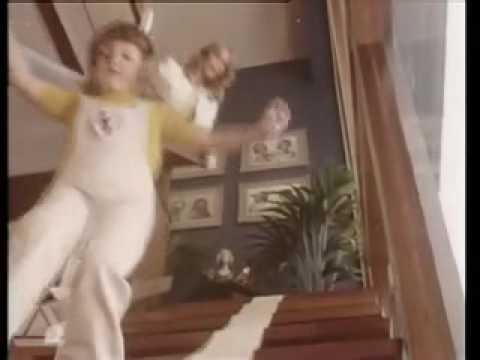

Fifty years of pleasant nothing on film and one of the most effective business decisions in British advertising, with an IPA Gold and a share that went from 5% to 30% to prove it.
The most valuable brand asset in British advertising exists because a regulator said no. The 1972 script had a small girl running through a house trailing a roll of toilet paper behind her, and the television regulators refused it on the grounds that it taught children to be wasteful. With the shoot already booked, the girl was swapped for a golden Labrador puppy, and Kimberly-Clark has been living off that substitution for more than fifty years.
Our take: an accident that became the most disciplined piece of brand asset management in the country, and a campaign that is far better at selling than it has ever been at entertaining.
Andrex started life in 1942 as a disposable handkerchief sold at Harrods, and by the 1970s it was a premium two ply product in a category where price, availability and promotion decide almost everything. The brief for that kind of brand is unglamorous: give people a reason to reach past the cheaper pack without ever describing what the product is actually for. Toilet tissue advertising has to demonstrate softness, strength and length while showing you none of the circumstances in which those things matter.
The girl with the unspooling roll solved that neatly, which is why it was written. A puppy solves it better, because a puppy adds an emotional payload the girl never had.
The puppy does two jobs at once and that is the whole trick. It runs the length of a house dragging the roll, which is a product demonstration of strength and length that a voiceover could never sell. It is also soft, warm and daft, which is the emotional claim delivered without a single adjective.
The original film is thirty four seconds long and does nothing clever. A puppy takes the end of a roll and goes, the paper follows it through the house, and the line “soft, strong and very very long” arrives to name what you have just watched. There is no story, no jeopardy and no joke, which is precisely why it can be remade indefinitely.
Matt Stone, Kimberly-Clark’s UK and Ireland marketing director, put the logic to Marketing Week in 2022. The puppy, he says, is not a random mascot but a metaphor for the product, and that is what separates a working brand character from what he calls gimmick territory. It is a fair distinction, and it explains why so many mascots die and this one has not.
There have been around 130 different Andrex adverts featuring various puppies, and the craft question is not how good any one of them is. It is how tightly the brand has policed the constants: the same breed, the same colour, the same unspooling roll, the same three word product claim. The films change decade by decade in film stock, music and set dressing, and the asset itself does not move.
Individually, the work is pleasant rather than remarkable. The 1980s and 1990s executions are competently shot puppy footage with a demonstration in the middle, and almost none of them would survive a Cannes shortlist. Judged as a single campaign across fifty years, the consistency is the craft.
The brand has extended the asset well beyond film. A 1999 on-pack offer of “bean” toy puppies drew 1.4 million responses, which Campaign recorded as the most successful send-away offer in the UK, and one in ten British households ended up owning an Andrex cuddly toy. The Puppy Points loyalty scheme and a Guide Dogs partnership followed, both of which only work because the character was already load bearing.
This is where the campaign stops being twee and starts being formidable. Campaign’s brand fame study records that since the puppy first appeared in 1972, Andrex lifted its Nielsen volume share from just under 5% to about 30%, with a value share of 33.4% and more than 12 million UK households buying the brand at least once a year.
It did that while charging more. An IPA Effectiveness paper written in 1992, which took a Gold award, found that Andrex had at times carried a price premium of 40% above rivals and was still significantly preferred, including through the recessions of the 1970s and 1980s. The paper’s conclusion is the campaign’s whole defence: continually updating the advertising while retaining the constants keeps consistency without going stale.
The share has held. It stood at 32% by value in 2010 and Kimberly-Clark still claimed over 30% in 2022, in a category that has watched supermarket own label demolish kitchen towel and facial tissue brands. Fifty years of market leadership against private label is a harder result than most Grand Prix winners can show.
In December 2010, JWT London spent £15m on a campaign built around a computer generated puppy, launching in the ad break of I’m a Celebrity with an endline of “it’s the little things”. It was the biggest change of strategy since 1972 and it did not go well with the public, who correctly understood that the appeal of a real puppy is that it is a real puppy. The live dog stayed on the packaging throughout.
By September 2012 Andrex had recalled the real puppy for a £2m fortieth anniversary push tied to Guide Dogs. In 2022, for the puppy’s fiftieth and the brand’s eightieth, FCB Inferno and director Nicholas Jack Davies put a live Labrador on a supermarket shelf between the packs, with creative directors Ben Usher and Rob Farren and media by Mindshare. The lesson had been absorbed: you can refresh the film, but you do not synthesise the asset.
The bigger break came in March 2024, when FCB London launched a new brand platform called Get Comfortable. The launch film, “First Office Poo”, opens on an audible fart in a silent office and ends with the woman responsible striding to the toilet with a roll in hand, having been given an encouraging nod by the puppy under her desk. Andreas Nilsson directed it through Biscuit Filmworks, with Kyle Harman-Turner as ECD and Owen Lee as FCB London’s chief creative officer.
The reframing matters more than the fart. The puppy is no longer a metaphor for softness and is instead a permission device, which is a genuinely clever way to keep a fifty year old asset while changing what the brand is about. Andrex research quoted by Creative Review found that around half of Britons are too shy to use the toilet at work or at a partner’s house and 41% fear it at their in-laws, and the outdoor line “live unclenched” does more work than a decade of soft focus bathrooms.
Early testing suggested the gamble paid off. Zappi’s AdMiration study of “First Office Poo” put it in the top 25% of UK ads for potential to drive immediate sales and significantly above the norm for distinctiveness, with a laughter response of 27% against a UK norm of 6% and a personal care category norm of 1%. Notably, 46% of respondents said it was the puppy that told them the advert was for Andrex, which is the asset earning its keep in a film that has otherwise abandoned the category rulebook.
The direction of travel since is away from the household aisle entirely. In August 2024 Andrex unveiled its biggest redesign in more than a decade with Pearlfisher, explicitly aiming to look like “more beauty than bin liners” and be read as personal care rather than a household staple. The puppy survives that too, which is the point.
Judged as film, the Andrex puppy is fifty years of pleasant nothing, and it would be laughed out of most creative departments today. Judged as a business decision, it is one of the most effective things any British advertiser has ever done, with an IPA Gold, a share that went from 5% to 30% and a price premium that survived two recessions. It scores badly on bravery for the obvious reason that safety was the entire strategy, and it earns its high marks on effectiveness and legs several times over. For the scoring logic see how we score, and for the company it keeps, our best advertising campaigns ranking.

He plans, buys and reviews advertising for a living, and helps score campaigns on the site against the same five Crown Score criteria alongside other authors and contributors.
63/100McCann Erickson took the Bisto Kids' hundred-year-old 'Aah' and turned it into a booked appointment. A review of the Bisto advert that sold an occasion, not gravy.
 73/100
One photograph of Heinz Beanz on two biscuits, no paid media, a day of brand replies and a debate in the House of Commons. Frank PR's Beanz on Bix, reviewed.
 79/100
BMP DDB gave the jokes to Rowan Atkinson and the product line to his assistant. Seventeen films, nine British Arrows, an IPA Gold and a cinema franchise later, a full review.