 63/100
Bisto ‘Aah Nights’: how a 1919 catchphrase became a night of the week
McCann Erickson took the Bisto Kids' hundred-year-old 'Aah' and turned it into a booked appointment. A review of the Bisto advert that sold an occasion, not gravy.
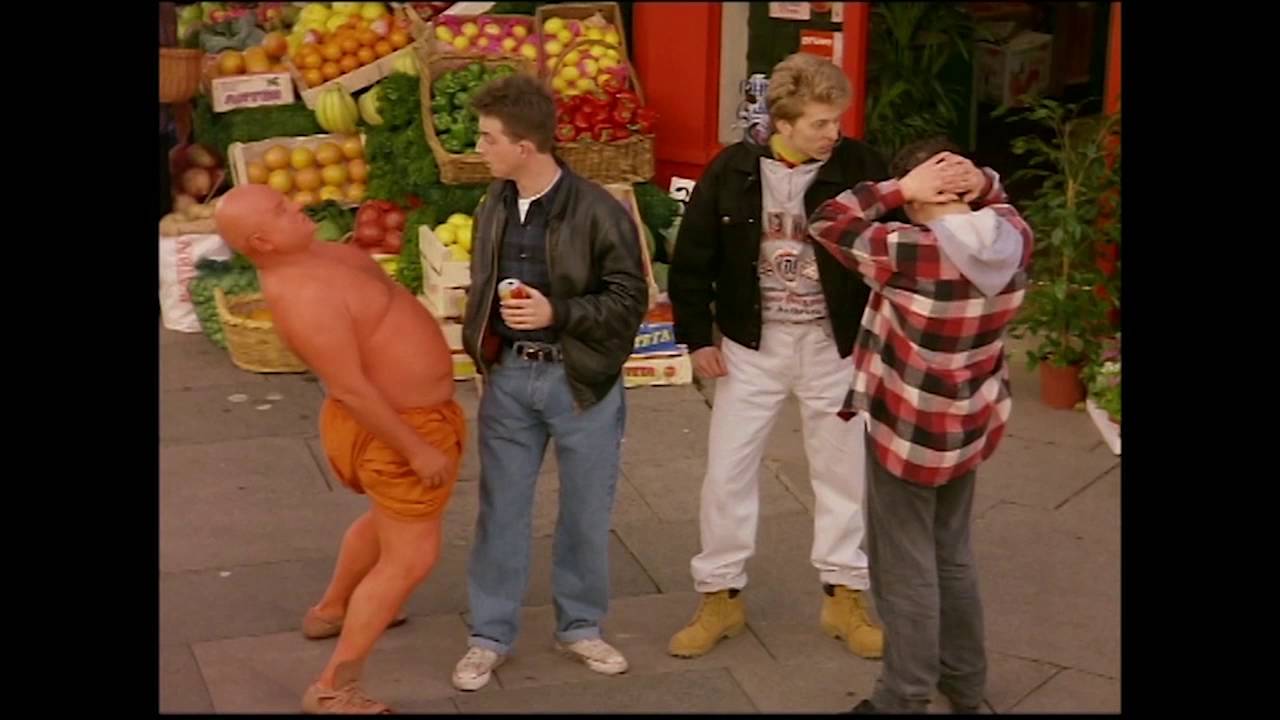

The bravest famous British ad of the 1990s and the one that rewrote what a challenger brand could do on a small budget, marked down only because Britvic never published an audited results case.
A man drinks a can of Tango. A large man painted entirely orange sprints in from off camera and slaps him hard across both cheeks. Two football commentators rewind the tape to check what happened, and a voice that turns out to belong to Gil Scott-Heron says “you know when you’ve been Tango’d”. Our take: the most influential forty seconds of British advertising in the 1990s, and a case study in what happens when an idea escapes the television set.
Britvic bought Tango in 1988 and wanted the brand radicalised. Soft drinks advertising at the time belonged to Coca-Cola, and nobody was competing with it on its own terms. “Coca-Cola was the big name in soft-drink advertising then,” Trevor Robinson wrote in The Guardian. “Nothing was taking on the Coke ads; nothing came close.”
The brief HHCL received is the kind that no longer exists: write whatever you want, just make Tango famous. Robinson and his creative partner Al Young were junior, frustrated and, by their own account, anti-advertising in outlook. The industry default they were reacting against was what Robinson calls cause and effect advertising, in which contact with a product visibly improves your life. Tango had neither the media budget nor the credibility to play that game, so word of mouth became the media plan.
The thought started as a gag between two bored creatives. What if you drank something and something shocking happened, but so fast that nobody else saw it? The second half came from an unrelated script about commentators rewinding footage, and the two were welded together, which Robinson cheerfully calls a cardinal sin in adland. The result takes the standard soft drink promise, the hit of real oranges, and stages it as assault.
What makes it more than a sketch is the structure. The slap happens in the first few seconds, unexplained and almost missable, and the commentary format then forces you to watch it twice more. That is a built-in repeat mechanic in an era before anyone could rewind a television advert, and it is why the film transferred so cleanly into playgrounds and pubs. The endline does the rest: “you know when you’ve been Tango’d” is a phrase people can perform on each other, which is a different and rarer thing from a slogan people can remember.
The first version was worse behaved. Robinson’s original had a fat orange genie running up and kicking the drinker up the backside, which the Broadcast Advertising Clearance Centre refused outright. The script was cleared only after the kick became what Robinson described as a pleasant, Morecambe and Wise-style slap on the face. His own summing up is that the little slap then got a bit out of hand.
It got out of hand in a park. Robinson and Young went out to shoot a test film, which amounted to two grown men Tangoing each other, and concluded that the cleared version was not powerful enough. So they exaggerated it, which is why in the finished commercial the orange man’s arms swing all the way back before contact. That decision is the whole controversy in one gesture, and it was taken by the creative team rather than the client or the director.
The casting is why it is funny rather than merely violent. Peter Geeves was an up-and-coming serious actor, and Robinson says they knew at the audition from the way he ran with his stomach sticking out. Several actors turned down the drinker’s role because they did not want to be slapped, and it went to Ben Fox, who reacted without making a meal of it. The paint was orange grease paint fixed with hairspray, and it took Geeves weeks to get off.
The sound design carries as much of the joke as the picture. American football commentators were tried first and rejected as insufficiently British, so Hugh Dennis supplies an Eddie Waring-ish excitement and the former England footballer Ray Wilkins plays it dry against him. Gil Scott-Heron was hired for the endline purely for the weight of his voice, and Robinson has said he was the first person to see the finished film and loved it. Very few 40 second commercials have three distinct vocal registers doing three different jobs.
Fame arrived almost immediately. Robinson has described falling asleep on the Underground and waking to hear a group of children reciting and mimicking the ad. That is the outcome the brief asked for, and it happened without the media weight of the brand it was competing against. The catchphrase outlived the commercial by a decade.
Then came the part every case study skips over. Children began Tangoing each other in playgrounds, harder than the film and without the framing, and injuries followed. Rupert Howell, one of HHCL’s founding partners, later recounted a call from a surgeon who had operated that morning on a child with a damaged eardrum and asked the boy what had happened, to be told he had been Tango’d. Howell pulled the advertisement from television that afternoon.
The film was withdrawn voluntarily rather than banned, which is worth stating clearly because the ad’s reputation as a banned commercial has hardened into folklore. Two replacements followed. In the first, the orange man puts his hand over the drinker’s mouth and kisses it. In the second he simply approaches and the drinker runs away, and both were rebuilt around the redesigned Tango can.
On hard numbers, the record is thin. Tango appears in the Marketing Society’s golden brands of 1992 on the strength of the commercial, and Britvic never entered an IPA Effectiveness paper for the campaign, so there is no independently audited sales case in the public databank. Widely repeated figures for the sales uplift trace back to secondary reporting rather than published brand data, and we have left them out on that basis. It is a real gap, and it is the one place where a canonical piece of work is marked down on our scorecard.
The industry hated it before it loved it. Television advertising in 1992 meant beautiful scripting and large budgets, and at least one senior figure dismissed Orange Man as “oik advertising”. The verdict reversed comprehensively. Campaign later called the Tango work “the seminal campaign of the 90s” and named HHCL its Agency of the Decade for the 1990s, a choice the magazine’s own jury argued about.
The public rankings agree. Orange Man placed third in Channel 4 and The Sunday Times’ 100 Greatest TV Ads poll in 2000, and fifth in ITV’s Best Ads Ever 2 in 2006. In 2013 The Guardian called Tango the original gangster of viral marketing and noted that no Tango campaign since has recaptured it. You can see where we place it against the rest of the canon in our ranking of the best advertising campaigns.
HHCL kept the campaign running to 1996 and kept getting into trouble, with “Exploding Pensioner” in 1993 and “Scotsman” in 1994 both drawing complaints or restrictions. Britvic revived the line from 2002 to 2005 with Chi after the HHCL relationship ended. The revivals prove the point about the original: the phrase survived, but the mechanic that made people repeat it did not travel.
Orange Man is the bravest famous ad Britain produced in the 1990s and the one that most obviously changed what a challenger brand could do with a small budget, which is why it still sits near the top of every public poll thirty four years later. It is scored down on effectiveness for a specific reason: Britvic never published or submitted an audited results case, and the sales numbers that circulate are second-hand, so the commercial claim rests on fame rather than evidence. The craft is close to perfect within its own low-fi terms, and the ending of the story, a client and an agency pulling their most successful film in an afternoon because a child was hurt, is a better lesson in creative responsibility than most industry codes manage. Bravery of this order comes with a bill, and Tango is one of very few brands that has ever paid it in public.

He plans, buys and reviews advertising for a living, and helps score campaigns on the site against the same five Crown Score criteria alongside other authors and contributors.
63/100McCann Erickson took the Bisto Kids' hundred-year-old 'Aah' and turned it into a booked appointment. A review of the Bisto advert that sold an occasion, not gravy.
 73/100
One photograph of Heinz Beanz on two biscuits, no paid media, a day of brand replies and a debate in the House of Commons. Frank PR's Beanz on Bix, reviewed.
 79/100
BMP DDB gave the jokes to Rowan Atkinson and the product line to his assistant. Seventeen films, nine British Arrows, an IPA Gold and a cinema franchise later, a full review.