 73/100
Weetabix beans: the tweet that started a 600-brand pile-on
One photograph of Heinz Beanz on two biscuits, no paid media, a day of brand replies and a debate in the House of Commons. Frank PR's Beanz on Bix, reviewed.

The rare piece of famous work with the paperwork to match the mythology, an IPA-documented turnaround dressed as 60 seconds of Motown and bare legs.
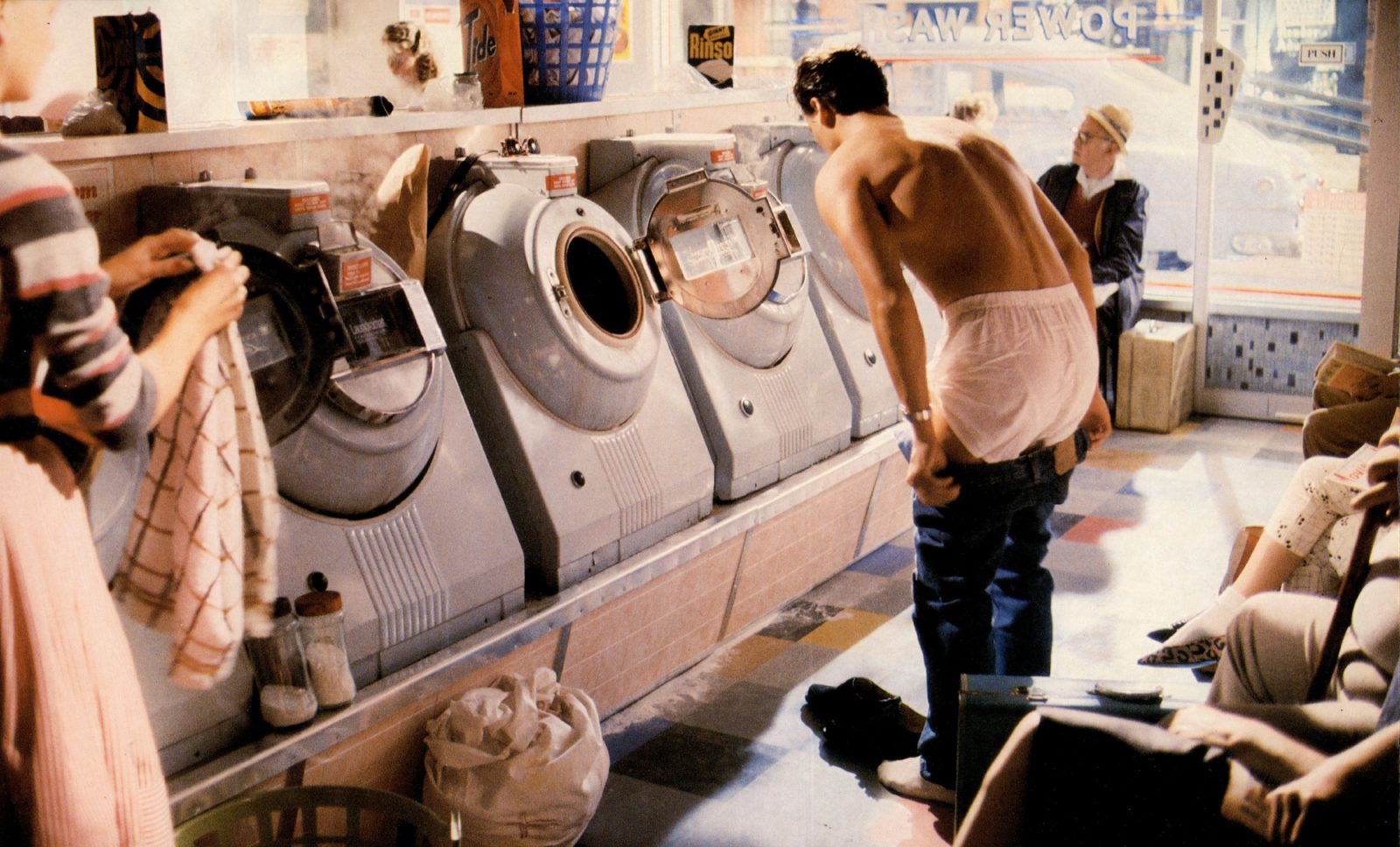
On Boxing Day 1985, a young man walked into an American launderette, took off almost everything he was wearing, put his jeans in a machine and sat down to wait. Levi’s “Launderette” ran for the first time that evening, made by Bartle Bogle Hegarty for a 112 year old product that had almost stopped selling. Within two years Levi’s 501 sales in the UK were reported at twenty times their 1984 level. Our take: the best-argued fashion advertisement ever made in Britain, and the moment the music industry learned what a 60 second slot was worth.
BBH won the Levi’s account in 1982 and inherited a brand in genuine trouble. Denim had gone from generational uniform to something the market believed might disappear entirely. “People used to talk about the doomsday scenario when jeans would go completely out of fashion,” John Hegarty told Marketing Week. “They were a phenomena that had almost gone.”
The British problem was sharper than the global one. Post-punk had fractured youth culture into New Romantics, soulboys, B-boys and Perry boys, and almost none of those uniforms included jeans. The charts were domestic, the clothes were British, and American workwear read as neither aspirational nor current. Hegarty’s summary is blunt: nobody thought anything coming out of America was interesting.
BBH’s first three campaigns, “Rivets” in 1982, “Stitching” in 1983 and “Airport” in 1984, argued the product and the provenance. They lifted the brand’s standing and, in Hegarty’s own words, hardly sold a pair of jeans. The 501, launched in 1873 with its button fly and shrink-to-fit finish, had suffered worse than anything else in the range.
The relaunch was built on research, not instinct. Levi’s used Censydiam, an Ipsos motivational tool it had part-funded alongside advertisers including Coca-Cola, to understand what people actually wanted from the category. Gie Van Cauteren, then marketing services manager at Levi Strauss, says it surfaced two things: a common product with a genuine speciality, and a strong appetite for identity among the people buying it.
Hegarty’s leap was to make “original” mean something a teenager could use. Being the first jean is a fact nobody cares about; behaving originally is an invitation. “So we said you are original but in my mind it was about original behaviour,” he told Marketing Week. The film then had to demonstrate three things at once: the silhouette, the button fly, and a young man doing something slightly outrageous without appearing to try.
The setting solved all three. A quasi-1950s American launderette places the jeans in the mythic period the research pointed to, and stripping to wash them is both product demonstration and provocation. “Kamen comes in and you see the product, the silhouette as they called it, from all angles,” Hegarty says. “It was a catwalk without it looking like a catwalk.”
Roger Lyons directs it as a single sustained entrance. The launderette door opens on the first bar of “I Heard It Through the Grapevine”, and the cut rate stays locked to the bass line for the whole film, so the striptease reads as rhythm rather than event. The onlookers do the reacting, which lets Nick Kamen play the entire thing without a flicker of self-consciousness.
Kamen was not a jobbing model. Ray Petri had put him on the cover of The Face in 1984 in a ski hat, lipstick and aviators, and the Buffalo styling movement had already made him a recognisable face to exactly the audience Levi’s needed. He is credited by Levi Strauss & Co with sending the shrink-to-fit jean’s popularity vertical across Europe. He died on 4 May 2021, aged 59, and the BBC led its obituary with the advert.
The single most consequential note came from the regulator. The British Advertising Clearance Centre objected to the original script, in which Kamen strips to Y-fronts, so the wardrobe changed to boxer shorts. Boxer short sales rose accordingly. It is the rare case of a clearance body improving a commercial, since boxers are looser, more American and far more in keeping with the period than briefs would have been.
The music was not what viewers assumed either. Motown and Atlantic refused to license the original recordings, so both “Grapevine” and Sam Cooke’s “Wonderful World”, used in the companion spot “Bath”, were re-recorded as session versions for the films. Hegarty’s account of what happened next is one of the best short lessons in the industry.
The record companies wouldn’t let us use the originals. They were re-recorded. The re-issued tracks were hits and then they came back and said “do you want to use the originals?” and we said “too late, we are done”.
Sir John Hegarty, Marketing Week
The sales effect is the most quoted number in British advertising and it holds up. Marketing Week reports 501 sales up 800% to the point where demand outstripped supply, and The Drum records sales by 1987 running at twenty times the 1984 level. Van Cauteren’s summary of the period is that a business in crisis was number one again by the end of the decade. Note that this is a relaunch from a very low base, which is what makes an 800% figure possible at all.
There is independent effectiveness evidence too, which is rarer for work of this vintage than people assume. The campaign was written up for the IPA Effectiveness Awards in 1988, where BBH took a Commendation for Levi Strauss UK. The paper records a return to profitability by the end of 1987 and, usefully, a natural control: the campaign worked in the UK, Italy and Germany, and results diverged in France, where it did not run. That last detail is what separates an effectiveness case from a sales anecdote.
The chart effect was equally real. The reissued Marvin Gaye original returned to the UK singles chart and reached number eight, its first appearance there since 1968, and the Sam Cooke track was also a top ten hit. Kamen himself charted at number five in 1986 with “Each Time You Break My Heart”, written and produced by Madonna and Stephen Bray. Six further songs from later Levi’s commercials went on to re-enter the UK top ten, a pattern Cadbury’s “Gorilla” would exploit again two decades later.
“Launderette” set the shape of Levi’s advertising for more than a decade and the shape of music-led advertising for far longer. It placed sixth in Channel 4’s “The 100 Greatest TV Ads” in 2000, fourth in Kantar’s 2019 study of the most iconic UK ads of the previous 60 years, and twenty fifth in The Drum’s 2022 global ranking of the best ads ever. Very little British work appears on all three lists, and we have weighed it against the rest in our ranking of the best advertising campaigns.
The uncomfortable part of the legacy is the copying. Within five years, licensing a 1960s soul record over a slow-motion good-looking person had become a category default, and most of the imitations skipped the bit that mattered. BBH had a product demonstration hidden inside the seduction: the fly, the fit, the shrink-to-fit wash. Take that out and you are left with a mood board and a sync fee.
“Launderette” is the rare piece of famous work with the paperwork to match the mythology, an IPA-documented turnaround dressed as 60 seconds of Motown and bare legs. It is marked down slightly on idea, because the strategic thought is a very well executed revival rather than a new proposition, and on bravery, because the risk was fashionable rather than genuinely dangerous. Everything else is close to the ceiling: the craft has not aged, the effectiveness is independently evidenced, and the format ran for another decade without fatigue. Forty years on it is still the reference every denim brief is quietly written against, and you can see how we weigh work like this on our scoring page.

He plans, buys and reviews advertising for a living, and helps score campaigns on the site against the same five Crown Score criteria alongside other authors and contributors.
73/100One photograph of Heinz Beanz on two biscuits, no paid media, a day of brand replies and a debate in the House of Commons. Frank PR's Beanz on Bix, reviewed.
 79/100
BMP DDB gave the jokes to Rowan Atkinson and the product line to his assistant. Seventeen films, nine British Arrows, an IPA Gold and a cinema franchise later, a full review.
 75/100
The ASA did not ban Iceland's 2018 Christmas film. Clearcast declined to clear it because Greenpeace made it. The difference is the whole story, and it handed Iceland 70 million views.