What makes an advertising slogan work, and why most of them do not
Distinctiveness, brand linkage, longevity and truth. Four tests that separate a slogan from a positioning statement, with the lines that passed and the famous ones that were thrown away.
7 min read
Frances Gerety wrote “A Diamond Is Forever” for N.W. Ayer & Son in 1947, and it has been on De Beers advertising ever since. In 2000, Advertising Age named it the best advertising slogan of the twentieth century. That is seventy-nine years of service from four words, which is a longer run than most brands, most agencies and most product categories manage.
Against that, consider the slogan on your own brand’s current deck. It probably arrived in the last three years, it probably says something about journeys or possibility, and it will probably be replaced by whoever takes the marketing director’s chair next. Most advertising slogans do not work, and the reasons they fail are consistent enough to be tested for in advance.
Four tests, in order of difficulty
A working slogan has to pass four things. It has to be distinctive, meaning nobody else could plausibly say it. It has to carry brand linkage, meaning the person who remembers the line also remembers whose line it is. It has to survive long enough to be learned. And it has to be true, because a line the product cannot back up becomes a liability the moment anyone tests it.
Almost every slogan passes one of these. Very few pass all four. The failures below are not failures of writing, and several were written by exceptionally good copywriters. They are failures of one specific test, and it is usually a different one each time.
Test one: could a competitor say it tomorrow
This is the test that kills the most work, and it is the easiest one to run. Take the line, put a rival’s logo under it and see whether anything breaks. If nothing breaks, you have written a category truth, not a slogan.
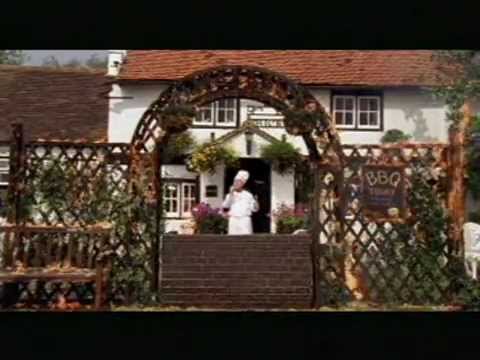
Ronseal’s “Does exactly what it says on the tin” survives the test because the joke only works for a company whose product is literally described on a tin. Liz Whiston and Dave Shelton wrote it at HHCL for a 1994 campaign for Quick Drying Woodstain, and it entered general English so completely that people who have never bought woodstain use it in meetings. That is the ceiling for this format: the line escaped the category entirely and still drags the brand with it.
Compare the standard shape of a financial services line written in the last decade: an abstract noun, a possessive pronoun and a promise about the future. Every competitor in the sector could sign it, which is why lines built that way cost a fortune to establish and are forgotten within a year of the spend stopping.
Test two: does it drag the brand name with it
The best-solved version of this problem is to put the brand inside the line. Maurice Drake, head of copy at Young & Rubicam, took his team to a Camden pub in 1967 to crack a Heinz brief and came back with “Beanz Meanz Heinz”, later voted into the industry’s slogan hall of fame. It is not possible to remember the line without remembering the brand, because the brand is the punchline and the spelling of the first word only makes sense because of it.
Specsavers does the same job with a different mechanism: the line is a punishment for not using the brand, so the brand is the payoff of every joke. We have written about how that structure holds up over two decades in our review of the Specsavers campaign.
Where brand linkage fails, the spend subsidises the category and often the market leader inside it. This is the quiet reason abstract lines are expensive: you are paying to teach people a sentiment, and sentiment does not carry a logo home.
Test three: will it survive the next marketing director
Longevity is not a property of the words. It is a property of the organisation, and this is where most good lines die. “Happiness is a cigar called Hamlet” ran from 1966 until the UK banned tobacco advertising on television in 1991, then came back in cinemas until 1999. Nobody woke up and decided the line needed refreshing, because the format kept generating new films.
Carlsberg shows the other outcome. Tony Bodinetz wrote “Probably the best lager in the world” at KMP in 1973, Orson Welles read it, and it worked in market after market for nearly forty years. In 2011 Carlsberg replaced it with “That calls for a Carlsberg” across 140 markets, which is a line that fails test one and that nobody now quotes in a pub.
Coca-Cola runs the extreme version of this behaviour. Since 2000 the company has cycled through “Life tastes good” in 2001, “The Coke side of life” in 2006, “Open Happiness” in 2009, “Taste the Feeling” in 2016, “Real Magic” in 2021 and “Recipe for Magic” in 2023. Six global lines in twenty-two years. The brand assets people actually recognise, the contour bottle, the red, the Spencerian script, have not changed once in that period, and it is not a coincidence that those are the assets nobody is asked to justify at a quarterly review.
Test four: is it true, and can the company keep being true
Paula Green wrote “We Try Harder” for Avis at Doyle Dane Bernbach in 1962, and it worked because it was an argument rather than a boast. Avis was number two to Hertz, admitted it, and turned the admission into a promise about service. Within a year the company had converted a $3.2m loss into a $1.2m profit, its first in thirteen years.
The line lasted fifty years and then failed the organisational test rather than the truth test. In 2012 Avis in the US dropped it for “It’s Your Space”, written by Leo Burnett. Avis Europe’s then interim marketing director Sally Balcombe fought to keep the old line, which tells you the argument inside the building was about newness rather than performance.
Truth can also become inconvenient in ways nobody planned for. KFC’s “Finger Lickin’ Good” dates from 1956 and is anchored in a physical action, which is exactly why the brand had to suspend it in August 2020 when licking your fingers stopped being an appealing image. A line tied to a real behaviour is stronger than an abstraction, right up until the behaviour goes out of fashion.
The instructive failures
KFC’s own history is the cleanest case study in throwing away an asset and buying it back. Having built one of the best-known slogans of the twentieth century, the company replaced it with “Follow your taste” from 2006, then “So good” from 2011, before returning to “Finger Lickin’ Good” in 2015. Nine years of spend to arrive back at the line it already owned.
L’Oréal shows a subtler decay. Ilon Specht wrote “Because I’m worth it” at McCann in 1973, and its power is entirely in the first person: it is a woman’s line, not a brand’s. The company softened it to “Because you’re worth it” in the mid-2000s and then to “Because we’re worth it” in late 2009. Each edit moves the speaker further from the customer and closer to the boardroom, and the last version means almost nothing.
Nike is the counterexample that proves how rare all of this is. Dan Wieden wrote “Just Do It” in 1988 at Wieden+Kennedy, and between 1988 and 1998 Nike’s North American sport-shoe share went from 18% to 43% while worldwide sales rose from $877m to $9.2bn. The line did not do that on its own. It survived long enough to be there while everything else did.
Why most of them do not work
Strip out the individual stories and the pattern is dull. Most slogans are written to summarise a brand platform for an internal audience, then presented to the public as though they were a piece of advertising. A summary is not a slogan. It has no argument, no joke, no name in it and nothing a stranger would repeat.
The second reason is churn. A line needs years of repetition before the public has learned it, and the average marketing director’s tenure is shorter than that, so the asset is destroyed before it has finished being built. If you want a comparison with how we weigh longevity when scoring campaigns, see how we score.
A working checklist
Put a competitor’s logo under the line. If it still reads as a plausible promise, it is not a slogan.
Get the brand name inside the line, or inside the mechanism, so the memory cannot detach from the owner.
Write a line that generates films rather than one that describes the brand. Ronseal, Hamlet and Specsavers each produced hundreds of executions from a single sentence.
Check it survives being said out loud by a customer. A line nobody would repeat in a pub is a positioning statement in fancy dress.
Make it something the company must keep doing. “We try harder” only worked because being second was a fact.
Never change person or tense to broaden appeal. “I” is stronger than “you”, and both are stronger than “we”.
Set a minimum term before launch and write it into the plan, so replacing the line requires an argument rather than a new arrival.
If you already own a famous line, the strategic options are to keep it or to keep it. KFC spent nine years learning that.
Max Rottier
He plans, buys and reviews advertising for a living, and helps score campaigns on the site against the same five Crown Score criteria alongside other authors and contributors.
A character you invent is a freehold asset; a celebrity is a rental. The evidence on fluent devices, the twelve points of share of voice most brands leave on the table, and the mascots that failed.
A track can carry a film, move a record to number one and date a campaign inside a quarter. What sync and master licences actually cover, roughly what they cost, and where brands get burned.
How to get into advertising in 2026: the roles, whether you need a degree, the free schools and apprenticeships that still work, what graduate schemes are left, and what the jobs pay.
The Ad Ranking letter
One verdict a week. No press releases.
The campaign worth studying, the ASA ruling worth knowing, and the number nobody else reported. Every Thursday.
One email a week. Unsubscribe in one click. We never share your address.