Brand mascots: why a made-up character outperforms a celebrity
A character you invent is a freehold asset; a celebrity is a rental. The evidence on fluent devices, the twelve points of share of voice most brands leave on the table, and the mascots that failed.
7 min read
The most successful advertising character in history is a pile of tyres with a face. O’Galop drew Bibendum for Michelin in 1898, adapting a poster he had originally made for a Munich brewery, and the figure is now one of the oldest trademarks still in active use. Michelin puts recognition of the character at around 90% of the world’s population.
No living person has ever done that for a brand, and no living person could. A celebrity’s fame is rented, non-exclusive and revocable. A made-up character is a freehold asset, and the evidence on how those assets behave is better than most marketers realise.
What a mascot actually is on the balance sheet
The useful frame comes from the Ehrenberg-Bass Institute, whose work on distinctive brand assets grades any recurring element of a brand’s advertising on two axes. Fame is the proportion of category buyers who link the asset to your brand. Uniqueness is the proportion who link it to nobody else. An asset that scores high on both can carry the brand on its own, which is why a logo-free Michelin poster still sells tyres.
A character is unusually good at reaching that corner of the grid because it is invented, so uniqueness starts at 100% and only erodes if someone copies you. A colour, a font or a piece of music all start life shared with somebody. The character is the only asset class you own outright on day one.
The industry term for a character used this way, appearing campaign after campaign as the recognisable engine of the advertising, is a fluent device. It is not a synonym for mascot. A mascot on packaging is decoration; a fluent device is the thing that makes the next thirty seconds identifiable before the logo appears.
The evidence, and how thin the field is
System1’s analysis of its Ad Ratings database counted 72 fluent device characters on British television from July 2017, and found that only about 7% of brands used one. Campaigns that did were more likely to report profit gain, market share gain and the ability to charge a price premium. System1 puts the media value of running a fluent device at roughly the equivalent of an extra twelve points of share of voice.
Twelve points of share of voice is a large number. In most categories it is the difference between being the challenger and being the leader, and it is available to any brand willing to commit to a character for long enough to make it familiar. The fact that 93% of brands do not is the single clearest arbitrage in advertising.
The catch is the commitment. System1’s own finding was that even brands with a successful television character were reluctant to use it in other media, which defeats the purpose. An asset that only exists in the thirty-second film is not fluent, it is a recurring guest.
Celebrity versus character, honestly
Celebrities are not useless, and pretending otherwise is why this argument usually loses in the room. System1’s Super Bowl analysis found 49% of 2024 ads used a celebrity and that those ads averaged 2.8 Stars against a US average of 2.4 that year, with particularly strong short-term activation scores. If your problem is a single quarter, a famous face is a legitimate instrument.
The picture reverses over time. Looking at long-running campaigns since 1998, System1 found brand-owned characters outperform celebrities in the long term, which is exactly what the distinctive assets model predicts: the character accumulates linkage to your brand every time it appears, and the celebrity accumulates linkage to themselves.
Then there is the risk you cannot price. In October 2022 Adidas terminated its Yeezy partnership with Ye after his antisemitic remarks, and the company subsequently guided that not selling the remaining stock would cost it around €1.2bn in revenue and roughly €500m in operating profit. Bibendum has never said anything on a podcast.
The characters that built businesses
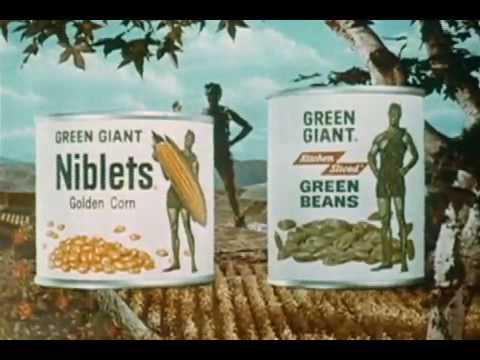
Leo Burnett built an agency on this. In 1935 he took a scowling caveman in a bearskin, put him in leaves, gave him a smile and added a word: the Jolly Green Giant. By 1999 Advertising Age ranked him the third greatest advertising icon of the century, behind only the Marlboro Man and Ronald McDonald, and the valley in Minnesota where the peas grow is still named after him.
The same agency created Tony the Tiger in 1952, drawn by Eugene Kolkey. Thurl Ravenscroft then voiced him for roughly five decades until his death in 2005, which is the underrated part of the story. Consistency of performance is as much of the asset as consistency of design, and brands that recast casually give away the half of the character that lives in the ear.
Failure mode one: the character remembers the wrong brand
Fame without uniqueness is worse than no asset at all, because you are paying to advertise a competitor. The Energizer Bunny, created by DDB Needham in 1988, was explicitly conceived as a parody of the Duracell bunny that had run since 1973 and whose trademark had lapsed. Duracell has claimed that 40% of its customers thought the campaign was promoting Duracell.
Whether that figure stands up or not, the mechanism is real and it is the most common way character work fails. If your device is a variation on the category’s existing visual language, a talking animal in an insurance ad, a family in a supermarket ad, a cartoon in a kids’ cereal ad, you will build category memory and the market leader will collect it.
Failure mode two: the business underneath
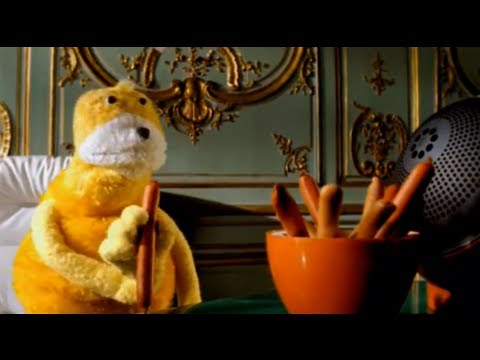
Mother created Monkey and Al for ITV Digital in 2001, with Johnny Vegas playing Al and Ben Miller voicing the knitted monkey. The campaign was so loved that a secondary market appeared: knitted Monkeys came free with a subscription, and originals were fetching hundreds of pounds on eBay. It is one of the most affectionately remembered campaigns in British television advertising.
ITV Digital went into administration on 27 March 2002 and into liquidation that October with debts of £1.25bn. It had around a million subscribers against Sky Digital’s 5.7m. Monkey survived, reappearing for PG Tips in 2007, which is a useful reminder that the character was never the problem and was never going to be the solution either.
Failure mode three: killing the thing you own
In January 2020 Planters and VaynerMedia killed Mr Peanut, and used the Super Bowl to replace him with a toddler version called Baby Nut. Baby Nut became a 21-year-old “Peanut Jr” that August and reverted to adulthood in February 2021. Three identities in thirteen months, for an asset that had been stable for over a century.
The stunt got attention, which was the brief, and destroyed continuity, which was the asset. If a character is worth twelve points of share of voice, spending it on a fortnight of social media chatter is a poor trade.
The one that survived being hated
Gio Compario, the operatic tenor played by Wynne Evans, arrived in August 2009 and was voted Britain’s most irritating advertisement in 2015. GoCompare’s response in 2012 was not to retire him but to build a campaign around silencing him. The full argument is in our review of the Gio Compario campaign.
The lesson for anyone building a character is narrow but important. A device strong enough to annoy people is a device that has achieved fame and uniqueness, which is the hard part. The correct response to annoyance is to change the story, not the device.
How to build one that works
Invent, do not hire. A character you own cannot renegotiate, retire or say something career-ending, and every appearance compounds into your brand rather than someone else’s.
Test uniqueness before fame. If a rival could plausibly run the same character, you are building category memory and the leader will bank it.
Give it a job in the story, not a cameo at the end. The character should be the reason the film happens, which is what makes the format renewable.
Lock the voice as tightly as the design. Ravenscroft did Tony for five decades, and audiences notice a recast long before they notice a redraw.
Run it everywhere: packaging, retail, social, sponsorship idents, customer service. Most brands leave the asset stranded in television, which is where its value leaks away.
Commit to a decade before launch. A character needs enough repetition to become shorthand, and nothing about the first eighteen months will tell you whether it is working.
Change the situations, never the character. GoCompare kept the tenor and changed the joke, and that is why the tenor is still there.
Do not stage a death for headlines. Continuity is the whole asset, and Planters spent a hundred years of it in a single Super Bowl.
Remember that no character can rescue a broken proposition. Monkey was beloved and ITV Digital still went under with £1.25bn of debt.
Max Rottier
He plans, buys and reviews advertising for a living, and helps score campaigns on the site against the same five Crown Score criteria alongside other authors and contributors.
Distinctiveness, brand linkage, longevity and truth. Four tests that separate a slogan from a positioning statement, with the lines that passed and the famous ones that were thrown away.
A track can carry a film, move a record to number one and date a campaign inside a quarter. What sync and master licences actually cover, roughly what they cost, and where brands get burned.
How to get into advertising in 2026: the roles, whether you need a degree, the free schools and apprenticeships that still work, what graduate schemes are left, and what the jobs pay.
The Ad Ranking letter
One verdict a week. No press releases.
The campaign worth studying, the ASA ruling worth knowing, and the number nobody else reported. Every Thursday.
One email a week. Unsubscribe in one click. We never share your address.