 63/100
Bisto ‘Aah Nights’: how a 1919 catchphrase became a night of the week
McCann Erickson took the Bisto Kids' hundred-year-old 'Aah' and turned it into a booked appointment. A review of the Bisto advert that sold an occasion, not gravy.

Close to flawless as craft and close to unproven as safety work, which is exactly why the industry has quoted its results for over a decade without ever auditing them.
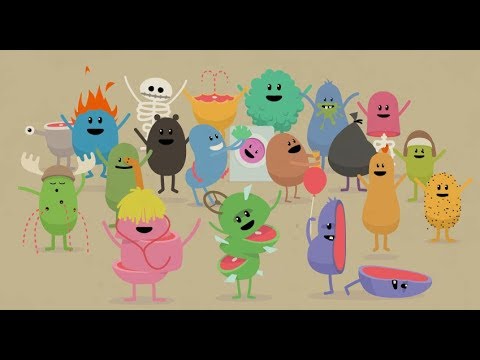
A pale blue bean sets fire to its own hair. Another eats a two-week-old packet of medicine. A parade of cartoon idiots dies in three minutes to a folk-pop tune sweet enough for a nursery, and only the last three deaths involve a train. “Dumb Ways to Die” went public on 16 November 2012 and became the most awarded campaign in the history of Cannes Lions.
Our take: a near-perfect piece of craft attached to a safety claim that has never been properly proven, which makes it the most interesting effectiveness argument in modern advertising.
Metro Trains had safety signage and safety instructions, but nothing designed to change behaviour. Its marketing manager, Chloe Alsop, told Campaign in 2013 that the insight came from talking to front line staff and reading the incident reports. The same thing kept surfacing: it is genuinely hard to get hit by a train. Almost every incident required someone to do something careless first.
The target was young people, the group least receptive to public safety advertising and most likely to take a shortcut across a level crossing. Alsop was clear about what she did not want: no shock, no gore, no offence, no tugging at heart strings. That rules out roughly ninety per cent of the road and rail safety canon in one sentence.
John Mescall, executive creative director at McCann Melbourne, framed the brief as engaging an audience that does not want to hear a safety message at all. The category convention is fear. If fear was off the table, the only remaining lever was to make the message something people would voluntarily pass to their friends.
The structural trick is the whole campaign, and it is a piece of writing rather than a piece of design. The song works through a long list of absurd deaths that have nothing to do with railways: poking a bear with a stick, eating out-of-date medicine, hiding in a clothes dryer. Only at the end does it arrive at standing too close to the platform edge, driving around a level crossing boom gate and taking a shortcut across the tracks. Those, the lyric says, are the dumbest ways to die.
The rhetorical move is to reclassify rail deaths from tragedy to stupidity. Fear appeals tell a young person that trains are dangerous, which they already know and have discounted. This tells them their friends will think they are an idiot, which is a far more powerful deterrent at seventeen. Alsop put it plainly: kids are not scared of dying, but they definitely do not want their friends to think they are stupid.
Ollie McGill of The Cat Empire wrote and produced the music, and Emily Lubitz of Tinpan Orange sings it in a register somewhere between a lullaby and a nursery rhyme. The gap between that voice and the content is the entire joke, and it is the reason the track works detached from the picture. It was released as a single under the invented act name Tangerine Kitty and charted in its own right, reaching number 38 on the UK indie chart and number nine on the Ultratip listing in Flanders.
Julian Frost’s animation is doing something harder than it looks. The beans have no faces to speak of and no dialogue, so all the comedy has to be carried by timing and by the flat, friendly palette that makes each death land as a gag rather than an image. Frost also keeps the deaths escalating in absurdity so the final rail sequence arrives as a tonal drop. Alsop’s own favourite detail is the skeleton that cannot spin.
The campaign was not only a film. It ran in newspapers, on local radio, across the Metro network’s own outdoor estate and on Tumblr, and became an iOS game in May 2013. That breadth is why it won an Integrated Grand Prix rather than a Film one.
The attention numbers are beyond argument. The video has passed 350 million YouTube views, it had 3.2 million Facebook shares and more than 100,000 retweets by June 2013, and McCann estimated A$50m of global media value and over 700 media stories within a fortnight of launch. The song charted on iTunes in 28 countries. Metro Trains says more than 44,000 people in Melbourne pledged not to do dumb things around trains in the four months after launch.
The safety numbers are where you should slow down. In February 2013 Metro told Mumbrella that the campaign had produced a 20% drop in unsafe behaviour at stations against the annual average. A week later Stephen Cauchi reported in The Age that Metro was claiming near misses had fallen from 13.29 per million kilometres in November 2011 to January 2012, to 9.17 per million kilometres in the same three months a year later. That is the roughly 30% reduction repeated in almost every case study since.
The figure is a single three-month window compared against the same window the year before, self-reported by the operator, with no control and no published isolation of other variables such as enforcement, infrastructure works or seasonality. It measures near misses, which are recorded incidents of unsafe behaviour, not deaths. For a campaign this decorated, there is no published, independently judged effectiveness paper of the kind the IPA or the Effies demand.
Trade scepticism arrived fast. Writing in Mumbrella on 11 February 2013, Karalee Evans, a former employee of Victoria’s Department of Infrastructure, urged readers to apply critical thinking to the safety claims and described the 20% figure as social media bullshit. Earlier, on 25 November 2012, Susie O’Brien had argued in the Herald Sun that the work trivialised serious injuries and served the advertisers’ egos more than it served rail safety.
There is a separate and heavier criticism about suicide, which accounts for a substantial share of rail trauma and which the campaign does not address at all. Framing every death on the tracks as an act of stupidity leaves no room for the deaths that are not. Whether that is a flaw in the work or a limitation of its brief is a fair question, and Metro’s brief was explicitly about careless behaviour. Readers can weigh the claim and the counter-claim themselves: both are on the record, and neither has been settled.
At Cannes in June 2013 it took the Integrated Grand Prix and, in total, five Grand Prix, 18 Gold Lions, three Silver and two Bronze, the largest haul any campaign had taken in the festival’s sixty year history. It added seven Webby Awards, three Siren Awards including the Gold, and the Grand Trophy at the New York Festivals. In February 2013 Russia’s Roskomnadzor censored the video, on the grounds that its lyrics constituted an incitement to self-harm.
The most telling epilogue is commercial. The beans outgrew the railway entirely, spawning three sequel games, and in October 2021 Metro Trains sold the franchise to the Australian studio PlaySide for A$2.25m. A transport operator’s safety campaign became an asset with a resale value, which is not something the brief asked for.
On idea and craft this is as good as public service advertising has ever been, and the bravery of selling a comedy song about death to a state rail operator should not be underrated. The problem is the fourth criterion. Fame is not a safety outcome, the one number everybody quotes is a three-month self-reported comparison that a former state infrastructure employee publicly called nonsense within days, and nobody has since published the audit that would settle it. Judged by our scoring criteria that costs it dearly on effectiveness, and it is the clearest case in our best campaigns ranking of work the industry loved more than it examined.

He plans, buys and reviews advertising for a living, and helps score campaigns on the site against the same five Crown Score criteria alongside other authors and contributors.
63/100McCann Erickson took the Bisto Kids' hundred-year-old 'Aah' and turned it into a booked appointment. A review of the Bisto advert that sold an occasion, not gravy.
 73/100
One photograph of Heinz Beanz on two biscuits, no paid media, a day of brand replies and a debate in the House of Commons. Frank PR's Beanz on Bix, reviewed.
 79/100
BMP DDB gave the jokes to Rowan Atkinson and the product line to his assistant. Seventeen films, nine British Arrows, an IPA Gold and a cinema franchise later, a full review.