 63/100
Bisto ‘Aah Nights’: how a 1919 catchphrase became a night of the week
McCann Erickson took the Bisto Kids' hundred-year-old 'Aah' and turned it into a booked appointment. A review of the Bisto advert that sold an occasion, not gravy.

A modest creative idea executed with unusual discipline and backed by a media plan that understood the joke, with off-trade sales up more than 18 per cent in year one and enjoyment scores far above the beer norm, marked down for bravery because dropping the cut-out was the only genuine risk taken.
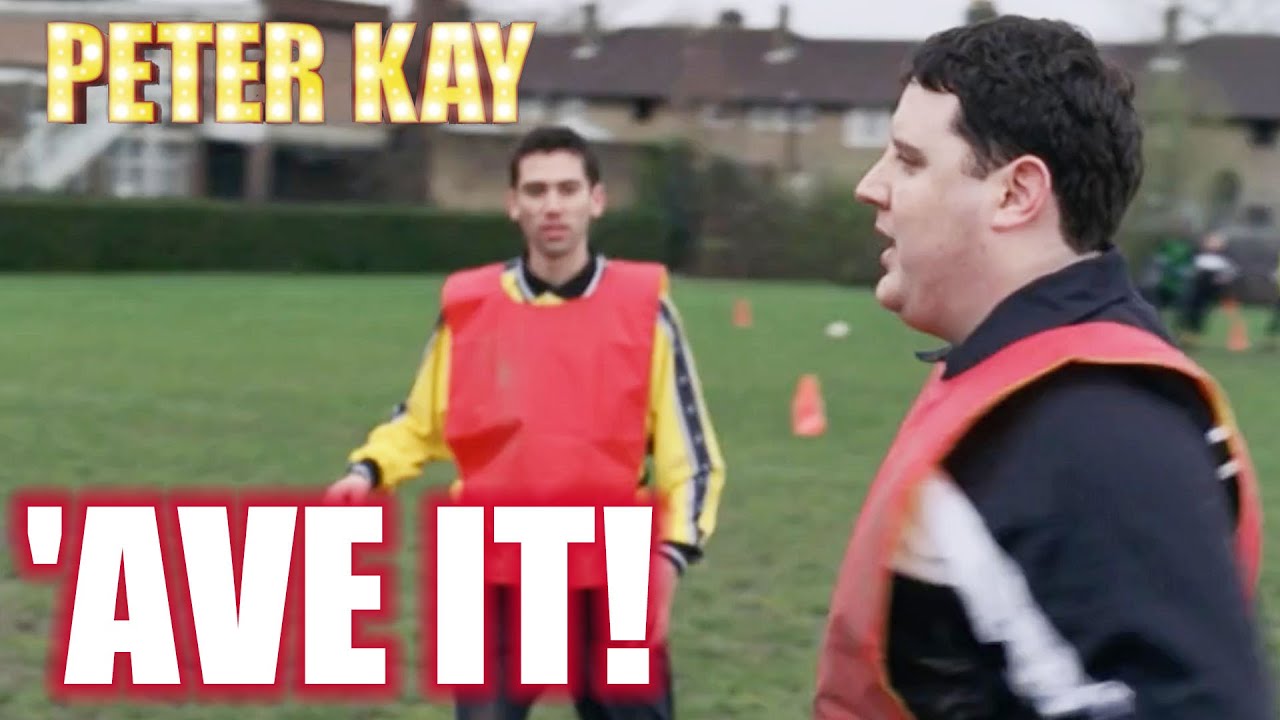
A man in a replica shirt takes a football on his thigh, loses control of it immediately, boots it through a neighbour’s greenhouse and bellows “‘ave it” at the wreckage. That is the whole idea. John Smith’s replaced a cardboard cut-out with Peter Kay in May 2002, and within a World Cup summer the brand had given the country two catchphrases it did not ask for and could not stop repeating. Our take: the most efficient piece of comedy casting in modern British advertising, and proof that a brand platform is worth more than a joke.
John Smith’s did not arrive at 2002 in trouble. The “no-nonsense man”, a cardboard cut-out who had fronted television, poster and retail work since 1997, had pushed the brand into top spot in the ale market. Campaign, naming the relaunch its Campaign of the Year in January 2003, was blunt about the risk: dumping a device that was winning was a brave move.
The brand director John Botia set the brief that made the difference. Keep the core “no nonsense” idea, but refresh the brand values in a way consumers could actually relate to. That is a positioning brief rather than an advertising brief, and it is the reason the campaign survived a decade rather than a season.
The problem with a cardboard cut-out is that it can only say things. It cannot do anything, and it certainly cannot be misunderstood in an interesting way. Ale in 2002 needed a person, because the category’s whole claim was ordinariness and ordinariness needs a face.
Paul Silburn, then TBWA/London’s deputy creative director and later its senior creative partner, came up with the campaign concept. The thought is small enough to fit on a beer mat. Take the brand’s plain-speaking claim, put it in the mouth of a man with no aptitude and total conviction, and let the gap between the two do the work.
The launch pair were “monsters” and “ball skills”. Kay was not yet a national fixture in May 2002, which is exactly why the casting reads as a real person rather than a celebrity endorsement. The films are shot flat and cheap looking, in gardens and living rooms, with Danny Kleinman directing dialogue rather than spectacle.
“‘Ave it” was not written. Kay coined it in “ball skills”, the second execution, and the agency kept it. That is the single most valuable decision in the campaign, and it was a decision to leave something in rather than to think something up.
The production credits are a first-division line-up spent on deliberately unglamorous material: Kleinman directing, Denis Crossan shooting, Steve Gandolfi cutting, The Mill on post. The discipline is in the framing. Nothing is heightened, nothing winks, and the punchline is almost always allowed to land in a wide shot with the camera still.
Then came “diving”, which aired during the 2002 Commonwealth Games in Manchester. Kay, in a Great Britain tracksuit, climbs the top board in a diving final and performs a bomb. A commentator calls it “top bombing” and the country had a second catchphrase inside three months.
The media plan was doing real work here. Media-Vest weighted the campaign heavily into sports programming and added sponsorship packages across radio and television, including Sky’s The SP, so that the films arrived in the context they were parodying. Placing a bad diver inside coverage of good divers is a media buy, not a script.
Not everything cleared. A film called “babies”, in which Kay explains how babies are made in unambiguous terms, failed to get past the television regulators and was released online instead, where it reached number two on the Lycos viral chart and picked up further coverage on Patrick Kielty’s late-night chat show.
It is worth being precise about who was doing the blocking, because the campaign predates the current system. The ASA only took on television and radio advertising in 2004, when Ofcom contracted broadcast regulation out to it, as the regulator’s own history records. The “babies” decision was a clearance decision under the older broadcast regime, not a published adjudication.
The below-the-line activity attracted a different kind of legal attention. A “Just ‘ave it” programme ran through on-trade and off-trade outlets with The Sun and The Daily Telegraph as media partners, an online “No nonsense free kick” game, and hundreds of loudhailers handed out at Premiership matches. Nike threatened to sue over the title, which raised the campaign’s profile at precisely the moment a scrappy everyman platform benefited from being seen next to a corporate World Cup sponsor.
Campaign reported in January 2003 that off-trade sales, the cleaner read on public demand because on-trade volume is distorted by brewer distribution deals, were up by more than 18 per cent. ITV Media’s retrospective on the campaign puts the off-trade rise at more than 20 per cent.
The attention numbers are just as instructive. Across the five 2002 executions, Millward Brown’s enjoyment scale returned scores of between 68 and 82 per cent, with “diving” highest. The norm for beer advertising at the time was 55 per cent. Campaign also put the earned coverage at an estimated £1 million in value, which for a campaign whose media plan was built on sport is a large free extension.
The awards followed. At the 2003 Creative Circle awards the campaign took platinum and four golds, including the Ken Grimshaw memorial honour for best use of humour for the film in which Kay tries to move his still-youthful mother into an old people’s home. Silburn took the President’s Award. The judging chairman, Mike McKenna, summed up the reason.
“‘Ave it’ echoes around every playground and every council pitch in the land.”
Mike McKenna, chairman of the Creative Circle judging panel, quoted in Campaign
Kay fronted the brand from 2002 to 2005, then came back in 2010. Marketing Week reported the return in April 2010, with Kay presenting the winner’s trophy at the John Smith’s sponsored Grand National at Aintree and a new TBWA London campaign breaking around 3 May.
The reasoning given by Heineken UK’s senior brand manager Gareth Turner was that research showed the public was tired of recession, bankers, expenses scandals and windbag politicians, and was “yearning for the return to the plain-speaking, no nonsense approach to life”. That is a platform being redeployed against a new mood, which is what platforms are for. It is the same mechanism that keeps a well-built brand idea alive for decades, as our review of Guinness advertising sets out at greater length.
The wider legacy is a change in what casting is for. Before 2002, comedians in British beer advertising were mostly there to perform. Kay was there to be recognised, and the films are built so that his ordinariness, not his act, carries the brand claim.
A modest creative idea executed with unusual discipline and backed by a media plan that understood the joke, and the numbers hold up: off-trade sales up by more than 18 per cent in year one, enjoyment scores far above the beer norm, and a platform strong enough to be reactivated eight years later. It loses marks for bravery, because dropping the cut-out was the only real risk anyone took, and for ambition, because the work never tried to say anything beyond what it said in May 2002. As always, the marking is explained in how we score, and the campaign’s place among the greats is argued in our best advertising campaigns ranking.

He plans, buys and reviews advertising for a living, and helps score campaigns on the site against the same five Crown Score criteria alongside other authors and contributors.
63/100McCann Erickson took the Bisto Kids' hundred-year-old 'Aah' and turned it into a booked appointment. A review of the Bisto advert that sold an occasion, not gravy.
 73/100
One photograph of Heinz Beanz on two biscuits, no paid media, a day of brand replies and a debate in the House of Commons. Frank PR's Beanz on Bix, reviewed.
 79/100
BMP DDB gave the jokes to Rowan Atkinson and the product line to his assistant. Seventeen films, nine British Arrows, an IPA Gold and a cinema franchise later, a full review.