 63/100
Bisto ‘Aah Nights’: how a 1919 catchphrase became a night of the week
McCann Erickson took the Bisto Kids' hundred-year-old 'Aah' and turned it into a booked appointment. A review of the Bisto advert that sold an occasion, not gravy.
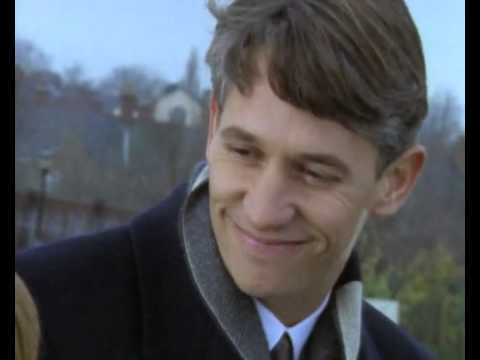

A celebrity endorsement that argued with its celebrity, repeated the trick for a decade, and has the IPA paper to prove it sold crisps.
Gary Lineker went through an entire professional football career without collecting a single booking. In 1995 an advertising agency looked at that record and decided the interesting thing to do was make him a thief. The first Walkers advert ends with the nation’s most wholesome footballer taking a packet of crisps off a small boy and walking away, and with four words on screen: no more Mr Nice Guy.
Our take: the sharpest celebrity endorsement Britain has produced, because it is the only one that bothered to argue with the celebrity.
BMP DDB won Walkers from Young & Rubicam in July 1994, and inherited a strange brief. Walkers was already the best selling crisp in Britain, but almost all of its recent growth had come from distribution rather than desire, as a Midlands brand went national on PepsiCo’s muscle. Campaign’s account of the BMP years puts the task plainly: keep growth going at the point where sales looked like plateauing.
The agency’s first attempt was a talking duck from Leicester who wins £20 in his packet and cannot find his wallet. The client lost its nerve, partly because the American parent was uneasy about pairing food with a farmyard animal. The duck did one useful thing before it was shelved: it sent the creative team, Gary Betts and Malcolm Green, back to Leicester.
In Leicester they found Gary Lineker, freshly back from finishing his playing career in Japan and, at that moment, a man with no obvious next act. He was local, he was famous, and he was about to become a broadcaster. He was also, as an endorsement asset, almost uselessly nice.
John Webster, BMP’s executive creative director, takes the credit for the move that made the campaign work. Rather than borrow Lineker’s decency, the advertising took it away from him. The crisps are so good that the most sportsmanlike man in England will rob a child to get them, and the endline, no more Mr Nice Guy, tells you exactly what has happened in case you missed it.
This is a product claim disguised as a character assassination. Every subsequent film is the same sentence rewritten: here is a situation, here is Lineker’s reputation, here is the reputation being sold for a packet of crisps. That is why the idea survives cast changes, flavour launches and three decades of media change.
It nearly did not survive its own client. PepsiCo did not find it funny and insisted BMP shoot an alternative ending in which Lineker hands the crisps back. Martin Glenn, then commercial director of Frito-Lay Europe, refused to use it.
“Welcome home” is directed by Paul Weiland, who went on to direct almost every film in the run. The sixty seconds are built as a homecoming parade, with thumbs up to fans, a kiss for a baby and a wink for a mum, so that the theft in the final ten seconds lands as a genuine reversal rather than a gag you can see coming.
Weiland’s contribution is casting direction as much as camera. Lineker was, by the director’s account, extremely nervous at first, and the films are constructed so that the performance never has to carry more than one expression at a time. The comedy is handed to the guest instead, which is why the second famous execution belongs to Paul Gascoigne.
In “Stand”, aired in January 1996, Gascoigne reaches for Lineker’s crisps, gets his hand crushed, and weeps in a direct restaging of his Italia 90 tears with Nessun Dorma over the top. “Paranoia” followed in July 1996, with Linekers disguised as a baby, a schoolgirl and a mum, closing in on a boy guarding his packet. The guest list widened from there: Ulrika Jonsson for the Lite range, then the Spice Girls, then Michael Owen, Victoria Beckham, Lennox Lewis and David Seaman.
The Spice Girls film is the high water mark of the campaign’s cheek. Shot at Shepperton and retitled “No more Mr Spice Guy”, it has Lineker reject five pop stars in favour of their crisps, and the Broadcast Advertising Clearance Centre made the agency cut a tamer ten second version for daytime because of lines like “have you scored recently?”. Campaign’s Campaign of the Week records it entering Adwatch at number two with 86% awareness, rising to 95% among 15 to 24 year olds.
Most famous campaigns are famous first and effective later, in a case study nobody checks. Walkers is the opposite. The IPA Effectiveness Awards paper “Staying loyal to Lineker”, a Silver winner in 2002 written by Abbott Mead Vickers BBDO, reports sales up 105% between 1995 and 2000 and grocery share up from 21% to 27%, achieved on a media spend that was a fraction of competitors’.
The brand numbers move with it. Walkers sales were £170m in 1991 and £300m by 1996, by which point it was Britain’s second biggest brand behind Coca-Cola, while Golden Wonder fell from £65m to £45m over the same period. By 2002, Campaign’s Great British Brands profile had Walkers at nearly £490m a year and roughly 11 million packs a day. When AMV BBDO launched Cheese and Owen in 1999, the brief referred to a claimed market share of 60%.
The first film did not test well with everyone. It drew 23 complaints to the Independent Television Commission, none of which were upheld. Twenty three complaints and a doubled market share is a trade most advertisers would take.
BMP lost the account in 1998 to Abbott Mead Vickers BBDO as part of a global Frito-Lay realignment, and the idea carried on regardless. Peter Souter wrote the Michael Owen film in which Lineker attempts murder by grand piano, wrecking ball and lorry, and Weiland directed it. Very few campaigns survive a change of agency intact, and fewer still survive it without losing a degree of nerve.
Lineker’s contract in December 2000 was worth £1.5m over five years and bound him to at least five commercials a year. In 2000 the campaign was voted ninth in Channel 4’s public poll of the 100 Greatest TV Ads. The idea even made it onto the packaging, with Salt and Lineker and later Cheese and Owen.
The reversal was eventually reversed. In February 2006 Walkers dropped the “no more Mr Nice Guy” persona for a health message about reduced saturated fat, delivered by a sombre Lineker with the line “just thought you’d like to know”. The partnership itself continued far longer than the joke did, past Lionel Messi cameos and Tear ‘n’ Share, and Lineker was still contracted as a brand ambassador when Campaign reported in 2023 that he had not appeared in a Walkers advert since 2021.
Walkers took the least interesting thing about its endorser and turned it into the only interesting thing about the advertising, then had the discipline to repeat that trick for a decade before anyone got bored, with an IPA paper to prove the till kept ringing. It scores high on legs and effectiveness because both are documented rather than claimed, and slightly lower on craft because Weiland’s films are expertly made rather than form changing. If you want to see how it sits against the rest of the canon, our ranking of the best advertising campaigns and our scoring method are the places to start, and the Cadbury Gorilla review covers the opposite strategy of the one big swing.

He plans, buys and reviews advertising for a living, and helps score campaigns on the site against the same five Crown Score criteria alongside other authors and contributors.
63/100McCann Erickson took the Bisto Kids' hundred-year-old 'Aah' and turned it into a booked appointment. A review of the Bisto advert that sold an occasion, not gravy.
 73/100
One photograph of Heinz Beanz on two biscuits, no paid media, a day of brand replies and a debate in the House of Commons. Frank PR's Beanz on Bix, reviewed.
 79/100
BMP DDB gave the jokes to Rowan Atkinson and the product line to his assistant. Seventeen films, nine British Arrows, an IPA Gold and a cinema franchise later, a full review.