 63/100
Bisto ‘Aah Nights’: how a 1919 catchphrase became a night of the week
McCann Erickson took the Bisto Kids' hundred-year-old 'Aah' and turned it into a booked appointment. A review of the Bisto advert that sold an occasion, not gravy.
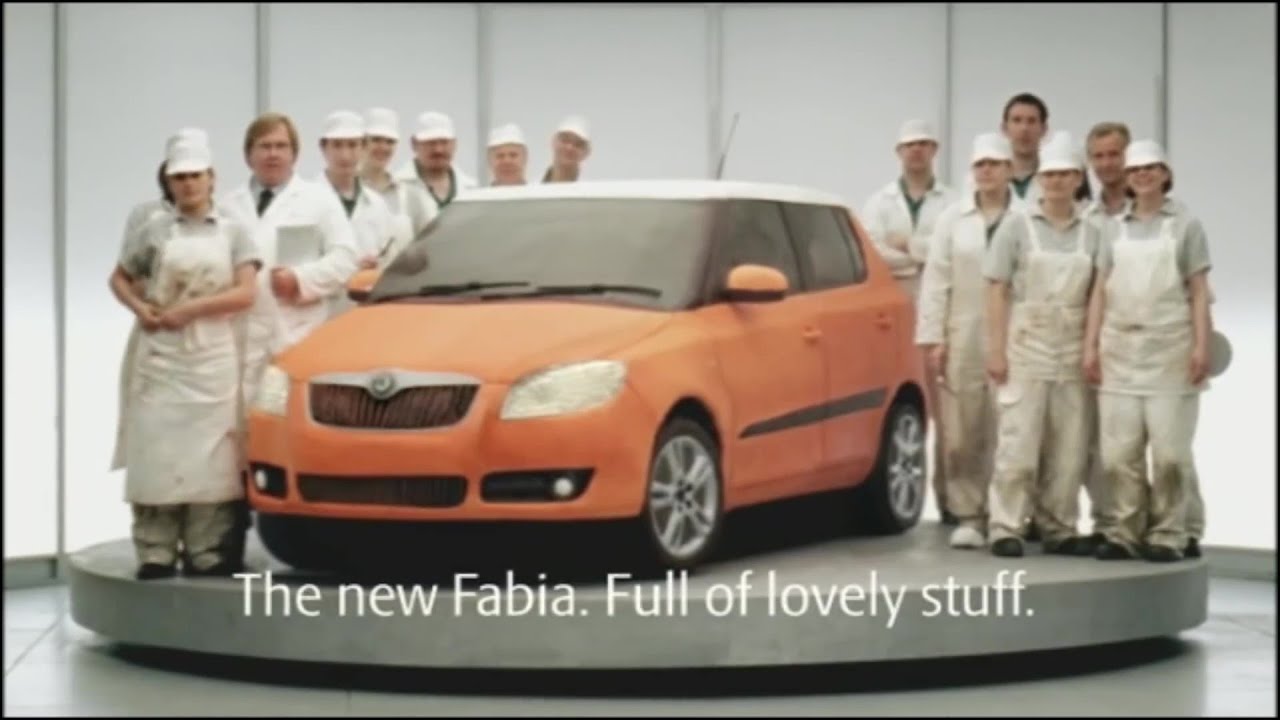

As close to perfect craft as British television advertising has produced, and it lifted Skoda's quality reputation seven points in three weeks, but no IPA paper and no attributed sales figure means the case rests on tracking rather than revenue.
A baker cracks an egg into a bowl and Julie Andrews starts singing about raindrops on roses. Sixty seconds later a team of bakers, confectioners and a bricklayer step back from a full-size Skoda Fabia built entirely out of cake, and the line comes up: “The new Fabia. Full of lovely stuff.” The real car is never shown. The client agreed to that.
Our take: “Cake” is the purest execution of a literalised proposition in British advertising, and it is why a generation of planners still say “make the metaphor real”. It also asked Skoda to spend an estimated £500,000 on an object that would be inedible within a week.
Fallon had been fixing Skoda’s reputation since the turn of the century, and the hard part was already done. The cars had been a national punchline: the 1998 Octavia, backed by Skoda’s biggest UK spend to that point, sold barely six thousand units in a year, four fifths of them to the over-45s. The agency’s answer was to name the prejudice rather than avoid it.
That campaign, “It’s a Skoda. Honest”, took a Gold at the 2002 IPA Effectiveness Awards, along with the John Bartle Award. It reported marque rejection falling from 60 per cent to 42 per cent and UK sales growing 64 per cent against an identical model mix elsewhere. By 2006 the brand had moved on to “Manufacturer of happy drivers”. The reputational emergency was over.
Then came the second-generation Fabia, which was a modest facelift rather than a new car. Laurence Green, Fallon’s planning partner, has recorded that the client’s product briefing led with a new umbrella holder. There was no rational story worth sixty seconds. So the agency stopped selling the specification and sold the feeling of a car that is nicer than it needs to be.
The thought fits in one sentence and a stranger can repeat it after a single viewing, which is the test almost nothing passes. John Allison and Chris Bovill were a new creative team at Fallon, handed the brief on their first day by the creative director Richard Flintham. Green’s account has the idea arriving over tea and cake in a café on Great Titchfield Street.
The decision that makes it work is the one that should have killed it: the finished film never shows the actual product. A client who has just spent development money on a facelift agreeing to keep the car off screen is the rarest thing in this story, rarer than the cake.
Watch the performances. Nobody mugs at the camera and nothing is played for laughs. The bakers work with the concentration of people building a car, which is the joke, and the joke is never once explained.
This is a practical build shot in camera, not a render. The chassis was Madeira sponge, the interior Battenberg, the paintwork icing and the rear lights jelly, with golden syrup standing in for engine oil. Rice Krispies gave the structure its bulk, and Glacier Mints did duty as glass. The film was shot over four days with master bakers, confectioners and a bricklayer working in real time.
The shopping list explains the scale of the gamble: 600kg of icing sugar, 440kg of margarine, 200kg of sugar, 40 jars of raspberry jam and 180 eggs, on figures reported by Campaign at the time. Chris Palmer directed through Gorgeous Enterprises, with Brian Morris as production designer, interviewed about the build by Creative Review that summer. Nothing was tested first.
We didn’t have a practice run, it was all theory until we had done it. But I’m so glad we did, and that the people in the advert were the people who did it.
Chris Palmer, director, quoted by The Drum
That is the whole argument for practical production stated by the man who had to do it. The people on screen are the people who did the work, and the film has the texture of a documentary because it partly is one. It also produced the least glamorous ending in advertising: after days under studio lights the cake was unfit to eat, and it went to a community composting project rather than to charity as planned.
The music is the other half of the craft, and Julie Andrews personally approved the use. “My Favourite Things” supplies warmth, familiarity and a list structure that does the job of a features rundown without anyone reading one out. It also removes the need for a voiceover entirely. There is no spoken copy in the film at all.
Skoda’s problem was never awareness. It was that people did not believe the cars were good, and that is precisely the number this campaign shifted. On YouGov BrandIndex tracking published in Campaign on 5 June 2007, three weeks after launch, Skoda’s reputation for quality rose seven points, from minus nine to minus two.
The supporting scores moved with it: general impression up four points, corporate reputation up four, recommend up two, and buzz from plus three to plus eight. The film also crossed into news, picked up by The Sun, the Daily Star and the Daily Mail. For a brand whose commercial problem was a quality perception, a seven point move on quality is the exact result you would have written on the brief.
The awards record is emphatic. “Cake” took a Yellow Pencil, a Graphite Pencil and four Wood Pencils in Film at D&AD in 2008, and a Gold Lion at Cannes that June. Fallon was named Agency of the Year at the British Television Advertising Awards in the same season.
What does not exist is a revenue case. There is no IPA Effectiveness paper on “Cake”: the IPA databank holds exactly two Skoda entries, the 2002 Gold and a 2018 paper with PHD Media, and neither covers this film. No Effie and no Cannes Creative Effectiveness Lion either. The evidence is brand tracking and press, which is real but is not a sales number.
Fallon returned to the format with a sequel in 2010, and Skoda went back to the cake car again in a 2022 Fabia campaign, fifteen years after the original aired. Very few sixty-second films are still being quoted by their own brand that far out. Richard Flintham, the creative director on it, had a decade earlier co-written the “Love it or hate it” line for Marmite, which makes him responsible for two of the most durable ideas in British advertising.
Its wider influence is on method rather than style. “Cake” belongs to a run of mid-2000s British work, alongside Cadbury’s “Gorilla” and Sony’s paint and bouncing balls films, that put the money into physical production instead of post. That approach is slow, expensive and unrepeatable, which is exactly why a competitor cannot answer it the following quarter. Our ranking of the best advertising campaigns is unusually crowded with work from those three years for the same reason.
“Cake” is as close to perfect craft as British television advertising has produced, a full-size edible car shot in real time with no rehearsal, and it moved the one perception Skoda needed moving, lifting quality reputation seven points within three weeks. It is marked down only on effectiveness, and not because it failed: no IPA paper was ever published on it and no sales figure has ever been publicly attributed to it, so the case rests on brand tracking and an award cabinet rather than revenue. By our scoring method that is the difference between a great advert and a proven one.

He plans, buys and reviews advertising for a living, and helps score campaigns on the site against the same five Crown Score criteria alongside other authors and contributors.
63/100McCann Erickson took the Bisto Kids' hundred-year-old 'Aah' and turned it into a booked appointment. A review of the Bisto advert that sold an occasion, not gravy.
 73/100
One photograph of Heinz Beanz on two biscuits, no paid media, a day of brand replies and a debate in the House of Commons. Frank PR's Beanz on Bix, reviewed.
 79/100
BMP DDB gave the jokes to Rowan Atkinson and the product line to his assistant. Seventeen films, nine British Arrows, an IPA Gold and a cinema franchise later, a full review.