The best Halloween adverts ever made, ranked
Twelve Halloween adverts ranked on idea, craft, bravery and evidence, from Burger King's Scary Clown Night and Tesco's Spookermarket to Heinz Tomato Blood, with verified credits.
Twenty food adverts ranked on idea, craft, bravery and evidence, from the Gold Blend couple and Coca-Cola's Hilltop to Jaffa Cakes, PG Tips and Maltesers, with verified credits.
Food is the hardest brief in advertising and the most over-served. Everyone eats, nobody needs persuading that they are hungry, and the product itself is usually a commodity with a logo on it. So the best food adverts almost never sell the food. They sell a serial romance, a national referendum, a chimpanzee moving a piano, or a biscuit that behaves like a lunar eclipse.
This is Ad Ranking’s list of the twenty best food adverts ever made, and we have let the drinks fridge count, because the grocery aisle always has. The criteria are the ones we apply to everything: one idea a stranger could retell, craft that survives a second viewing, evidence the brand risked something, and published proof it worked. Every agency, year and credit below has been checked, and where a credit could not be verified it has been left out rather than invented.
One useful yardstick recurs throughout. In 2000, Channel 4 polled the public on the 100 greatest television adverts, and food and drink took a remarkable share of the list. Where an entry below placed in that poll, we have said so, because it is the closest thing British advertising has to a public vote.
Framestore’s London team rebuilt Audrey Hepburn in software and scored the film to Hepburn singing Moon River. It debuted in February 2013 and immediately split the audience between people admiring the modelling and people asking whether a dead actress can endorse a chocolate bar. Both reactions were the point, and the chocolate is barely in it. Every argument the industry now has about synthetic performers was had here first, thirteen years early and at higher craft. Crown verdict: the most technically ambitious food advert ever made in Britain, and the most uncomfortable.
Pot Noodle spent a decade agreeing with its critics. The 2002 television campaign called the product the slag of all snacks and was withdrawn that August after complaints to the Independent Television Commission, while a poster reading “hurt me, you slag” was pulled once the ASA judged the tone could be read as condoning violence. The 2005 successor asking whether you had the Pot Noodle horn drew 620 complaints and was not upheld, the regulator calling it a little crude but harmless. Crown verdict: shameless self-loathing as a positioning, executed with more discipline than it is ever given credit for.
Kellogg’s renamed Coco Pops to Choco Krispies in February 1998 to tidy up its brand architecture, discovered that Britain minded a great deal, and put the decision to a vote. More than a million people took part in the 1999 phone and internet poll and 92 per cent chose Coco Pops, with the campaign staging the whole thing as a town hall election and casting Screaming Lord Sutch as returning officer. The name was restored that May. Crown verdict: the best recovery from a self-inflicted branding wound in British grocery, and the earliest proper piece of participation marketing.
A white-bearded merchant sailor in a peaked cap has sold frozen fish to British children for six decades, and John Hewer played him for thirty-one years of that. The brand killed him off in 1971 with an obituary placed in The Times, then resurrected him on 22 July 1974 when the Cod Wars and inflation made a trusted face useful again. By 1993 Hewer was being described as the most recognisable captain on the planet after Captain Cook. The character placed 65th in Channel 4’s 2000 poll. Crown verdict: the most efficient mascot in food advertising, and the only one whose death was a media plan.
Only the crumbliest, flakiest chocolate, tastes like chocolate never tasted before. Ronnie Bond’s jingle survived fifty years, until 2010, attached to a run of images that got steadily more suggestive: a rowing boat and a swan in 1965, a poppy field in a summer shower in 1973, a silk negligee on a windowsill in 1987, an overflowing bath in 1991. Cadbury retired the Flake Girl in 2004, then found she still had 19 per cent recall and brought her back in 2007. It placed 26th in the Channel 4 poll. Crown verdict: forty-five years of the same idea, and the industry’s cleanest lesson in what a jingle is actually for.
Gary Lineker had never been booked in a professional career and was, in 1995, the most straightforwardly decent man on British television. Walkers cast him as a crisp thief who takes packets from children, and the joke worked entirely because of what the audience already knew about him. It is celebrity endorsement in reverse: the fame is contradicted rather than borrowed. The campaign placed ninth in Channel 4’s 2000 poll, and Lineker has now fronted the brand for three decades. Crown verdict: the smartest piece of casting in British food advertising, and the template every reputation-flipping celebrity ad has followed since.
Weetabix animated its own biscuits into a gang of street-wise teenagers, beginning as skinheads, with Bob Hoskins voicing the leader, Dunk. It is an odd, slightly menacing piece of work for a breakfast cereal, which is why a generation can still do the walk. A product with no flavour and no differentiation was given a personality that had nothing to do with the food and everything to do with the playground. Crown verdict: the bravest character work any cereal brand has commissioned, and proof that likeability is optional.
Michael Redfern and Lynda Bellingham ran a kitchen for sixteen years, ageing in real time along with their children, in a soap opera where the product frequently did not get mentioned and appeared only as a logo in the corner of the screen. That restraint is the achievement. Oxo had done the trick once already with Katie from 1958, played by Mary Holland, so the 1983 relaunch was a return to a format it knew worked. It placed 22nd in Channel 4’s poll, and a 1984 episode was screened on Christmas Day 2014 as a tribute after Bellingham’s death. Crown verdict: the longest-running piece of British drama nobody counts as drama.
Tony Hancock and Patricia Hayes performed it, Len Fulford directed it, and the line is generally credited to the novelist Fay Weldon, then a copywriter. It is six words that turn a raw ingredient into a habit, and it worked well enough that the phrase outlived the organisation that paid for it. The postscript is the best part: in 2007 the Broadcast Advertising Clearance Centre refused to clear the original films for rebroadcast on the grounds that they did not promote a varied diet. Crown verdict: the most quoted line in British food advertising, and the only one banned for being too persuasive forty years later.
John Webster at BMP built a large yellow shambles who bursts in on Henry McGee shouting “tell them about the honey, mummy”, is told “I’m not his mummy”, and then destroys the set. Webster’s genius was to make the mascot a liability rather than an aspiration, which is the opposite of every other cereal character and considerably funnier. The monster placed 53rd in Channel 4’s poll and the brand was eventually renamed after him. Crown verdict: the best-written mascot in British advertising, and the only one whose main characteristic is being a nuisance.
A pyramid of gold-wrapped chocolates is carried into a European ambassador’s residence and the assembled guests are audibly delighted. Everything about it is wrong: the acting, the lighting, the idea that diplomats would gasp at a confectionery display. It has been parodied continuously for thirty years, which means it has been remembered continuously for thirty years, and it placed 21st in Channel 4’s 2000 poll on the strength of that. No agency credit for the UK campaign could be verified. Crown verdict: the most-quoted bad advert ever made, and a permanent argument against confusing polish with effectiveness.
Leo Burnett launched the cereal with four mascots and killed three of them inside a year. Katy the Kangaroo, Elmo the Elephant and Newt the Gnu all lost to a tiger drawn by Eugene Kolkey and named after a colleague, Raymond Anthony Wells. Thurl Ravenscroft voiced him for over half a century and described the job simply: he made Tony a person. Seventy-four years on the character is still working, in the same two colours, saying the same word. Crown verdict: the most durable asset in food advertising, and a masterclass in killing three good ideas to protect one great one.
Forty-six years, chimpanzees from Twycross Zoo, and voices including Peter Sellers and Bob Monkhouse. The 1988 removal-men film, in which Mr Shifter’s son gets a piano down a staircase while Michael Robbins and Irene Handl bicker over the top, is the one everyone can still perform. The commercial evidence is unambiguous: PG Tips went from fourth to first in the British tea market by 1958, and when the campaign was paused in the 1970s over animal welfare complaints, sales fell far enough that it returned eighteen months later. It ended in January 2002. Crown verdict: the most commercially effective campaign in British food history, and the one modern ethics would never let you make.
Three films, disabled actors including Storme Toolis, and jokes written from real experiences rather than about them: a sign-language misunderstanding, a wedding, a story about a spasm at the worst possible moment. Almost every previous attempt at disability in mainstream advertising had been solemn, which is why nobody remembered any of it. Maltesers made the audience laugh with the cast rather than at them, kept its existing lightness platform intact, and ran the most successful advertising the brand had produced in a decade. Crown verdict: the only piece of representation work on this list that is funny first, and it is more effective for it.
Three elderly women inspect an enormous bun containing a very small patty, and one of them, Clara Peller, demands to know where the beef is. It is a comparative claim delivered as character comedy, which is why it escaped the advertising break and became American slang within months. Wendy’s still marks the anniversaries: the brand published a fortieth birthday cut in 2024. Crown verdict: the shortest, rudest and most quoted competitive line in fast food, and the reason every challenger brand since has hunted for three words rather than a paragraph.
A man in a black polo neck performs an entire action film of stunts in order to leave a box of chocolates on a pillow. Gary Myers played him for sixteen years, the stunt work was handled by James Bond doubles including Alf Joint and Martin Grace, and Cliff Adams wrote the theme. And all because the lady loves Milk Tray is a line that does the entire strategic job in nine words. The 1974 Avalanche film placed 48th in Channel 4’s poll and the campaign as a whole was voted 11th on ITV’s 2005 list. Crown verdict: the most expensive-looking chocolate advertising ever made, sustained for thirty-five years on one sentence.
A man in striped pyjamas creeps downstairs at night to drink lemonade from the fridge and is caught by his wife. Allen Brady and Marsh made it, Rod Allen wrote the line, Julian Chagrin and Harriet Philpin performed it, and the song was written and sung by Ross McManus with backing vocals from his son Declan, later known as Elvis Costello. It won a silver at the 1974 International Advertising Festival, ran until 1984 and placed seventh in Channel 4’s poll. Crown verdict: guilt as a product benefit, delivered by the best original song ever written for a British advert.
Full moon, half moon, total eclipse. A hand bites a Jaffa Cake into three states of the moon, and a product demonstration becomes a piece of astronomy that every British child under forty can still recite. There is no story, no celebrity and no music to speak of, which is why it beats work that cost twenty times as much.
The public agreed. When Channel 4 ran its 2000 poll of the hundred greatest television advertisements, Total Eclipse was voted first, ahead of the Smash Martians, Tango and Levi’s Launderette. No agency credit for it could be verified, which is a genuine gap in the British advertising record given the result. Crown verdict: the purest product demonstration ever filmed, and the highest-scoring British advert in the only poll the public has been asked.
Bill Backer at McCann Erickson wrote the idea, Roger Cook, Roger Greenaway and Billy Davis wrote the song, and Roberto Malenotti filmed a crowd of young people from all over the world on a hillside at Manziana outside Rome in July 1971. I’d like to buy the world a Coke is a soft drink positioned as a peace offering during Vietnam, which is either the most cynical or the most optimistic thing on this list.
The evidence is in the charts rather than the sales ledger. Rewritten without the product references, the song went to number one in the UK for the New Seekers and sold around twelve million copies worldwide, the first time an advertising jingle had crossed into the record industry at that scale. It placed 16th in Channel 4’s British poll despite being American. Crown verdict: the moment advertising discovered it could write culture rather than borrow it, and still the benchmark for brand purpose done without a lecture.
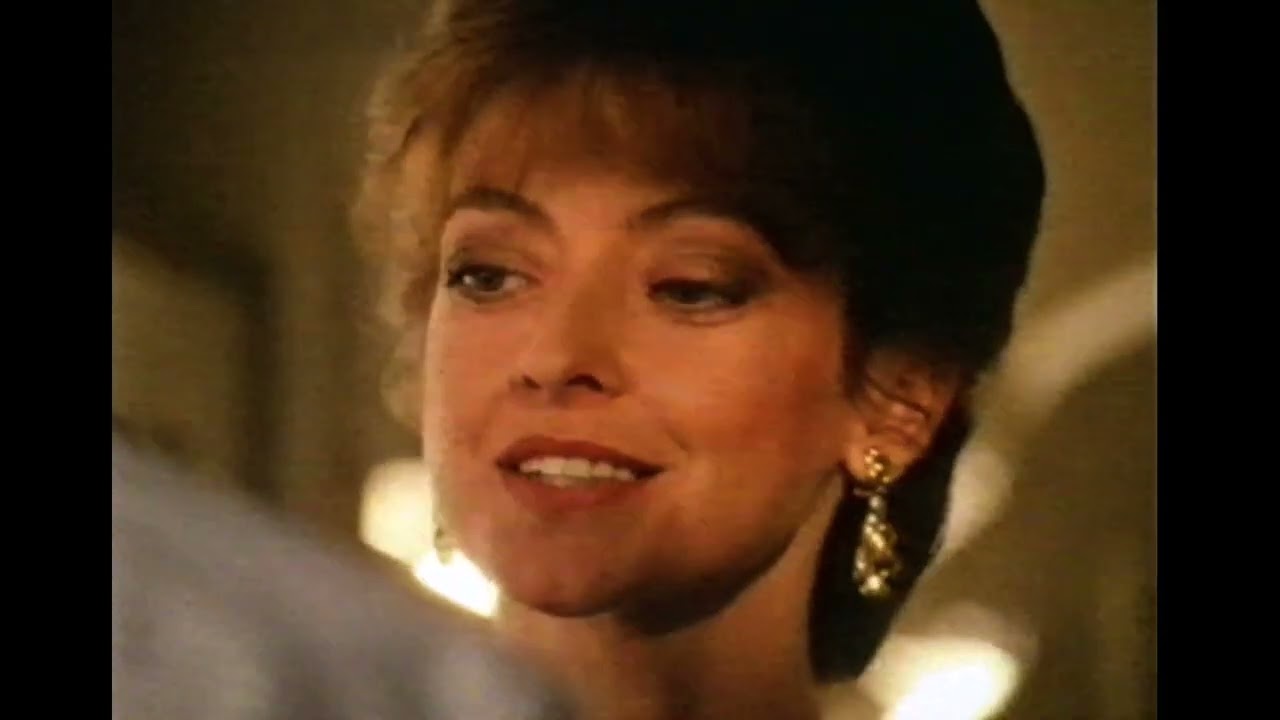
A woman knocks on a neighbour’s door to borrow coffee. That is the entire first instalment, and it ran for six years. McCann Erickson turned a jar of instant into twelve forty-five-second episodes of a romantic serial, starring Anthony Head and Sharon Maughan, each one ending on a cliffhanger.
It is the only entry here that invented a format. Serialised advertising existed before 1987, but nothing had made an audience wait for the next commercial break the way this did, and the device was borrowed across the 1990s, most famously by Renault’s Papa and Nicole. The sales evidence is unusually blunt for the period: Gold Blend sales rose by more than 50 per cent in the UK across the run, in a category where a two per cent share shift is a good year.
What holds up best is the restraint. Nobody explains the coffee, nobody tastes it on camera with their eyes closed, and the product’s only job is to give two people a reason to be in the same room. It placed 31st in Channel 4’s poll, which is a public underrating of something the industry has never stopped copying. Crown verdict: the most influential food advertising ever made in Britain, the best-evidenced, and still the only campaign that made a nation care what happened next to a jar of instant.
Idea first, in the order we use for every campaign we score: could a stranger retell it in one sentence. Craft second, bravery third, and effectiveness last but heavily weighted when it exists, which is why Gold Blend and PG Tips finish above work that is funnier. Food is one of the few categories with a long public record of sales effects, so there is no excuse for ranking it on charm alone.
Longevity is the tiebreak, and food rewards it more than any other sector. Tony the Tiger has been working since 1952 and the Milk Tray line since 1968, which is a harder problem than one perfect film and a more valuable asset. That bias is why several good single executions missed out: After Eight’s dinner party, Ready Brek’s glow, Terry’s Chocolate Orange with Dawn French and the Cornetto jingle were all considered and all beaten on evidence rather than affection.
Campaigns already reviewed in full elsewhere on this site were not eligible for a second run here, which removes some obvious names from the shortlist, including Cadbury’s Gorilla, the Smash Martians, Hovis and Marmite. If you want the full picture, they sit alongside these twenty in our ranking of the best advertising campaigns of all time. Credits were verified individually, and where an agency is missing from an entry it is because no reliable record of it exists.

He plans, buys and reviews advertising for a living, and helps score campaigns on the site against the same five Crown Score criteria alongside other authors and contributors.
Twelve Halloween adverts ranked on idea, craft, bravery and evidence, from Burger King's Scary Clown Night and Tesco's Spookermarket to Heinz Tomato Blood, with verified credits.
Fifteen beer adverts ranked on idea, craft, bravery and evidence, from Heineken's Refreshes the Parts and Carling's Dambusters to Dos Equis and Corona, with verified credits.
From a Fiat built by robots to a Honda diesel engine chased out of a rainbow: twenty car adverts ranked on idea, craft, bravery, published effectiveness and legs.