The best Halloween adverts ever made, ranked
Twelve Halloween adverts ranked on idea, craft, bravery and evidence, from Burger King's Scary Clown Night and Tesco's Spookermarket to Heinz Tomato Blood, with verified credits.
From a Fiat built by robots to a Honda diesel engine chased out of a rainbow: twenty car adverts ranked on idea, craft, bravery, published effectiveness and legs.
No category spends more money to say less than car advertising. A saloon takes a coastal road, a voice says something about engineering, a badge lands. The best car adverts are the ones that refused that template, and there are fewer of them than the industry’s showreels suggest.
We ranked twenty on the five things we always score. Is there one idea a stranger could repeat? Is the craft actually craft, meaning direction, writing, casting, sound and design rather than budget?
Did the brand risk anything, is there published evidence it moved a number, and can it still run? Credits are given where we could verify them, and left out where we could not. Five car campaigns are missing from the list because they already have their own reviews in this archive, and we have linked to those instead.
Saatchi & Saatchi Los Angeles noticed that American parents had already coined a joke name for the Sienna people carrier, then handed the joke back to them as a rap video performed by two suburban parents. It launched in May 2010 and passed seven million views on YouTube, which in 2010 was a genuine number rather than a rounding error.
The discipline is in the restraint. Nobody explains the car, nobody apologises for the format, and the vehicle is treated as an accessory to the parents’ self image rather than a product with seven seats.
Crown verdict: the first car ad that was properly built for a comment section rather than a break.
Lowe Howard-Spink put Naomi Campbell, Linda Evangelista, Kate Moss and Christy Turlington in a Corsa commercial directed by Tarsem, at the precise moment supermodels were the most expensive faces on earth. The premise is that the car is the one thing in the frame getting more attention than they are.
It is a period piece now, and not an entirely comfortable one. It earns its place because it understood something most small car advertising still misses, which is that a supermini is bought as a piece of personal style and not as transport.
Crown verdict: enormous money, one idea, and a supermini repositioned as a fashion object.
Innocean’s Super Bowl 50 spot gave Kevin Hart a car feature, Hyundai’s remote tracking, and a daughter going on a date. Peter Berg directed, Paul Rudd narrated, Queen supplied the soundtrack, and the whole thing is a single mechanic executed with total conviction.
It matters because of what it proved. Hyundai became the first car brand to top USA Today’s Ad Meter, in a game where the category traditionally spends the most and scores the worst.
Crown verdict: proof that a car feature can carry a comedy premise if you only pick one feature.
David&Goliath in Los Angeles was handed a boxy hatchback from a brand American buyers regarded as a warranty rather than a choice. Its answer was hip hop hamsters, which sounds like a note from a bad meeting and worked because the campaign committed to it for years rather than one flight.
It took a Silver Effie in the David v Goliath category, which is the correct award for the correct reason. The hamsters gave Kia a distinctive asset at a moment when it had none.
Crown verdict: a challenger brand buying fame instead of credibility, and getting both.
A 405 drives through a burning sugar cane field to Berlin’s Take My Breath Away, and at no point does anyone explain why the field is on fire. That refusal is the whole trick. The commercial behaves like the trailer for a film that does not exist.
It is the purest example of the eighties car ad as spectacle, and the last one that still holds up, largely because the music was already lodged in the national memory from Top Gun and the ad simply borrowed the feeling wholesale.
Crown verdict: no argument, no product claim, just a minute of borrowed adrenaline.
Highdive persuaded Bill Murray to repeat the day again, twenty seven years on, this time in a Gladiator, and shot it in Woodstock, Illinois where the original film was made. Murray had never done a national commercial before, which is most of why it landed.
It won USA Today’s Ad Meter for Super Bowl LIV and was later named by Campaign US as the best American ad of the century so far. The lesson is that a borrowed property only works if the borrowing is the joke.
Crown verdict: the rare nostalgia buy that adds something to the thing it is buying.
DDB London put Gene Kelly’s face on a breakdancer and set him loose to a Mint Royale remix, directed by Ne-O through Stink with visual effects by MPC. The composite still stands up two decades later, which for 2005 facial replacement is remarkable.
The thought underneath is a proper GTI thought. Take something everyone already loves, keep every line of it, and make it faster. That is what the car is, described in film grammar rather than adjectives.
Crown verdict: a visual effects stunt that happens to be an exact description of the product.
Crispin Porter + Bogusky relaunched Mini in America and bought no television and no radio, in the country and the category that invented both. Instead it bolted Minis to the roofs of SUVs and drove them around, ran outdoor, and wrote print that read like a manifesto.
The media choice is the creative idea. A small car in a nation of large ones cannot outshout anybody, so the campaign made scarcity and cheek into the proposition and let the car be the punchline.
Crown verdict: the clearest proof that where you run it can be the idea.
Two minutes of Super Bowl XLV, bought by a company that had just been through bankruptcy, spent on a portrait of Detroit narrated as a challenge and ending with Eminem. Wieden+Kennedy wrote it, and it won a Creative Arts Emmy.
The bravery is in the framing. A weaker brief would have apologised for the past decade. This one turned the city’s decline into the reason to trust the car, which is a very hard sentence to write and an even harder one to sell.
Crown verdict: a bankrupt car maker buying the most expensive two minutes on television and using them to argue.
Deutsch LA gave a six year old a Darth Vader costume and a house full of objects that will not obey him, then let a father use the Passat’s remote start to grant him one miracle. Lance Acord directed it through Park Pictures, and Max Page plays the child.
It is the ad that made pre-releasing a Super Bowl spot standard practice, and it is built on a feature so minor that no product-led brief would ever have selected it. That is the point. Small feature, enormous feeling.
Crown verdict: remote start, sold as fatherhood.
Jung von Matt needed to explain Magic Body Control, a suspension system that scans the road ahead to keep the body level. Rather than animate a chassis, it filmed chickens being moved about by human hands while their heads stayed perfectly still, to Diana Ross. Daniel Warwick directed through Big Fish.
It is the best technical demonstration in car advertising because it needs no explanation at all. You understand the engineering in under two seconds and you laugh at the same time.
Crown verdict: the shortest distance ever travelled between a suspension spec and a human being.
Young & Rubicam composited Steve McQueen out of Bullitt and into a new Ford Puma driving the hills of San Francisco, twenty seven years after his last chase there and seventeen after his death. Paul Street directed through Streetlight, and it took a British Arrows Silver in the vehicles category.
The technique has aged and the idea has not. A small, cheap coupé borrowed the most famous driving performance in cinema and made a claim about character that no specification sheet could support.
Crown verdict: the original deepfake, and still the most tasteful one.
An Audi 100 CS quattro drives up the 37.5 degree incline of the ski jump at Kaipola in Finland. It is a demonstration, not a metaphor, and it is the single best argument quattro ever made for itself.
It sits inside the campaign that gave Britain Vorsprung durch Technik, which BBH put into UK Audi advertising in 1982 after John Hegarty found the phrase on a factory poster and decided not to translate it.
Crown verdict: a stunt with a thesis, and a line that outlived everyone who approved it.
Jonathan Glazer, at Academy Films for BMP DDB, shot black and white slow motion of people curling into the foetal position under threat: a rider coming off, a boxer taking a hit, bodies in a crowd bracing. Then the Polo, small and tucked in, doing the same thing. It won a D&AD pencil for television and cinema crafts in 1998.
Small cars are usually sold on price or on cuteness. This one is sold on the animal instinct to make yourself compact when something is about to hit you.
Crown verdict: safety advertising with no crash test, no family and no fear appeal.
Euro RSCG had Neill Blomkamp, three years before District 9, turn a C4 into a robot that dances across an ice rink and then folds back into a hatchback. The Embassy in Vancouver did the animation, and the British Arrows gave it a Craft Gold for computer animation and a Bronze in vehicles.
The reason it beats every other visual effects car ad is that the effect is the argument. Citroën was selling design and technology in a segment full of identikit hatchbacks, and the robot says both without a word.
Crown verdict: the only car ad where the computer animation is doing strategy, not decoration.
Two minutes of one man moving through Honda’s history, from a motorcycle to a powerboat to a balloon, while Andy Williams sings. Ivan Zacharias directed for Wieden+Kennedy London through Stink, with Simon Day as the dreamer, and it took British Television Advertising Awards commercial of the year and a British Arrows Gold in 2006.
Where Cog proved Honda’s precision, this proves its appetite. The company is not a car maker in it, it is a firm that keeps building the next unlikely thing.
Crown verdict: a corporate film with no product claim that made a whole company likeable.
Collett Dickenson Pearce sent Hugh Hudson into a Turin plant to film welding arms assembling a Strada, set it to Rossini, and put the result out as a two minute block in a News at Ten break. Paul Weiland wrote it. It ran while British car buyers were being told daily that Italian build quality was a punchline.
The line does everything. Handbuilt by robots takes the exact thing you distrust about a factory and reframes it as the reason to trust the car.
Crown verdict: the boldest piece of reframing in the history of the category.
Fallon spent around nine million dollars on eight short films rather than television, gave Clive Owen a driver with no name, and handed the cameras to John Frankenheimer, Ang Lee, Wong Kar-wai, Guy Ritchie, Alejandro González Iñárritu, John Woo, Joe Carnahan and Tony Scott. The films were watched more than a hundred million times over four years, and BMW’s sales rose 12 per cent in 2001.
Everything the industry now calls branded content is a worse version of this. It is the only entry here that invented a format rather than perfecting one.
Crown verdict: a car brand commissioning cinema and being taken seriously for it, first and best.
Paula Hamilton walks away from a house at dawn, dropping the engagement ring, the pearls, the brooch and the fur coat into a bin as she goes, and keeps the car keys. David Bailey directed for BMP DDB, to Alan Price’s Changes, and the film ends on the line that carried Volkswagen in Britain for the next quarter century.
It is fifty seconds of a woman leaving a marriage, sold as a reliability claim. No car ad before it had made the vehicle the only thing in a life worth keeping.
Crown verdict: the moment car advertising stopped talking to husbands.
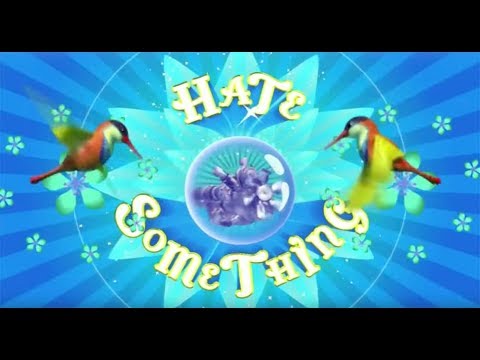
Ninety seconds of neopsychedelic animation in which flying diesel engines are chased out of a rainbow landscape by bunnies, while Garrison Keillor sings a folk song about hatred. Wieden+Kennedy London and Nexus spent six months and £600,000 on it, with Smith & Foulkes directing. It premiered in cinemas on 24 September 2004.
Then the numbers. Honda’s UK sales rose more than 35 per cent, diesel Accord sales went from 518 units in 2003 to 21,766 in 2004, and it took the Cannes Lions Film Grand Prix and a Grand Clio in 2005. Adweek later called it the commercial of the decade.
Crown verdict: the only car ad that is simultaneously the funniest, the prettiest and the most effective thing in the room.
Five obvious candidates are absent because they already carry full reviews here rather than a paragraph. Volkswagen’s Think Small is the founding document of the whole category. Honda’s Cog is the most copied two minutes in car film.
Skoda’s Cake solved a reputation problem no media budget could have solved. Renault’s Papa and Nicole ran a sitcom inside a car campaign for six years. Volvo’s Epic Split sold trucks to an audience of people who will never buy one.
Every entry was scored on idea, craft, bravery, effectiveness and legs, and the full method is set out in how we score. Effectiveness was marked only on published evidence, which is why Grrr and The Hire finish where they do and why several visually spectacular films finish lower than their showreels would suggest. Bravery was read as commercial risk rather than tonal edginess, so a media decision like Mini’s counts as much as a controversial script. Where we could not verify an agency, a director or a production company, we left the credit out rather than guess.

He plans, buys and reviews advertising for a living, and helps score campaigns on the site against the same five Crown Score criteria alongside other authors and contributors.
Twelve Halloween adverts ranked on idea, craft, bravery and evidence, from Burger King's Scary Clown Night and Tesco's Spookermarket to Heinz Tomato Blood, with verified credits.
Twenty food adverts ranked on idea, craft, bravery and evidence, from the Gold Blend couple and Coca-Cola's Hilltop to Jaffa Cakes, PG Tips and Maltesers, with verified credits.
Fifteen beer adverts ranked on idea, craft, bravery and evidence, from Heineken's Refreshes the Parts and Carling's Dambusters to Dos Equis and Corona, with verified credits.