 63/100
Bisto ‘Aah Nights’: how a 1919 catchphrase became a night of the week
McCann Erickson took the Bisto Kids' hundred-year-old 'Aah' and turned it into a booked appointment. A review of the Bisto advert that sold an occasion, not gravy.
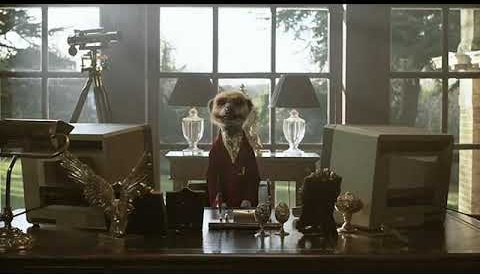

As film-making it is modest, but as strategy it is close to the best British work of the century, because one joke solved the brand problem, the search economics and the entertainment problem at the same time.
The most valuable line in British advertising this century began life as a footnote on a creative brief. VCCP asked its creatives whether they could find a cheaper word to put next to “market”, because Google was charging comparethemarket.com more than £5 a click for the term that was in its own name. The answer was a Russian meerkat in a smoking jacket, and it took a brand that was fourth of four to the front of the category.
Our take: the rare campaign where the joke, the media buy and the business model are the same decision.
VCCP’s own account of the work, written up for the APG Creative Strategy Awards in September 2009, is unusually candid about how bad the hand was. Comparethemarket.com was last to market in a category where share follows spend. Its name was long and, according to its own research, unmemorable, and it was close enough to Gocompare that consumers regularly described one brand’s advertising and attributed it to the other. It had no single product feature to build a difference on.
The category was also deafening. Four major players were sharing around 1,500 television spots a day, all of them saying the same thing about savings and the number of insurers compared. The public response, the paper records, was consistently along the lines of “I can’t stand any of it”. Outspending that was not an option, so the brief went looking for affection instead.
The reference point in research groups was not another comparison site. It was Cadbury’s gorilla, which people respected precisely because it had ignored the rules of its category. VCCP briefed its creatives to fuse that audacity into a functional product, a compound the paper cheerfully renders as “fun-ctional”.
The brief carried a small extra request: find a cheaper term or phrase that could live alongside “market” in the advertising. Search engines charge less when people type a brand name and more when they type a generic one, and “market” was costing over £5 a click. The creatives came back with comparethemeerkat.com. Cost per click on meerkats was in the region of 5p.
The first version did not work. Those early meerkats were based in Yorkshire, next door to the comparethemarket.com offices, and research met the wordplay with groans rather than delight. What tested well was the fictional website itself, a place where you could genuinely compare thousands of meerkats. VCCP re-briefed for character, warmth and affection, and Aleksandr Orlov arrived: aristocratic, faintly pompous, and permanently exasperated that people looking for car insurance keep landing on his site by mistake.
That structure is the whole trick. The advertising sells a website that does not exist, the audience is corrected into the real name, and the correction is the entertainment. It is one of the very few campaigns where the brand’s biggest weakness, an unmemorable name, becomes the engine of the story.
Darren Walsh directed the films through Passion Pictures, and the animation is deliberately unshowy. Orlov is shot like a minor European aristocrat giving a doorstep interview, framed against oak panelling and heavy furniture, with the comedy carried by timing rather than movement. In 2009 the temptation to make a CGI animal do slapstick was enormous, and the restraint here is the reason the character has survived more than fifteen years of ad breaks.
The performance is Simon Greenall’s. The accent is thick enough to be funny and precise enough to be intelligible, and the writing gives him a register of wounded formality that is much harder to write than it looks. “Simples” works because it is a small grammatical error made by a character who believes he is speaking beautifully.
VCCP also built the character out beyond television faster than most brands managed at the time. Orlov was, per the APG paper, the first UK advertising character with his own Twitter account, and by September 2009 he had 456,000 friends on Facebook. The social work was written into the campaign rather than bolted on afterwards. D&AD gave comparethemeerkat.com a Wood Pencil for Integrated in 2010.
The numbers in the APG paper, published nine months after launch, are the ones worth quoting because they are the ones the agency was prepared to be judged on. The campaign hit all of its twelve month objectives in nine weeks. It took the brand to number one in spontaneous awareness and consideration. Cost per visit fell by 73 per cent and quote volumes rose by more than 83 per cent.
The long-term picture is starker still. Writing in Marketing Week in August 2024, Richard Shotton set the pre-meerkat position, fourth in a category of four, against GlobalData’s 2022 UK Insurance Consumer Survey, which put Compare the Market first among price comparison websites for motor insurance on a 54.5 per cent share.
Shotton also supplies the general case for what Orlov is. System1’s Orlando Wood calls characters like him fluent devices, and a 2019 analysis of long-term campaigns in the IPA Databank found that 40.9 per cent of those using a character fluent device achieved a very large market share gain, against 29.7 per cent of those without. The meerkats are not an exception to how advertising works. They are an unusually pure example of it.
The oddest thing the campaign produced is a merchandise operation. More than 50,000 people enquired about buying the original Aleksandr soft toy when it appeared in Harrods in 2009, and the book A Simples Life sold over 500,000 copies and topped the Christmas bestseller list, outselling memoirs by Tony Blair, Katie Price, Michael McIntyre and Keith Richards. When the toys became a reward for buying a policy, comparethemarket.com reported 500,000 claims in six months by January 2012, roughly one every thirty seconds.
That matters commercially, not just as a curiosity. A free toy that people actively want turns a price comparison, the most switchable purchase in British retail, into something with a reason to come back. The brand then bolted the same logic onto entertainment, taking the Coronation Street sponsorship from November 2012 in a three year deal reported at around £30m, and later building the Meerkat Movies and Meerkat Meals reward schemes.
The characters are still working. In September 2021 the brand launched what it called its most distinctive campaign since 2009, Meerkat your money, with Orlov facing down a table of furry villains, made by VCCP Blue and directed by David Scanlon through Passion Pictures. Seventeen years is a long time for a pun.
Judged as film-making the original spots are modest, and the animation has aged more than the writing has. Judged as strategy this is close to the best work any British agency has done this century, because the idea solves the brand problem, the search economics and the entertainment problem in one move, and the evidence for it was published within nine months rather than assembled years later. It belongs high on our list of the best advertising campaigns, and it loses points only on craft, where the meerkats have always been serviceable rather than beautiful. Our scoring method is explained in how we score.

He plans, buys and reviews advertising for a living, and helps score campaigns on the site against the same five Crown Score criteria alongside other authors and contributors.
63/100McCann Erickson took the Bisto Kids' hundred-year-old 'Aah' and turned it into a booked appointment. A review of the Bisto advert that sold an occasion, not gravy.
 73/100
One photograph of Heinz Beanz on two biscuits, no paid media, a day of brand replies and a debate in the House of Commons. Frank PR's Beanz on Bix, reviewed.
 79/100
BMP DDB gave the jokes to Rowan Atkinson and the product line to his assistant. Seventeen films, nine British Arrows, an IPA Gold and a cinema franchise later, a full review.