 63/100
Bisto ‘Aah Nights’: how a 1919 catchphrase became a night of the week
McCann Erickson took the Bisto Kids' hundred-year-old 'Aah' and turned it into a booked appointment. A review of the Bisto advert that sold an occasion, not gravy.
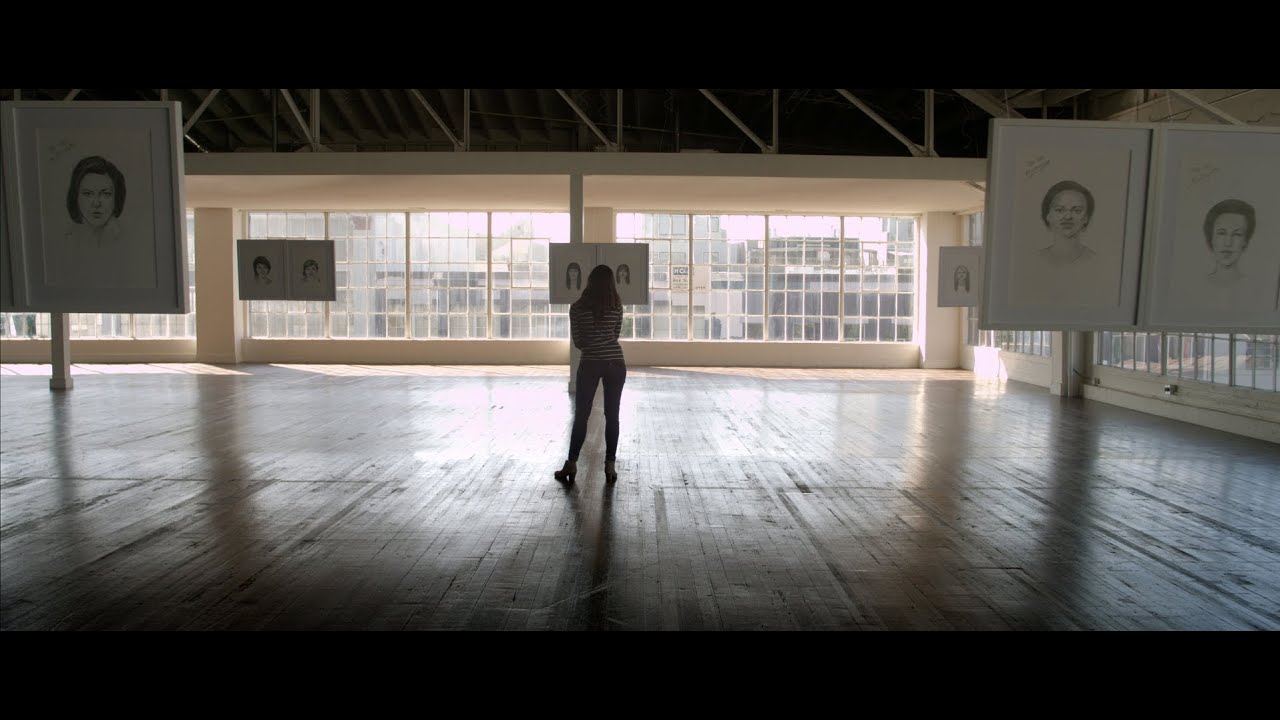

The best-argued piece of purpose advertising ever made and the least honest, and any planner citing it should be able to recite both halves of that sentence.
A man sits behind a curtain with a pencil and a pad, and never once looks at the woman he is drawing. He draws her twice: once from her own description, once from a stranger’s. The two faces do not match, and the second one is kinder. That is the whole of “Real Beauty Sketches”, the Dove advert that became the most-viewed online video ad on record within a month of its release in April 2013.
The one-line take: it is the most efficient piece of persuasion Unilever has ever bought, and it is also the piece of Dove work that best rewards a second, more sceptical viewing.
By 2013 the Dove Campaign for Real Beauty was nearly a decade old and starting to look like furniture. It had already produced “Evolution” in 2006, the time-lapse retouching film from Ogilvy Toronto that won both the Film and the Cyber Grand Prix at Cannes in 2007, the first time one piece of work took both. Anything that followed had to justify itself against that.
Dove’s own global research gave Ogilvy Brazil the number to argue from. The brand’s studies put the proportion of women worldwide who would describe themselves as beautiful at around four per cent, and found that most women name themselves as their own harshest critic. That is not a product problem, and Dove had long since given up pretending it could be solved with soap. The brief was to dramatise the gap between how a woman sees herself and how everybody else sees her.
The device is the whole idea, and it is a good one. Hire Gil Zamora, an FBI-trained forensic artist who has spent a career turning verbal descriptions into faces for police work, and give him a job with no criminal in it. He sits behind a curtain. He draws a woman as she describes herself, then draws her again from the description given by a stranger who met her that morning.
Hanging the two sketches side by side does the rest. The self-portrait is heavier, older, more closed. The stranger’s version is open and recognisably nicer, and the women cry when they see the difference. It is a proposition a stranger can repeat in one sentence, which is the only real test of an idea.
John X. Carey directs it as observational documentary rather than as advertising, and the discipline is what makes it land. There is no voiceover telling you how to feel, no music swell under the reveal until quite late, and no product until the endframe. Ed David’s camera stays wide enough to keep the curtain, the easel and the woman in one frame, so the mechanism of the experiment is always visible.
Keith Kenniff’s score is piano and sustained strings, held deliberately below the dialogue. The real craft decision is the edit: the film withholds the second sketch until the woman has finished undercutting herself, so the reveal reads as evidence rather than as a trick. It is also, as we will get to, the decision the film’s critics went for first.
Ogilvy Brazil produced the film in 25 languages and pushed it out through Dove’s national YouTube channels rather than buying television. For a piece of work with no media weight behind it at launch, that was the correct bet.
Within a month the film had passed 114 million views and topped Unruly’s viral video chart as the most-viewed online video ad recorded to that point. Adweek called it the runaway viral success of the year. That is reach, not effect, and reach is where most purpose advertising stops.
This one did not stop there. At Cannes in June 2013 it took the Titanium Grand Prix and an Integrated Gold Lion, Ogilvy Brazil’s second Grand Prix of that festival. The following year it won the Grand Effie in North America, and the numbers in that entry are the ones worth keeping: $24m in incremental sales and $52m of earned media exposure from a production and media budget of $925,000. It also took a pencil at D&AD in 2014.
A twenty-six to one return on media exposure alone is the sort of figure that usually turns out to be agency arithmetic. Here it survived an Effie jury, which is a materially higher bar than a creative one. On our scoring rubric, that is what an effectiveness score is for.
A review that only reports the trophies is a press release. The most damaging criticism came from Virginia Postrel, writing for Bloomberg, who took the film apart on its own terms: it is presented as a social experiment and it is not one. Zamora knew what the film was for, so nothing about it was blind. He also skipped the step that makes a forensic sketch usable, which is showing the subject the drawing and letting them correct it.
Postrel quoted Stephen Mancusi, a former New York Police Department forensic artist, on what that omission does to the output.
It’s a tainted image, there’s no question about it.
Stephen Mancusi, forensic artist, quoted by Virginia Postrel
The sample is the second problem. Zamora drew roughly twenty women over two and a half days; seven appear in the film and only three get the full side-by-side comparison. Choosing the three widest gaps out of twenty is editing, and there is a word for presenting the result as a finding.
The second wave of criticism came from the audience the film was made for. Jazz Brice’s response post, republished by Refinery29 five days after launch, made the point that has stuck: the featured women are young, thin and overwhelmingly white, and women of colour appear on screen for a matter of seconds. The film widens the frame around who is allowed to feel beautiful without widening the frame around what beautiful looks like.
Brice’s sharper objection is structural. The film does not argue that beauty matters less than we think. It argues that you personally sit closer to the existing standard than you feared, which leaves the standard exactly where it was. For a brand that spent a decade positioning itself against that standard, that is a real cost, and it is fair to say Dove has never fully answered it.
“Real Beauty Sketches” set the format for the decade that followed: the branded social experiment, three minutes long, shot like documentary, ending on a hug. Most of the imitations were worse, because most brands had no equivalent of the four per cent statistic and simply staged an emotion. The film’s real inheritance is that it taught marketers a purpose film could carry a business case, and that is why it still turns up in any serious list of the best advertising campaigns.
It also raised the price of entry. After 2013 an emotional film without a number attached read as an indulgence, and after the criticism a purpose film with an unrepresentative cast read as carelessness. Both of those standards are Dove’s doing.
“Real Beauty Sketches” is the best-argued piece of purpose advertising ever made and the least honest, which is an uncomfortable combination to hold in one hand. The idea is close to perfect, the Effie numbers are real, and the casting and the fake methodology are indefensible on their own terms. It earns its place in the canon and it does not get a free pass, and any planner citing it should be able to recite both halves of that sentence.

He plans, buys and reviews advertising for a living, and helps score campaigns on the site against the same five Crown Score criteria alongside other authors and contributors.
63/100McCann Erickson took the Bisto Kids' hundred-year-old 'Aah' and turned it into a booked appointment. A review of the Bisto advert that sold an occasion, not gravy.
 73/100
One photograph of Heinz Beanz on two biscuits, no paid media, a day of brand replies and a debate in the House of Commons. Frank PR's Beanz on Bix, reviewed.
 79/100
BMP DDB gave the jokes to Rowan Atkinson and the product line to his assistant. Seventeen films, nine British Arrows, an IPA Gold and a cinema franchise later, a full review.