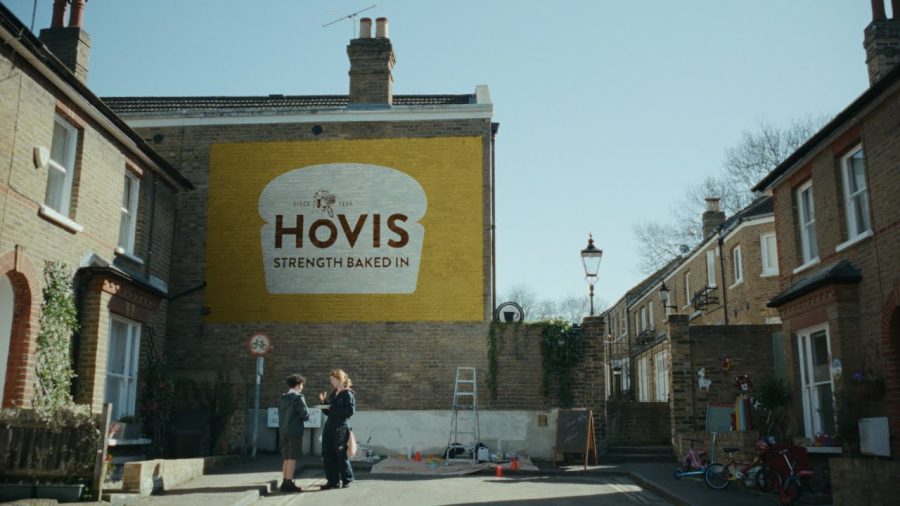
Hovis puts £4m behind first campaign under ABF ownership
Hovis has launched a £4m national push for "Strength Baked In", its first big campaign since Associated British Foods completed its takeover in July.
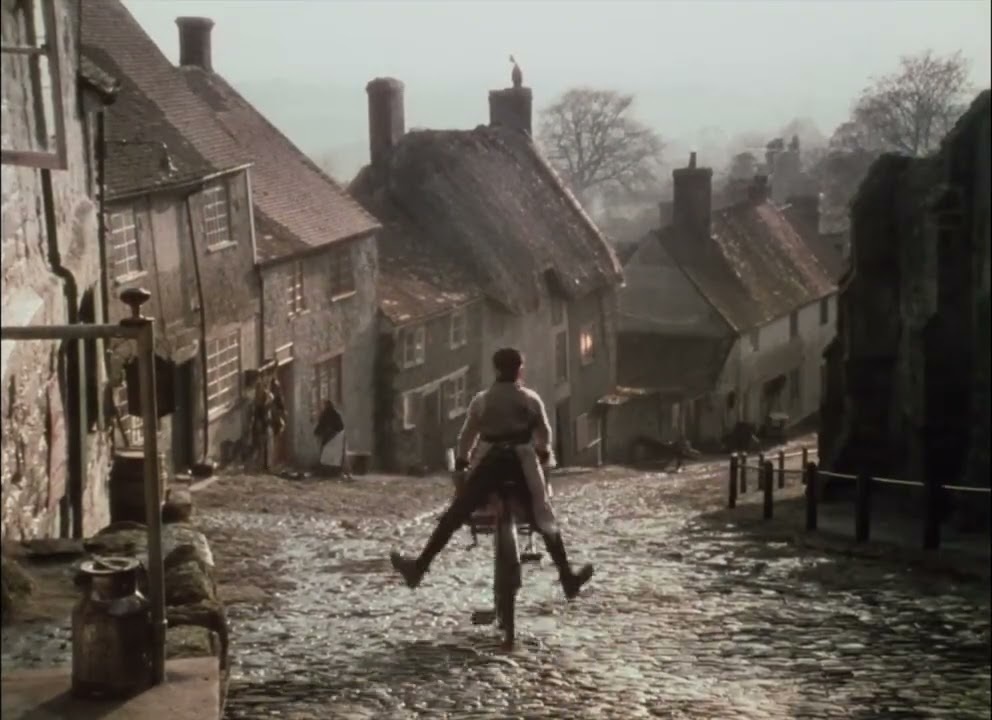

The most economical piece of brand building on British television, held back only by the absence of any published sales evidence to sit beside five decades of unbeaten recall.
A boy pushes a bread bike up a cobbled hill, a brass band plays Dvorak, and a voice from somewhere in the West Country remembers it as “like taking bread to the top of the world”. That is the whole of the Hovis advert the country calls “Boy on the Bike”, made in 1973 by Collett Dickenson Pearce and directed by Ridley Scott. Decades later it is still the commercial British audiences reach for when asked to name the best one. Our take: this is the most economical piece of brand building on British television, and it works precisely because nobody in it is selling you anything.
Hovis arrived in the 1970s as one of those brands everyone knows and nobody considers. The wheatgerm loaf dated back to 1886 and the name was on bakery windows across the country, but familiarity had flattened into wallpaper. Alan Hepburn, Hovis marketing director at the time, joined with a mandate to find a new agency and settled on Collett Dickenson Pearce. His account of the brief is refreshingly unmodern: not move volume from X to Y, but get more people to love Hovis.
CDP’s answer was to stop treating the age of the brand as a liability. The line the agency landed on, “Hovis: as good for you today as it has always been”, makes heritage the product benefit rather than an apology for it. That single move sets up everything that follows, because it licenses a film with no product demonstration, no family at a kitchen table and no price. It also explains why the campaign survived changes of ownership, packaging and category fashion for half a century.
Geoff Seymour, later the first copywriter in Britain reported to earn six figures, wrote it as an old man’s recollection of a delivery round. The whole film is one errand: up the hill with a full basket, a loaf handed over at the top, then the freewheel back down. There is no conflict, no gag and no reveal. The brand is present only in the loaf and the last line.
This is the discipline most nostalgia advertising misses. Nostalgia usually arrives as a set of props, a period car and a hit record, laid over a modern sales argument. Here the feeling is the argument, and the product earns its place because bread delivery is what the memory is actually about. It is the same logic that makes Volkswagen’s “Think Small” work: one thought, expressed with nothing spare around it.
Scott shot on Gold Hill in Shaftesbury, Dorset, a cobbled lane with a row of cottages on one side and a wall on the other that frames the climb like a proscenium arch. Most of the country files the film under northern England, which is a fair measure of how completely the brass band does its work. The voiceover, delivered by Howard Lang of The Onedin Line, is West Country. The misremembering has become part of the ad’s folklore.
The light is the performance. Scott has described the end of the third day on location, the clouds closing in and the kit already back in the van, when the sun broke and he ordered the whole shoot unpacked and reset. Hepburn was in his car about to drive home when the reshoot started. What survives on screen is that last hour: low, raking, gold on wet cobbles, and a silhouette pushing uphill against it.
Casting was similarly unglamorous. Carl Barlow was 13 and got the part, by his own account, because he was the only one of the final three who could ride a bike and would agree to the pudding bowl haircut. Bill Maynard, later of Heartbeat, plays the baker. Nobody in the film is beautiful, and that is the point.
The music was chosen at home rather than in a session. Hepburn has said that he and his wife picked the Largo from Dvorak’s New World Symphony on a Sunday afternoon, and the recording used is the Ashington Colliery Band, a colliery brass band from Northumberland. Scott, from South Shields, said Seymour brought the idea to him partly because he would understand the mining mentality behind it. Classic FM still fields requests for “the Hovis music”, which is as clean a demonstration of sonic ownership as British advertising has produced.
The creative record is unambiguous. The film took a D&AD Silver in 1975 for outstanding film photography, Gold and Special Gold at the 1974 Clio Awards, and the joint Premier Award at the 1974 National Broadcast Advertising Festival. Hepburn recalls hundreds of letters from viewers and a large increase in Hovis sales in the period that followed. Hard contemporaneous sales figures were never published, so the commercial case rests on brand metrics rather than a submitted effectiveness paper, and we mark it accordingly on our scorecard.
What is measurable is the memory. In 2006, a poll of 1,000 people reported by The Independent named it the nation’s favourite advertisement of all time, ahead of Milk Tray, Ferrero Rocher and Bisto. In 2018 a Marketing Week and YouGov poll made it the best advert of the 1970s on 28% of the vote, with the Smash Martians second on 26%. In the same research, 78% of adults recalled the campaign and 89% correctly attributed it to Hovis, 45 years after it aired.
The 2019 picture is the same. Kantar surveyed more than 1,000 UK consumers and, as reported by The Drum, 22% named it the most iconic ad of the previous 60 years and 15% the most emotional, topping both lists. Cadbury’s “Gorilla” came second on iconic status, Coca-Cola’s “Hilltop” third and Levi’s “Launderette” fourth. Those are the only three pieces of film in Britain with a comparable hold on the public, and we have ranked all of them in our list of the best advertising campaigns.
Hovis has treated the film as property rather than history. It returned to television for a ten day run from 10 May 2006 to mark the brand’s 120th anniversary. In 2019 it came back again, on 3 June, using footage restored by the British Film Institute and a fresh recording of the Dvorak by descendants of the 1973 Ashington players. Jeremy Gibson, then Hovis marketing director, told Marketing Week that the ad’s stillness was the reason it cut through against modern price messaging.
Gold Hill has become a destination in its own right, with a Hovis memorial at the top of the climb. Carl Barlow went on to be a firefighter and has since appeared in other cyclists’ advertising, which is a strange kind of afterlife for a 13 year old with a basket of loaves. The risk of an asset this large is obvious: every subsequent Hovis campaign is measured against it, and most have lost. That is the cost of making something people refuse to forget.
“Boy on the Bike” is the high-water mark of British emotional advertising and the cheapest kind of famous, one hill, one boy and one piece of public domain music arranged for brass. It loses marks only where the record is thin: there is no published effectiveness paper and no contemporaneous sales number to set against the creative honours, so the commercial case leans on five decades of recall data rather than proof of a moved market. Everything else is close to faultless, and the fact that a 1973 spot still tops national polls in the 2010s tells you the craft was doing something no brief could specify. Fifty three years on, it remains the ad every British planner quietly wishes they had briefed.

He plans, buys and reviews advertising for a living, and helps score campaigns on the site against the same five Crown Score criteria alongside other authors and contributors.
Hovis has launched a £4m national push for "Strength Baked In", its first big campaign since Associated British Foods completed its takeover in July.
 63/100
McCann Erickson took the Bisto Kids' hundred-year-old 'Aah' and turned it into a booked appointment. A review of the Bisto advert that sold an occasion, not gravy.
 73/100
One photograph of Heinz Beanz on two biscuits, no paid media, a day of brand replies and a debate in the House of Commons. Frank PR's Beanz on Bix, reviewed.