 63/100
Bisto ‘Aah Nights’: how a 1919 catchphrase became a night of the week
McCann Erickson took the Bisto Kids' hundred-year-old 'Aah' and turned it into a booked appointment. A review of the Bisto advert that sold an occasion, not gravy.
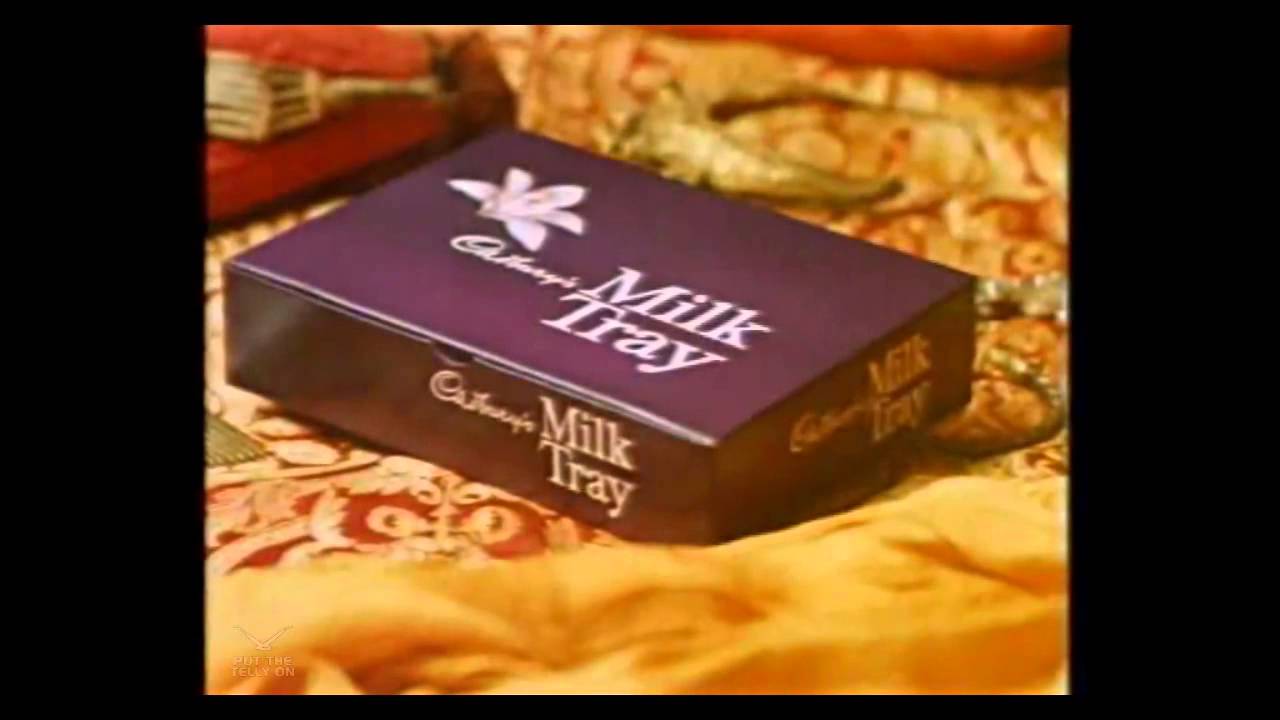

One of the most disciplined brand devices Britain has produced, undone in the marking only by an effectiveness file that barely exists for its first thirty-five years.
Almost no British advertising line survives its own campaign. “And all because the lady loves Milk Tray” has outlived six actors, four decades of tonal change and a thirteen-year cancellation, and it still gets used, usually sarcastically, by people who were born after the last film ran. Campaign credited the line to the work of Leo Burnett art director Norman Icke, alongside Cadbury’s Flake and Curly Wurly.
Our take: a near-perfect brand device with an unusually thin evidence file, which is what happens when an idea is famous for fifty years before anyone thinks to write a case study.
Milk Tray was introduced in 1915 and was outselling its competitors by the mid-1930s, so by the late 1960s Cadbury was not fixing a failure. It was defending a mature assortment in a category where every brand says the same thing about romance. The product itself offers a copywriter nothing: it is a box, it contains chocolates, somebody gives it to somebody else.
The decade supplied the answer. Britain in 1968 was in the middle of Bond fever, and the spy thriller was the dominant visual grammar on screen. Borrowing it gave a confectionery brand access to production values, music and pacing that chocolate advertising had no business owning.
The single move that makes this work is refusing to advertise the product at all. There is no assortment shot, no centre being cut in half, no talk of praline. The films are about the effort of getting the box to her, and the chocolates matter only as the thing worth that effort.
The format is strict and never varies. A man in a black polo neck completes an implausibly dangerous mission, leaves the purple box somewhere she will find it, leaves a calling card, disappears, and the line arrives. He does not speak, she is barely seen, and the audience is left to fill in a relationship that the advertising never explains.
That restraint is why the property lasted. A campaign that says nothing specific about its heroine can run for thirty-five years without ageing into a particular woman, a particular decade or a particular kind of romance. The film below, from 1981, runs the format exactly as it was set thirteen years earlier.
The production is the part that would be quietly replaced by visual effects today, and the campaign is poorer for the substitution. Wikipedia’s record of the series, drawing on Gene Scott Freese’s dictionary of Hollywood stunt performers, credits the cliff-top dive into the sea to Alf Joint, who had doubled for Sean Connery’s 007 in Goldfinger. Martin Grace, Roger Moore’s Bond double, performed early Milk Tray stunts including a leap from a bridge onto a speeding train.
Hiring the actual Bond stunt unit is not a gag, it is a positioning decision. The films are not spoofing the thriller, they are competing with it on its own terms, and the audience can tell the difference between a pastiche and a brand that has hired the same people.
The sound does as much as the pictures. Cliff Adams wrote “The Night Rider” for the campaign, and it functions as a theme rather than a backing track, which is why it is recognisable in a second and has been recorded commercially by other artists. Peter Wyngarde voiced the line between 1970 and 1974, at the height of his own fame as Jason King.
The casting rule is equally consistent: the Milk Tray Man is never a star. Gary Myers, a former Australian soldier, played him in most of the films between 1968 and 1984 and remains the face most people picture. James Coombes took over in 1987 and Alan Riley played him in 2003 opposite Sienna Guillory, before the character was retired.
Cultural penetration is documented and unusually early. The Guardian records that the campaign was popular enough in the 1970s for Waddingtons to release a Man in Black board game, in which players took the hero’s role and fought obstacles to deliver the chocolates. Advertising that generates a licensed toy has cleared the fame test without needing a tracking study.
The public verdicts agree. The campaign was ranked eleventh on ITV’s Best Ads Ever list in 2005, and the Avalanche film came forty-eighth in Channel 4’s national poll of the 100 Greatest TV Ads in 2000. Milk Tray itself still sells over eight million boxes a year in the UK.
What is missing is the thing this magazine cares about most. There is no published IPA paper, no Effie, no audited econometric case for the original thirty-five year run, which means the most famous confectionery campaign in Britain has less effectiveness evidence behind it than a six-week promotion would carry today. We mark that down, and we explain why in how we score.
The character had been off screen for thirteen years when Cadbury restarted him for Milk Tray’s centenary. The clever part was that the search was the campaign. In October 2015 James Coombes returned in a television spot, breaking during ITV’s The Chase, to explain the role and then leap out of a window, leaving the job open.
Cadbury was explicit that the specification had changed. “The key point is the new Milk Tray man won’t be chosen just for his derring-do, diving off cliffs into shark-infested waters,” the company’s Tony Bilsborough told the Guardian. “It will be as much about traits such as thoughtfulness.” Applications were left open to women, though the brand was clear that was a long shot.
The funnel is worth reading as a media plan rather than a casting process. Fallon’s executive creative director Nick Bell told shots that the site was open for two months, that over 4,000 applicants submitted 60-second video pitches, and that it came down to a final casting of 37 and a screen test of seven. More than 20,000 people applied in total.
We didn’t want to settle for making a 30-second TV spot. We were much more ambitious than that and Cadbury have already, at this very early stage in the campaign, had a very good return on investment for that ambition.
Nick Bell, executive creative director, Fallon London, speaking to shots
The winner was Patrick McBride, a firefighter from Liverpool, nominated by his wife. The film that followed, credited by Campaign to Fallon London and directed by Chris Palmer through Gorgeous, was set in the Altai Mountains over the Mongolian-Manchurian steppe and kept every component of the original: the theme, the exotic location, the silent hero and the line.
The revival is also the only part of the story with numbers attached. Golin, which ran the PR, reports a 40 per cent sales uplift in the launch month, an overall sales increase of 11.8 per cent since the start of the campaign and over 300,000 website visits. Those are agency-reported rather than audited, which is a caveat, not a dismissal.
One of the most disciplined brand devices Britain has produced, built on a refusal to show the product and a willingness to pay Bond’s stunt team, and let down only by an evidence file that barely exists for the first thirty-five years. The 2016 relaunch is the smarter piece of thinking, because turning the casting into a public vacancy earned the fame the original had to buy. If you want the modern equivalent of a confectionery brand holding its nerve on a single strange idea, read our review of Cadbury’s Gorilla, and then see where both sit in our best advertising campaigns ranking.

He plans, buys and reviews advertising for a living, and helps score campaigns on the site against the same five Crown Score criteria alongside other authors and contributors.
63/100McCann Erickson took the Bisto Kids' hundred-year-old 'Aah' and turned it into a booked appointment. A review of the Bisto advert that sold an occasion, not gravy.
 73/100
One photograph of Heinz Beanz on two biscuits, no paid media, a day of brand replies and a debate in the House of Commons. Frank PR's Beanz on Bix, reviewed.
 79/100
BMP DDB gave the jokes to Rowan Atkinson and the product line to his assistant. Seventeen films, nine British Arrows, an IPA Gold and a cinema franchise later, a full review.