 63/100
Bisto ‘Aah Nights’: how a 1919 catchphrase became a night of the week
McCann Erickson took the Bisto Kids' hundred-year-old 'Aah' and turned it into a booked appointment. A review of the Bisto advert that sold an occasion, not gravy.

A near-perfect match of idea, product and execution whose published effectiveness evidence is thinner than its reputation, redeemed by a platform that ran for years.
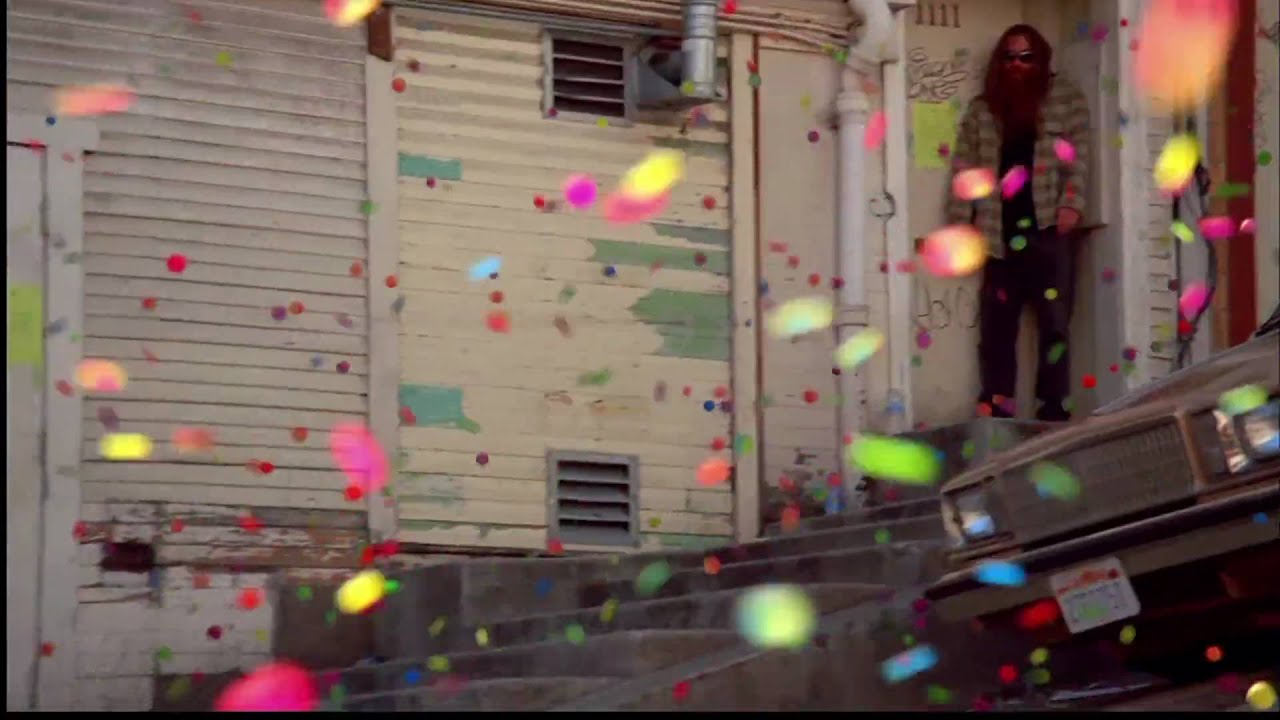
Twelve air cannons, bolted to trucks at the top of a San Francisco hill, fire 250,000 rubber bouncy balls down it at up to 136 miles an hour. A camera crew in Kevlar and riot helmets films the result from behind plywood shields. Six houses are damaged, two dozen cars are dented, and the window repair bill comes to $74,000. There is no computer-generated imagery in the finished sixty seconds, and that is the entire argument.
Our take: “Balls” is the cleanest product demonstration of the last thirty years, because Sony sold colour by filling a street with it rather than by claiming anything about panels. It is also the ad that taught British advertising that a film could be a destination.
In 2005 Sony’s electronics division was in trouble. Apple’s iPod had taken the ground Sony had owned since the Walkman, the share price had fallen, and the flat-panel market was being carved up by Sharp and Samsung. Sony retired the LCD Wega name and launched Bravia in September 2005, and needed the launch to say something other than specifications.
David Patton had just moved across from Sony Computer Entertainment Europe, where he had run PlayStation marketing. He told Marketing Week he was brought in “to freshen up the brand”, and that the step change was “really about repositioning Sony as an entertainment brand rather than being a slightly dull electronics hardware company”. The account went to Fallon London and to Juan Cabral, an Argentine creative Fallon had hired a couple of years earlier from Mother. The line was “Colour like no other”, and the brief that went out to directors was close to a haiku: millions of balls arrive in a city, millions of balls leave a city.
Spike Jonze was among the directors who pitched. The job went to Nicolai Fuglsig, a Danish former photojournalist, who considered basketballs and beach balls before settling on the bouncy ball and choosing San Francisco because of the hills and a long obsession with Bullitt. That is the whole idea: colour, in enormous quantity, behaving beautifully in a real place. Nobody has to be told what it means, which is why it works in a market where the product claim is a number nobody understands.
The discipline is in the restraint. There is no voiceover, no demonstration of a television, no comparison shot and no interface. Sony appears at the end with a line and a logo, and the whole of the preceding minute is the argument. Compare it with Cadbury’s “Gorilla” two years later, which borrowed the same nerve and the same trust in a single image.
The first job was sourcing, and The Drum has catalogued the logistics: fairground suppliers and toy shop clearances across the United States, three shooting days, a 23-strong camera crew in body armour and fifty students on roller skates collecting balls between takes. The production bought, in the words of location manager Patrick Ranahan, “every bouncy ball west of the Mississippi”, and Fuglsig has said there was not a single bouncy ball left in a vending machine in America for a couple of months. The second job was getting them airborne, because simply rolling them down a hill would not produce the density the film needed. Barry Conner built a proprietary mortar system, tested it on a Culver City soundstage, and discovered that the first attempts shredded the balls into fragments that travelled eight feet.
The harder problem was permission. Ranahan worked the mayor’s office, the Board of Supervisors and every resident on every street, promising that anything the shoot destroyed would be repaired “ten times better”, with a glass company on site holding replacement panes. Filming took place in July 2005, with six cannons at Filbert and Hyde and six more at Jones and Union, each mortar loaded with roughly 25,000 balls. After the crew moved on to Noe Valley, the head of the San Francisco Film Commission banned the mortars outright, and the team improvised by hoisting shipping containers 65 feet on forklifts and tipping the balls onto plywood ramps.
Fuglsig sent the visual effects team home to the UK after the first ball drop on Filbert Street, because the plates looked better than anything they could add. Six cameras shot each blast, each boxed in plywood, with an older Photo-Sonics camera handling the slow motion at a frame rate so demanding that a passing cloud would ruin a take. Production designer Bret Lama built set pieces into the line of fire: mailboxes, bins, a ledge for a dog and the drainpipe that the frog emerges from. The frog was rigged, in that a plug held it in place until the right moment, but the frog was real.
There’s a shot in the commercial that we named “the aquarium of mayhem” because it was in slow motion and it looks so beautiful as you’re tracking left to right. It was as if you were underwater. We were in tears.
Nicolai Fuglsig, director, speaking to SFGATE
José González initially declined to license “Heartbeats”, his acoustic cover of The Knife, and changed his mind after the team sent him dailies. He liked the footage enough to use it as a backdrop at his own concerts. The song then became a hit on the ad’s back, reaching number nine on the UK singles chart when it was released as a single in January 2006, against a peak of 119 for the original. A single guitar under a street full of colour is a deliberate imbalance, and it is the reason the film reads as calm rather than as noise.
The media plan was as brave as the shoot. Sony bought the entire ad break before kick-off of Manchester United against Chelsea on Sky Sports 1 on 6 November 2005 and ran the two-and-a-half-minute cut, with the bouncing-ball footage playing on the perimeter boards inside the ground and a sixty-second version at half time. Campaign, naming it Campaign of the Year, reported that in the six weeks after launch Sony’s share of the LCD television market was the highest it had been in two years, and that demand outran supply to the point that Sony opened a new factory. Fallon took Agency of the Year in the same set of awards.
The other result is a strategic one. Sony put the film and its making-of on bravia-advert.com and more than a million people watched “Balls” online before it ever aired on television, a sequence of events that was close to unheard of in 2005. OMD’s IPA Effectiveness Awards paper in 2006 is built on exactly that: it argues that digital media enabled and accelerated the spread of Bravia awareness from digital influencers to early mass and then mainstream audiences. The production itself ran past a million dollars, which for a launch of this size is not the extravagance the mythology suggests.
The awards were substantial rather than merely numerous. “Balls” won a Gold Lion in Film at Cannes in 2006 and took two Yellow Pencils at D&AD alongside graphite and wood pencils in the same year. It ran in more than forty markets. It never aired in the United States, the country it was filmed in.
“Balls” turned into a platform rather than a one-off, which is the test most spectacle fails. Fallon followed it with “Paint”, directed by Jonathan Glazer and shot on a Glasgow tower block in 2006, and then “Play-Doh” in New York, all under “Colour like no other”. Juan Cabral went on to write “Gorilla” for Cadbury and then to direct, and Nicolai Fuglsig built a commercials career on it before making the feature 12 Strong. Twenty-one years on, it still turns up in almost every list of the best television advertising ever made, including ours.
It also has an afterlife in San Francisco that no media plan bought. Residents still find balls in gutters two decades later, and still stop the crew in the street to show them the ones they kept. Fuglsig remembers no news coverage at the time, because 2005 had no smartphones and no functioning social platforms to carry it. The same shoot today would be a global news story before the second cannon fired, and would probably never be permitted.
“Balls” is a near-perfect match of idea, product and execution, and it is braver than it now looks: a struggling electronics division spent a million dollars firing rubber at a residential neighbourhood on the promise that colour would explain itself. It scores lower on effectiveness than its reputation suggests, not because it failed but because the published evidence is thinner than the folklore, resting mainly on Campaign’s share reporting and an IPA paper about digital diffusion rather than a full econometric case. What it undeniably did was give Sony a platform that ran for years and give the industry a template for the film as destination. Our marking is explained in how we score.

He plans, buys and reviews advertising for a living, and helps score campaigns on the site against the same five Crown Score criteria alongside other authors and contributors.
63/100McCann Erickson took the Bisto Kids' hundred-year-old 'Aah' and turned it into a booked appointment. A review of the Bisto advert that sold an occasion, not gravy.
 73/100
One photograph of Heinz Beanz on two biscuits, no paid media, a day of brand replies and a debate in the House of Commons. Frank PR's Beanz on Bix, reviewed.
 79/100
BMP DDB gave the jokes to Rowan Atkinson and the product line to his assistant. Seventeen films, nine British Arrows, an IPA Gold and a cinema franchise later, a full review.