 73/100
Weetabix beans: the tweet that started a 600-brand pile-on
One photograph of Heinz Beanz on two biscuits, no paid media, a day of brand replies and a debate in the House of Commons. Frank PR's Beanz on Bix, reviewed.
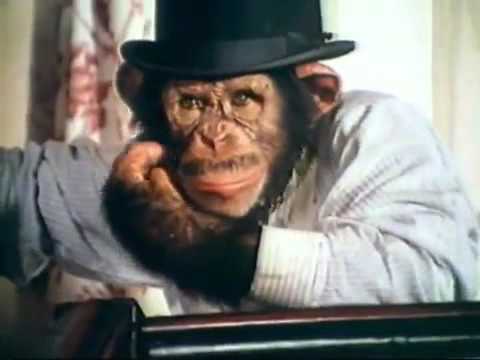

The best-proved commercial result in the British archive, resting on a performance the animals could not consent to and did not recover from, which is why it earns top marks for longevity and almost none for bravery.
Before the chimps, PG Tips was the fourth brand in the British tea market. Two years after they arrived it was the first, and it stayed there. Campaign calls the work the longest-running television campaign in British history, which makes it the most commercially successful advertising idea this country has produced.
Our take: an unbeatable business result built on a device that the industry can no longer use, and should not want to. The numbers are canonical. The method is not.
PG Tips was launched by Brooke Bond in 1930 and spent the next quarter century as a competent also-ran. Commercial television arrived in Britain in 1955, and Brooke Bond had a distribution business, a decent product and no distinguishing idea. Tea is close to a commodity, so the brand needed fame rather than an argument.
Davidson Pearce Berry and Spottiswoode answered with the oldest crowd-pleaser in British zoo-going. Campaign’s brand history records that the first chimp commercial, screened in 1956, showed a chimpanzees’ tea party at London Zoo. The Independent names that first film as “Stately Home”.
The mechanic is simple and the writing is where the work actually sits. Chimps are dressed as people, filmed doing a recognisable British job or domestic scene, and then dubbed by comic actors delivering lines that belong to the sitcom of the day. The animals supply the attention, the script supplies the joke, and the product arrives at the end as the reason everyone stops for a cup.
Casting the voices as carefully as the situations is what separates this from a novelty act. Peter Sellers, Bob Monkhouse, Cilla Black and Donald Sinden all took turns, and the audience heard familiar comic timing coming out of unfamiliar faces. The gap between the two is the entire gag, and it never needed explaining.
The most quoted example is the removal men struggling to get a piano down a staircase, with the exchange “Dad, do you know the piano’s on my foot?” answered by “You hum it, son, I’ll play it.” The Independent places Mr Shifter in the era when Steptoe and Son was at its peak, and that is the point: the films tracked contemporary television comedy rather than inventing a house style of their own.
The structural achievement is that the format had no fixed cast for its first 36 years. Each film was a one-off scenario, which meant the campaign could follow whatever Britain happened to be watching, from a courtroom drama to a Tour de France pastiche. Campaign records that a settled chimp family was only created in 1992, echoing the family formats that were fashionable by then.
That flexibility let the work carry product news without breaking character. When Brooke Bond’s successor put £25 million into the pyramid tea bag in 1996, the launch film had a chimp singing “Papa’s Got a Brand New Bag”. Three years later, PG’s bags had edged ahead of Tetley’s, which had led the tea bag sector for years.
The campaign also ran a second engine off screen. Picture cards packed inside the tea, an idea borrowed from cigarette cards but aimed squarely at children, turned a grocery purchase into a collection. It is an early and unusually effective piece of pester power, and it kept the chimps in circulation between commercial breaks.
The headline number is unambiguous. PG Tips sat fourth in the tea market before the chimps debuted in 1956, and by 1958 it was the top-selling tea in Britain. Very little advertising in the archive can point to a two-year move of that size, and this is why the campaign outranks flashier work in our best advertising campaigns list.
The more instructive number came later, and by accident. In the late 1960s Brooke Bond tested alternative advertising treatments in selected parts of the country, effectively running the brand with and without its chimps. Sales fell where they were not used, and the chimps came back in force in 1971.
That is a regional withdrawal test, which is the closest thing to a controlled experiment most brands ever get, and it is worth more than any award. It also explains the campaign’s extraordinary run. Once you have proof that removing the advertising costs you money, nobody in the building argues for a rebrief.
The chimpanzees came from Twycross Zoo in Leicestershire, which trained them and took revenue from the work. Twycross itself has since said the use of the apes was wrong and has set out the harm it caused. That is not a campaigning group’s claim, it is the organisation that supplied the animals.
Speaking to BBC News in 2014, the zoo’s then chief executive Sharon Redrobe described Choppers, who played Ada in the commercials and was by then the last surviving PG Tips chimp, as still learning how to be a chimpanzee in old age. Redrobe was blunt about the cause.
It’s not a good start in life to be treated like a human because they don’t learn ape behaviour and are not very good at being with other chimps. They want to be with people.
Sharon Redrobe, then chief executive of Twycross Zoo, BBC News, 2014
The zoo’s head of life sciences, Dr Charlotte Macdonald, told the BBC that the fact Louis and Choppers lived so long as a pair was itself a sign that something was wrong, because chimpanzees are group animals. Both apes misread the ordinary signals other chimps used, and could become frightened or aggressive. Louis, who played the bowler-hatted Mr Shifter, died in 2013.
There is a second harm that has nothing to do with the individual animals. Ian Redmond, chair of the Ape Alliance, told the BBC that showing apes in human settings makes the public disbelieve that the species is facing extinction, which in turn makes the trade in young wild-caught apes look acceptable. A campaign that raises the commercial value of a chimpanzee raises the incentive to take one.
Welfare objections were not a late arrival. Wikipedia’s account records complaints from animal rights organisations that halted the ads in the 1970s, with the chimps returning 18 months later once sales dipped, and Lürzer’s Archive gives the same interruption. Campaign’s contemporaneous history, meanwhile, attributes the 2002 retirement to a commercial motive: Brooke Bond’s successor Van den Bergh Foods wanted something fresh for younger tea drinkers, and hired Aardman Animations to make claymation birds instead. Both things are true, and the honest summary is that the criticism made the idea indefensible long before the marketing department found a reason to stop.
The most effective British campaign ever measured, and one no agency should want on a reel today, because the performance that made it work required animals that could not consent and did not recover. It scores highly for longevity and for proof, and close to nothing for bravery, since borrowing a zoo attraction was the safest idea in the room. If you want the same emotional pull from an animal without the cost, the modern answer is Cadbury’s Gorilla, and it is a man in a suit. Our full marking scheme is set out in how we score.

He plans, buys and reviews advertising for a living, and helps score campaigns on the site against the same five Crown Score criteria alongside other authors and contributors.
73/100One photograph of Heinz Beanz on two biscuits, no paid media, a day of brand replies and a debate in the House of Commons. Frank PR's Beanz on Bix, reviewed.
 79/100
BMP DDB gave the jokes to Rowan Atkinson and the product line to his assistant. Seventeen films, nine British Arrows, an IPA Gold and a cinema franchise later, a full review.
 75/100
The ASA did not ban Iceland's 2018 Christmas film. Clearcast declined to clear it because Greenpeace made it. The difference is the whole story, and it handed Iceland 70 million views.