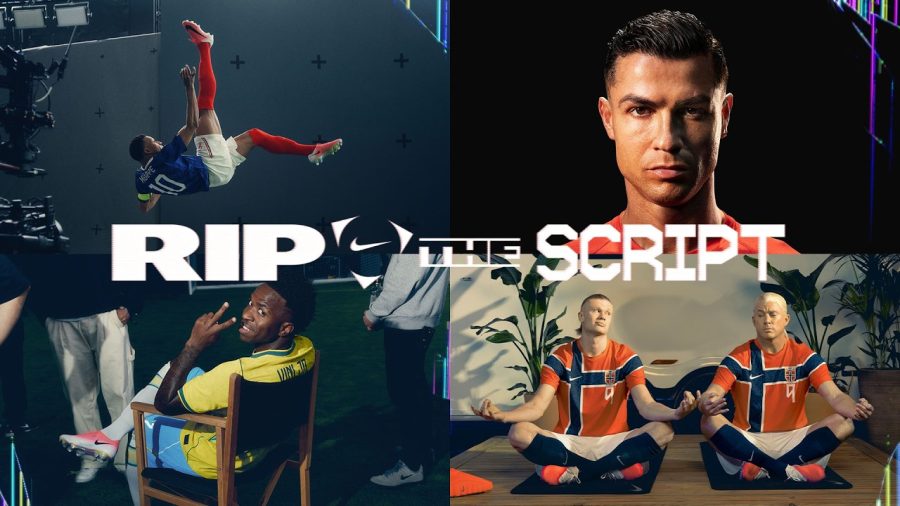
Nike raises brand marketing spend to $1.3bn as sales fall 4%
Nike's demand creation spend rose 5 per cent last quarter even as revenue fell 4 per cent, as Elliott Hill doubles down on brand building and cuts costs elsewhere.
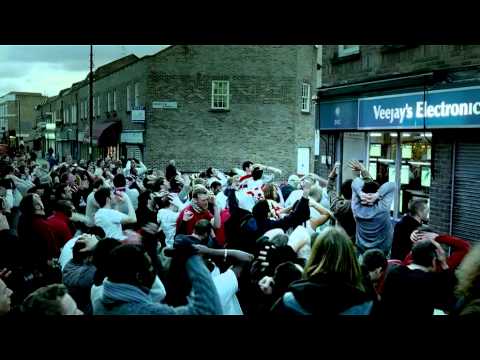

Superb filmmaking on a genuinely repeatable idea, held back by a commercial case that stops at views and Lions, and by a tournament that eliminated almost every player in the script.
Nike spent three minutes and a Mexican auteur’s fee arguing that a single touch of a football can rewrite a man’s entire life. Then the World Cup started, and almost every player in the film went home early. The take: the most technically ambitious sports advert ever made, and a permanent lesson in what happens when you hand your idea to eleven people you do not control.
A World Cup is the only month in four years when football advertising is watched by people who do not like football. Every kit manufacturer, energy drink and telecoms operator arrives with a montage of slow-motion boots and a stirring string arrangement, and by the second week nobody can tell any of them apart. The commercial problem is not awareness, it is separation.
Nike’s specific problem was scale. It had contracts with a large proportion of the tournament’s most recognisable players, and the obvious use of that roster is a parade: face, badge, boot, next face. A parade is expensive, forgettable and, worse, it is exactly what everyone expects a sportswear brand to make.
Wieden+Kennedy Amsterdam found the thought inside the sport rather than around it. In a knockout tournament a career can pivot on a single intervention, so the film shows the consequences of each moment branching outward in real time: the statue, the airport named after you, the biopic, the tabloid front page, the caravan in the rain. Every player gets a glimpse of the life a successful touch would buy, and the life a failed one would cost.
It is a proper idea because a stranger can repeat it in one sentence. It also solves the roster problem elegantly. The players are not endorsers standing in a line, they are the mechanism of the story, and the more of them you have the better the escalation works.
The title does the rest. “Write the Future” is an instruction rather than a boast, which is a harder and more useful register than the genre usually manages.
Alejandro González Iñárritu directed through Independent Films, and the choice explains the film’s texture. Iñárritu had spent a decade making pictures built entirely on consequence and coincidence, from Amores Perros to Babel, so the brief is a compressed version of his own preoccupation. He shoots the branching futures the way he shoots his features, with handheld urgency and a lot of ugly, believable detail.
The structure is a relay. Didier Drogba goes for goal, Fabio Cannavaro clears it off the line and is instantly canonised on Italian television. Wayne Rooney gives the ball away to Franck Ribéry and is dispatched to a caravan site with a beard and a bad haircut, then wins it back and gets a chalk figure carved into an English hillside. Ronaldinho’s step-overs turn into a global fitness craze, and Cristiano Ronaldo takes a cross down and runs into a stadium bearing his own name.
The cast list beyond the leads is deep enough to be a joke in itself, taking in Theo Walcott, Patrice Evra, Thiago Silva, Cesc Fàbregas, Andrés Iniesta, Gerard Piqué, Tim Howard and Landon Donovan, with cameos from Kobe Bryant, Roger Federer, Gael García Bernal and an animated Homer Simpson. Iñárritu appears in it himself. The full cast is documented at length, and the point of it is density rather than name-checking: the film never pauses to introduce anybody.
The music choice is the smartest craft decision in it. Instead of an orchestral swell, the track is “Hocus Pocus” by the Dutch band Focus, all yodelling and flute and manic tempo shifts, which is genuinely funny and gives the editor licence to cut on absurdity rather than emotion. Sound design and mix came from Raja Sehgal at Grand Central in London, and the layering of crowd, commentary and radio chatter is what holds three minutes of non-linear storytelling together.
Nike launched the film through Nike Football’s Facebook page rather than a television premiere, which in 2010 was still an unusual decision for a piece of this budget. D&AD records that the release drove the film past 40 million views, with more Facebook likes and more Twitter mentions than any other campaign that year, making Nike the most shared brand online in 2010. Slate reported 7.8 million views in the first week alone.
The awards were correspondingly heavy. It took the Film Grand Prix at Cannes Lions 2011, plus a Gold Lion in Integrated and a haul of Film Craft metal, as shots reported from the festival. It also collected pencils at D&AD 2011 across Film, Integrated and Digital Experience Design.
The most difficult brief is to make a global film that connects locally, but this film had managed to do it.
Tony Granger, Film jury president, Cannes Lions 2011, reported by shots
What is missing is the commercial half. There is no published IPA case, Effie or Cannes Creative Effectiveness paper attaching this film to Nike’s football revenue, and in a category where boot sales are seasonal and tournament-driven anyway, attribution would be hard even if someone had tried. Our scoring method treats fame without a demonstrated commercial effect as an incomplete case, and this is the textbook example.
Then South Africa happened. Ronaldinho was not selected for Brazil’s squad at all, so the man whose step-overs anchor the middle of the film never kicked a ball in the tournament. Cannavaro’s Italy and Ribéry’s France, the two 2006 finalists, both went out at the group stage, Italy finishing bottom of their group.
Drogba’s Ivory Coast finished third in a group containing Brazil and Portugal and went home after three matches. Rooney’s England were beaten 4-1 by Germany on 27 June, and Cristiano Ronaldo’s Portugal lost 1-0 to Spain on 29 June, both in the round of 16. Spain, whose players appear in the film only in supporting roles, won the thing.
Within weeks the press had a story about the curse of the Nike advert, and the film’s own logic was being turned against it. That is the exposure you accept when your idea depends on real people performing on a date you do not control. It is also, uncomfortably, why the film has aged well: the branching futures it imagines are hypothetical, and the tournament simply picked the other branch.
Write the Future set the template that every tournament film since has either copied or deliberately avoided: long form, ensemble cast, feature director, released online first and cut down for broadcast. Nike itself returned to the format for the 2014 World Cup with Risk Everything, which is louder, more animated and noticeably less disciplined. Very little in the genre since has matched the 2010 film’s willingness to be strange.
It also marked the point at which a Facebook launch became a respectable route to market for a flagship film rather than an afterthought. That is a bigger legacy than the awards. It sits comfortably in our list of the best advertising campaigns on craft alone.
A genuinely great piece of filmmaking attached to a genuinely good idea, undermined by the two things it could not buy: a published commercial case and a tournament that agreed with the script. It wins on craft, on fame and on the sheer nerve of hiring Iñárritu to make an advert about the consequences of a misplaced pass. It loses marks because the evidence stops at views, likes and Lions, and because within a month of launch the film’s premise was being used as a punchline by the same press that had shared it.

He plans, buys and reviews advertising for a living, and helps score campaigns on the site against the same five Crown Score criteria alongside other authors and contributors.
Nike's demand creation spend rose 5 per cent last quarter even as revenue fell 4 per cent, as Elliott Hill doubles down on brand building and cuts costs elsewhere.
Twenty Nike films ranked, from Walt Stack crossing the Golden Gate Bridge in 1988 to the Paris Olympics, with year, Wieden+Kennedy office and director checked for each. Dream Crazy is number one.
 88/100
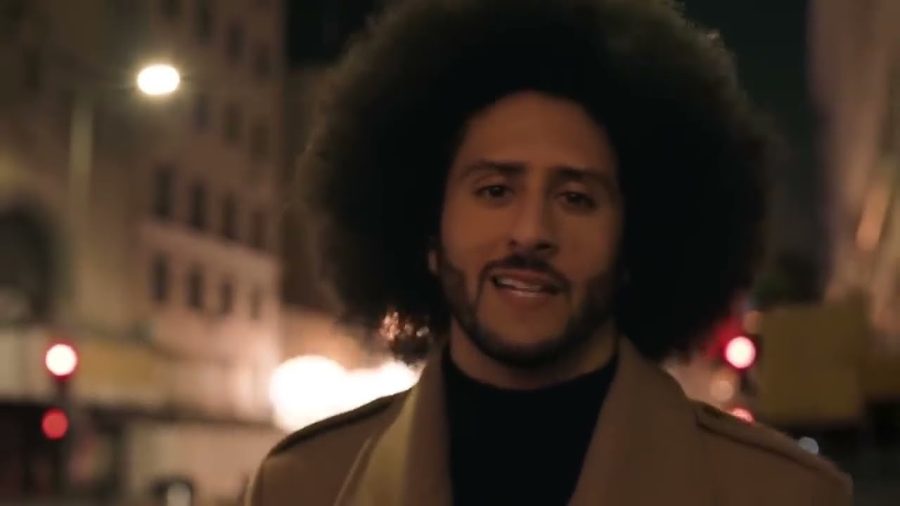
Nike put Colin Kaepernick on the thirtieth anniversary of Just Do It, watched a boycott start and the share price fall, then closed at a record high ten days later.