

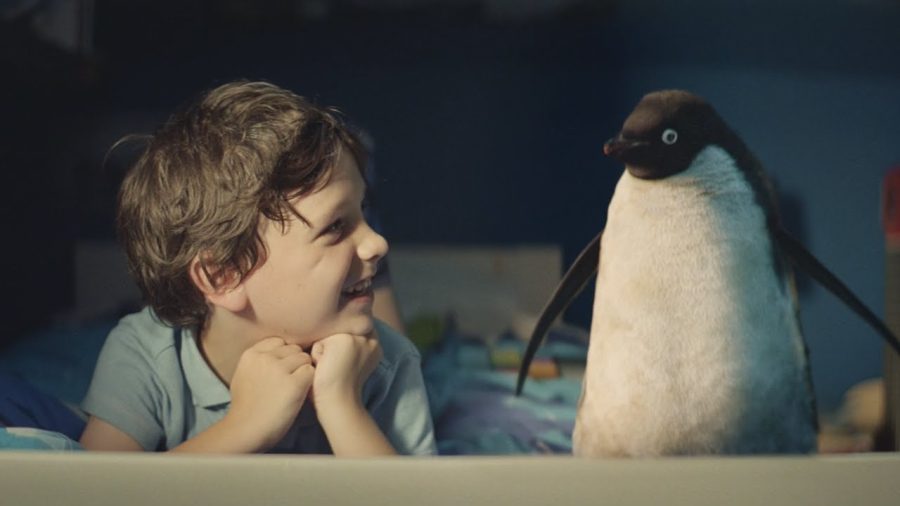
 81/100
John Lewis, Monty the Penguin: the Christmas advert that became a shop
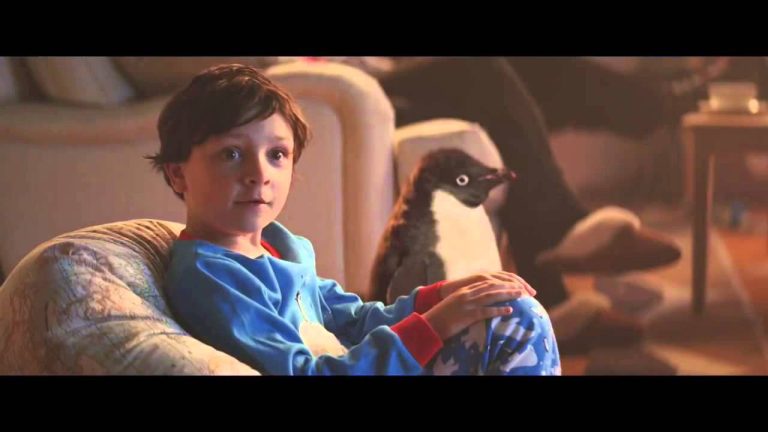
Dougal Wilson's 2014 film for John Lewis gave a boy's toy penguin a mate, sold out a £95 plush in days and won a Cannes Creative Effectiveness Grand Prix. A look back.
73 campaigns reviewed
Every review scored out of 100, with full credits and the evidence behind the result.
All campaigns29 Christmas adverts so far
Every UK Christmas advert of 2026 in one place, with the films, the credits and our verdicts.
Watch all 2922 rankings
The best adverts by brand, decade and season, argued properly and kept up to date.
All rankings157 stories
The advertising stories that matter, published every weekday, with what each one means.
All news 10 Nov, 09:53 JD Sports Christmas advert 2026: Create The New swaps festive nostalgia for young creatives
 10 Nov, 09:53 Morrisons Christmas advert 2026: Goldilocks meets the Three Bears in Christmas Made Just Right
 10 Nov, 09:52 Waitrose Christmas advert 2026: Keira Knightley and Joe Wilkinson return in The Perfect Gift 2
13 guides and rulings
ASA rulings and the UK advertising rules, explained in plain English and checked against the source.
All policy19 explainers
How great advertising gets made, from the brief to the media plan, and how to make your own.
All craft147 brands tracked
Every brand we have reviewed or reported on, with its best work and its latest news.
Brands A to Z97 agencies credited
The agencies behind the work, with every campaign we have credited to them.
Agencies A to Z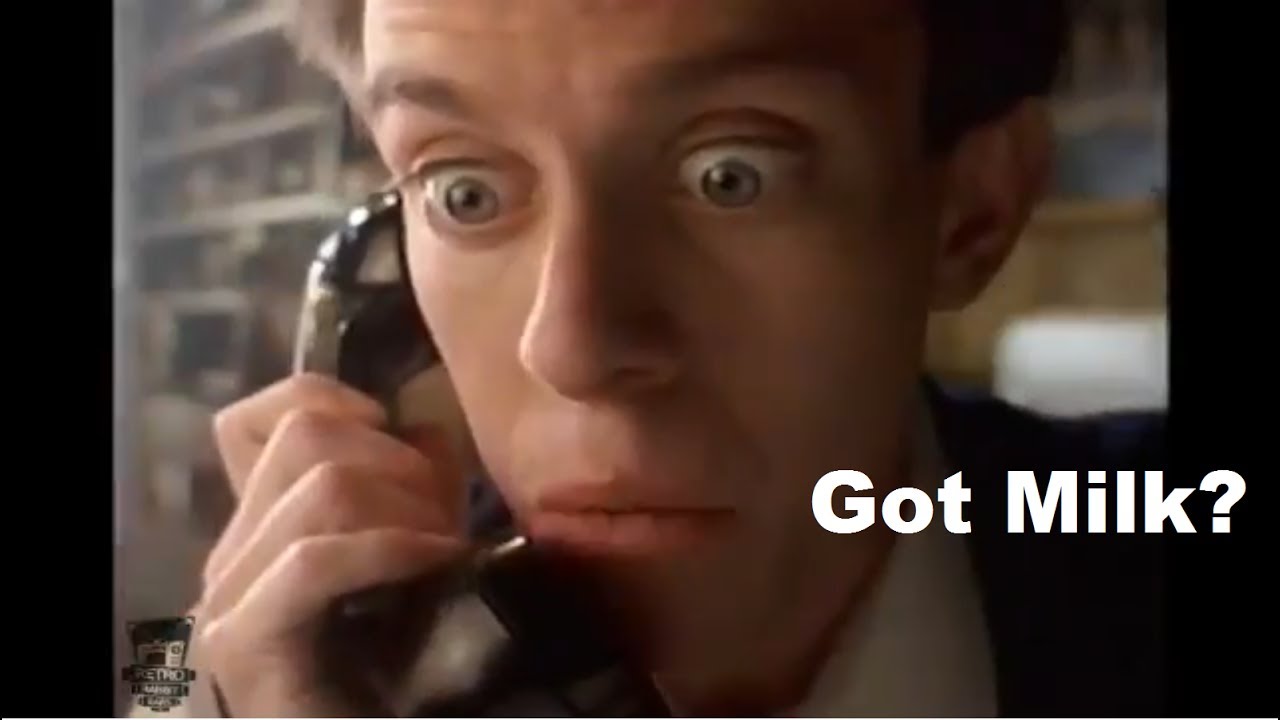
The canonical deprivation campaign, with a line that outgrew its client and its agency, held back on effectiveness because the verified sales evidence is Californian and modest while national milk consumption kept falling.
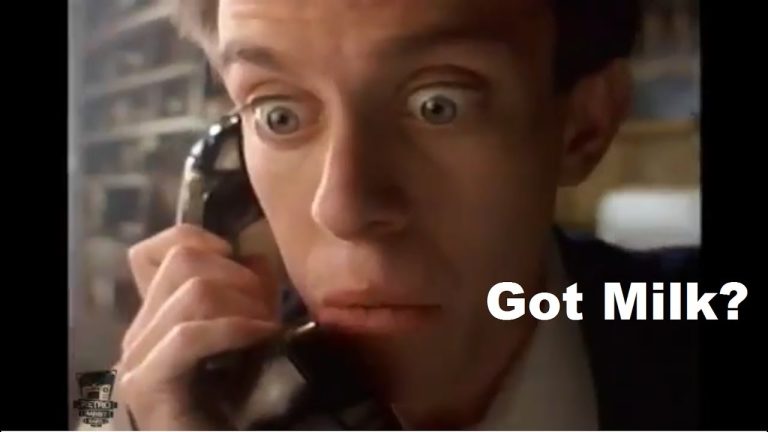
A man sits alone in a room stuffed with relics of the 1804 duel between Alexander Hamilton and Aaron Burr, chewing a peanut butter sandwich, when a radio station rings with a $10,000 question: who shot Hamilton? He knows. Everyone watching knows. He cannot say it, because his mouth is glued shut and the milk carton is empty, and out of that one minute of misery came the two most repeated words in American advertising.
Our take: the Got Milk advert is the purest example of selling a product by showing what life is like without it, and the line it launched outgrew the campaign, the agency and the client that made it.
The California Milk Processor Board was set up in February 1993 to stop a slide. Californians agreed that milk was healthy, agreed that it was full of calcium and were drinking less of it every year, because the health message had been made so often that it no longer registered. The ANA Educational Foundation case history records that 18 to 24 year olds were drinking 44 gallons of soft drinks a year against 17.2 gallons of milk.
Jeff Manning, the board’s first executive director, decided the answer was not another nutrition lecture. Milk was, in his words, white and came in gallons, and the job was to make people care. He hired Goodby, Silverstein & Partners, then a young San Francisco agency, and gave them a budget of around $23m a year and a client with a single product and no competitor except indifference.
The strategy came out of a research trick. Jon Steel, the agency’s planner, asked focus group participants to give up milk for a week before they came in, then asked them what it had been like, and the deprivation they described became the whole campaign. Nobody had ever felt strongly about a glass of milk, but everybody had a story about cereal with nothing to pour on it, or a brownie with nothing to wash it down. Fast Company’s oral history has Goodby recalling that the line itself was a throwaway: asked what to call the running-out-of-milk section of a meeting, he said “Got milk?”, with the question mark.
That is the sharp thought a stranger can repeat, and it inverts the category. Every milk advert before it showed the product being enjoyed; this one never shows a satisfying drink at all. The agency told the board that the message was simple: go to the fridge, check the milk, and if there is not enough, go and buy some. Milk stopped being a nutrient and became something you could run out of at the worst possible moment.
The launch spot gives the deprivation a plot. A history obsessive, surrounded by duelling pistols and portraits, makes himself a peanut butter sandwich just as a radio host announces a $10,000 prize for naming the man who shot Alexander Hamilton. The phone rings, he answers, and the name Aaron Burr comes out as a strangled “Aawon Buhh” while he lunges for a carton with almost nothing left in it. The host counts down, the line goes dead, and the two words appear on screen.
It first aired on 29 October 1993, and it was directed by Michael Bay, then a commercials and music video director more than a year away from his first feature. The choice looks stranger now than it did then. Bay had not yet become shorthand for explosions, and what the film needed was a director who could build tension in a single room with a sandwich, a telephone, a radio voice and a countdown, which is exactly what he does.
Sean Whalen carries the film without a single clean line of dialogue. He told Yahoo Entertainment that Bay’s only direction on set was “Do what you did in the audition”, where Whalen had played the moment as genuine despair: a man whose whole life has led to this question and who cannot answer it. That is why the spot is funny rather than merely silly. He is not a clown, he is a tragic figure with peanut butter on his teeth.
The mechanics were grim. Between takes, four handlers scraped the bread out of his mouth into a bucket, rinsed him with water, cleaned his teeth with a wet cotton bud and handed him a fresh sandwich. He finished the shoot with mouth ulcers and could not face peanut butter for four years. The film was on air within a week, and Whalen found he could not walk down the street without strangers shouting “Aaron Burr” at him.
The endline does almost nothing, which is the point. It is two lower case words and a question mark, delivered flat, with no logo and no brand to speak of, because the client is a processors’ board rather than a manufacturer. Where other campaigns build equity in a name, this one built equity in a question, and a question is easier to steal, parody and pass on than any slogan with a brand attached. Our piece on advertising slogans that work makes the case that the best lines are the ones people say to each other, and this is the canonical example.
The format also had range. The deprivation set-up could be played as horror, romance, science fiction or slapstick, and the board ran dozens of variations over the following years, from a man in a heaven full of giant cookies and empty cartons to an entire town, Drysville, where milk does not exist. The joke never wore out because the joke was always the same: you have something that needs milk, and you have no milk.
Here the record is better than for most famous campaigns, and it is worth separating the state from the nation. In California, sales rose from 740 million gallons in 1993 to 755 million in 1994, the first increase in more than a decade, and the ANA case history treats that swing as the campaign’s core proof. The Encyclopedia of Major Marketing Campaigns adds that household penetration in the state rose from 70 per cent in 1993 to 74 per cent in 1995, and that by 2003 the line had 97 per cent awareness in California.
Aaron Burr swept the 1994 award season, taking three Gold Clios, the Clio Grand Prix, a Gold Effie and a Silver Lion at Cannes, and in 2009 it was inducted into the Clio Hall of Fame. Nationally the picture is murkier. American milk consumption kept falling for two decades after the campaign began, from 0.96 cups a day in 1970 to 0.59 in 2011 according to figures cited by Mental Floss, so the honest claim is that Got Milk halted a decline in one state and made a slogan famous everywhere, not that it reversed a national trend.
Most people who say “Got milk?” are picturing a celebrity with a white upper lip, and that is a separate piece of work. The milk moustache print campaign was created by Bozell for the national Milk Processor Education Program, MilkPEP, with Jay Schulberg as creative director, Bernie Hogya as art director and Jennifer Gold as copywriter, and Annie Leibovitz behind the camera for the early portraits. Its first line was “Milk. What a surprise!”, followed by “Where’s your mustache?”, and it only carried “got milk?” after MilkPEP licensed the Californian slogan in 1995.
So the two things people conflate had different clients, different agencies and different media. Goodby Silverstein made deprivation comedy on television for California; Bozell made aspirational portraiture in magazines for the whole country, and the Californian line was bolted on because it was already the better-known phrase. The credit for the idea belongs west of the Sierra Nevada, and the credit for the moustache belongs to Bozell.
In February 2014 MilkPEP replaced “got milk?” with a new national platform, Milk Life, built around protein and nutrition rather than deprivation, and Dairy Reporter noted at the time that the California Milk Processor Board would keep using the original line. It did. Then in August 2020, with milk sales up during the pandemic, MilkPEP brought “got milk?” back for a new generation, as Adweek reported, complete with a TikTok challenge.
That arc, abandoned by the licensee and revived six years later because nothing better had come along, is the strongest possible evidence of a line’s value. The lesson for a marketer is not that milk needs a slogan. It is that a campaign built on a universal moment of frustration can be paused, parodied and handed between organisations for three decades without losing its meaning.
Got Milk earns its place among the campaigns that changed how the craft thinks, because it proved that a category could be sold by dramatising its absence and that a client with no brand could own a phrase the whole country used. The idea and the legs score close to the ceiling. Effectiveness is marked down because the verifiable sales evidence is Californian and modest, while national consumption kept falling for years, and craft loses a point for a launch film that is brilliantly performed but plainly shot. It is still one of the ten campaigns we would put in front of any planner who thinks a strategy needs a benefit, and we explain the marking in how we score.

He plans, buys and reviews advertising for a living, and helps score campaigns on the site against the same five Crown Score criteria alongside other authors and contributors.
81/100Dougal Wilson's 2014 film for John Lewis gave a boy's toy penguin a mate, sold out a £95 plush in days and won a Cannes Creative Effectiveness Grand Prix. A look back.
 83/100
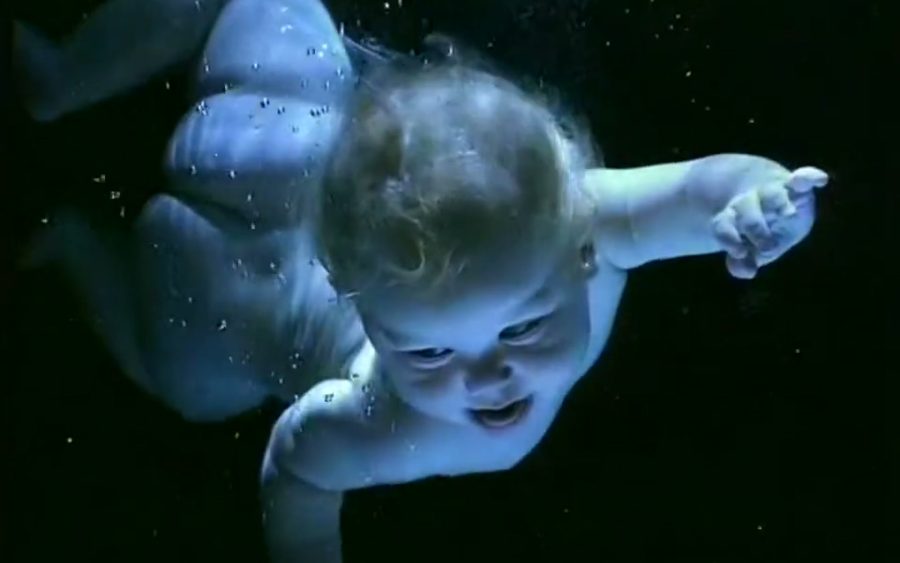
WCRS launched a fourth mobile network in 1994 with a Philip Glass score, an orange square and a line about the future. The Future's Bright, The Future's Orange, reviewed.
 64/100
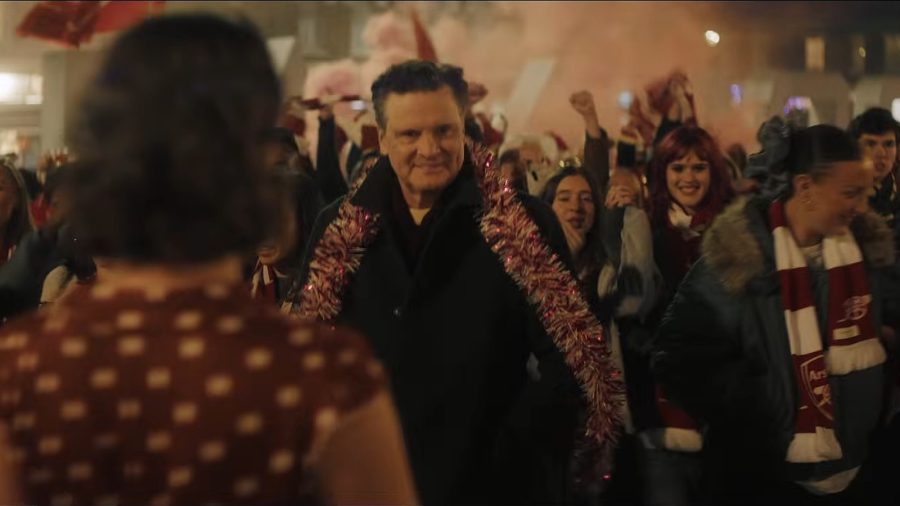
Colin Firth narrates what sounds like a Christmas story through Islington, and it turns out to be the 2025/26 title season. Arsenal's in-house festive film, reviewed.