


Distinctive brand assets: what they are, why they beat differentiation, and how to build one
Romaniuk's fame and uniqueness grid, the six kinds of asset, the brands that own a colour, a shape or a sound, and the redesigns that threw an asset away.
73 campaigns reviewed
Every review scored out of 100, with full credits and the evidence behind the result.
All campaigns29 Christmas adverts so far
Every UK Christmas advert of 2026 in one place, with the films, the credits and our verdicts.
Watch all 2922 rankings
The best adverts by brand, decade and season, argued properly and kept up to date.
All rankings157 stories
The advertising stories that matter, published every weekday, with what each one means.
All news 10 Nov, 09:53 JD Sports Christmas advert 2026: Create The New swaps festive nostalgia for young creatives
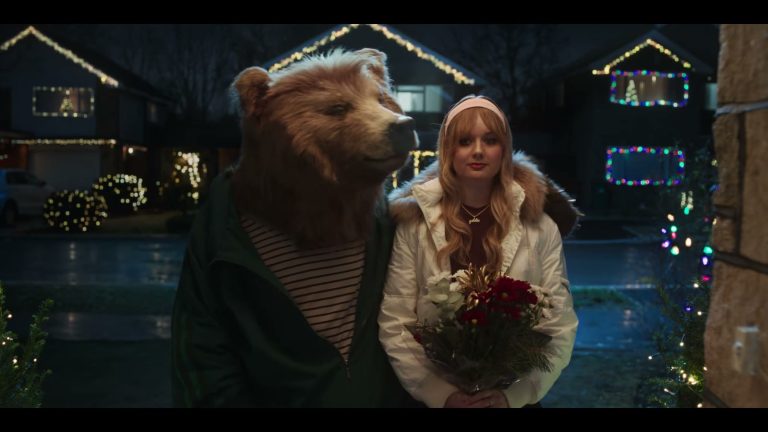 10 Nov, 09:53 Morrisons Christmas advert 2026: Goldilocks meets the Three Bears in Christmas Made Just Right
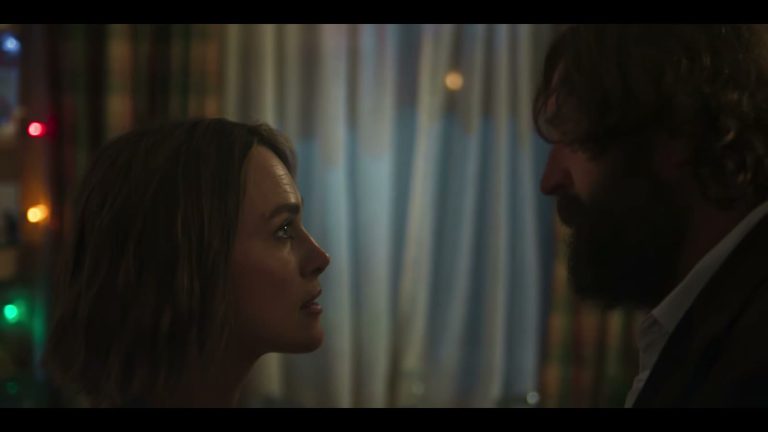 10 Nov, 09:52 Waitrose Christmas advert 2026: Keira Knightley and Joe Wilkinson return in The Perfect Gift 2
13 guides and rulings
ASA rulings and the UK advertising rules, explained in plain English and checked against the source.
All policy19 explainers
How great advertising gets made, from the brief to the media plan, and how to make your own.
All craft147 brands tracked
Every brand we have reviewed or reported on, with its best work and its latest news.
Brands A to Z97 agencies credited
The agencies behind the work, with every campaign we have credited to them.
Agencies A to ZWhat a brief is for, the single-minded proposition, and what the Levi's 501, Cadbury Gorilla, Compare the Market and Nike Dream Crazy briefs actually said. Plus a one-page template.
The most valuable sentence in the history of British price comparison advertising was a footnote. When VCCP briefed its creatives on comparethemarket.com in 2008, the main document described a business that was fourth in a category of four, with a long, forgettable name. At the bottom, the planners added a note: the word “market” cost over £5 a click on Google, so could the creatives find a cheaper word that could live alongside it in the advertising?
The answer was “meerkat”, at roughly 5p a click, and everything else about Aleksandr Orlov followed from it. That is what a creative brief is for. It is not a form, and it is not a record of the meeting. It is the one document whose job is to make the next idea more likely than the last one.
The brief exists because advertising is made by people who were not in the room when the business problem was discussed. The discipline that produced it, account planning, was formalised in London in the late 1960s by Stephen King at J. Walter Thompson and Stanley Pollitt at Boase Massimi Pollitt, who both concluded that research was being wasted because the person who understood the consumer was not the person talking to the creatives. King’s planning cycle still underpins most agency templates: where are we, why are we here, where could we be, how could we get there, are we getting there.
A good brief answers the first four of those questions in under a page and then gets out of the way. The line usually credited to David Ogilvy, “give me the freedom of a tight brief”, is quoted so often because it is the whole argument. Constraints are not the enemy of good work. Vagueness is.
The evidence that the industry has forgotten this is unusually stark. The BetterBriefs study, published with the IPA in October 2021 after surveying more than 1,700 marketers and agency staff in over 70 countries, found that 80% of marketers believe they write good briefs and 10% of creative agencies agree. Respondents estimated that a third of marketing budgets are wasted on work sent in the wrong direction, and around seven in ten on both sides said rebriefs happen too often.
Much of that waste comes from confusing two different documents. The client brief is written by the marketer and describes the business: the objective, the budget, the timing, the audience as the sales data sees it, the things legal will not allow. It is allowed to be long and it is allowed to contain spreadsheets.
The creative brief is written by the agency, usually the planner, and it is an act of translation. It takes the business problem and turns it into a human problem that a writer and an art director can do something about.
The Cadbury brief is the clearest example of the difference. The client’s problem in 2007 was a Dairy Milk brand that had recalled more than a million bars after a salmonella contamination the year before and had lost warmth with a generation of buyers. The brief Cadbury handed Fallon in March 2007 was three words: “get the love back”.
Fallon’s translation was that all Cadbury communication should be as enjoyable as eating the bar itself, an idea it framed as Glass and a Half Full Productions, with “a glass and a half full of joy” as the line on the film. Nothing in that thought mentions chocolate quality, cocoa content or reassurance about factories, and nothing in it needed to. A gorilla playing the drum break from “In the Air Tonight” is a direct answer to it, and our full review of Gorilla covers what happened when it aired on 31 August 2007.
Every creative brief template since the 1970s has had a box in the middle for the proposition, and every planner has watched a client try to put three things in it. The single-minded proposition is the one thing the advertising must leave in the reader’s head. Its ancestor is Rosser Reeves’s unique selling proposition from the 1940s, which insisted a claim be specific, unavailable from competitors and strong enough to move people, but the modern version does not have to be a claim at all. It can be a feeling, a role for the brand or a reframing of the category.
The Levi’s 501 brief at Bartle Bogle Hegarty is the textbook case. When BBH won the account in 1982 the brand was associated with middle-aged men rather than teenagers, and the agency’s answer was a European campaign it called The Original Jean. The proposition was that the 501 was the original, and the insight that made it work was that 15 to 19 year olds in 1985 found the America of the late 1950s far more desirable than the America of 1985.
That gave John Hegarty and Barbara Nokes a launderette, Nick Kamen, and Marvin Gaye’s “I Heard It Through the Grapevine”, and it gave Levi’s a sales increase Levi Strauss puts at 800% after the film aired on Boxing Day 1985. Notice what the proposition does not say. It does not say “authentic heritage denim for young adults”, which is what the same thought looks like after a committee has been at it. Our review of Launderette has the full credits.
Sometimes the proposition is so sharp that the creative leap is short. The comparethemarket.com footnote is one case. Nike’s 2018 brief to Wieden+Kennedy Portland is another: mark the 30th anniversary of Just Do It in a way that meant something to a younger audience. The agency’s answer was Dream Crazy, a two-minute film of athletes with unreasonable ambitions, narrated by Colin Kaepernick, launched on 3 September 2018 under the line “Believe in something. Even if it means sacrificing everything.”
The brief did not say “hire the most divisive athlete in America”. It asked for Just Do It to be reframed for a generation that did not remember 1988, and the casting was the consequence of taking that seriously rather than politely. The numbers Nike later submitted to Cannes, including a 31% rise in sales reported after launch, are covered in our Dream Crazy review.
The meerkat is the purest example because the brief solved a media problem and handed the creatives a word. What VCCP did with it, the fictional site, the Russian aristocrat, the “simples” catchphrase, was craft, and craft is the agency’s job. But a creative director will tell you which briefs produced the work that lasted, and it is rarely the ones that left every option open.
The first film aired on 5 January 2009, and the rest of the story, including what the character did to search costs and to the brand’s ranking among insurance sites, is in our Compare the Market review.
The BetterBriefs data lists the symptoms, and anyone who has sat in a creative department can supply the diagnosis. The first failure is the brief with no decision in it. Three propositions, two audiences and a list of “key messages” is not a brief, it is a request for the creatives to do the planning, and they will do it in the direction of the funniest script.
The second is the brief written as a description of the advert. If the box marked proposition contains “a heartwarming film showing a family at Christmas”, the work has already been decided by someone who is not going to make it. Cadbury did not ask for a gorilla. It asked for the love back.
The third is the brief with no truth in it. “Consumers want brands that understand them” is not an insight, because it is true of every brand and every consumer.
The Levi’s insight was specific and slightly uncomfortable: the customer preferred an America that no longer existed. The meerkat insight was a number from the search console. Both would have survived a hostile question in the room, which is the only test that matters.
The fourth is the brief that is never signed. The BetterBriefs research found that 69% of marketers and 73% of agencies think rebriefs happen too often, and rebriefs happen because the first brief was approved by someone without the authority to stop it changing. A brief that the chief marketing officer has not read is a draft.
Templates vary by agency, but the good ones contain the same ten answers in roughly this order. Write it in plain sentences, on one page, and have the person who will approve the work sign it before the creatives see it.
Then read it back and ask whether a stranger could tell you what the advertising is supposed to achieve from the proposition alone. If they could not, it is not single-minded yet, and the work that comes back will make the same mistake in a more expensive medium.

He plans, buys and reviews advertising for a living, and helps score campaigns on the site against the same five Crown Score criteria alongside other authors and contributors.
Romaniuk's fame and uniqueness grid, the six kinds of asset, the brands that own a colour, a shape or a sound, and the redesigns that threw an asset away.
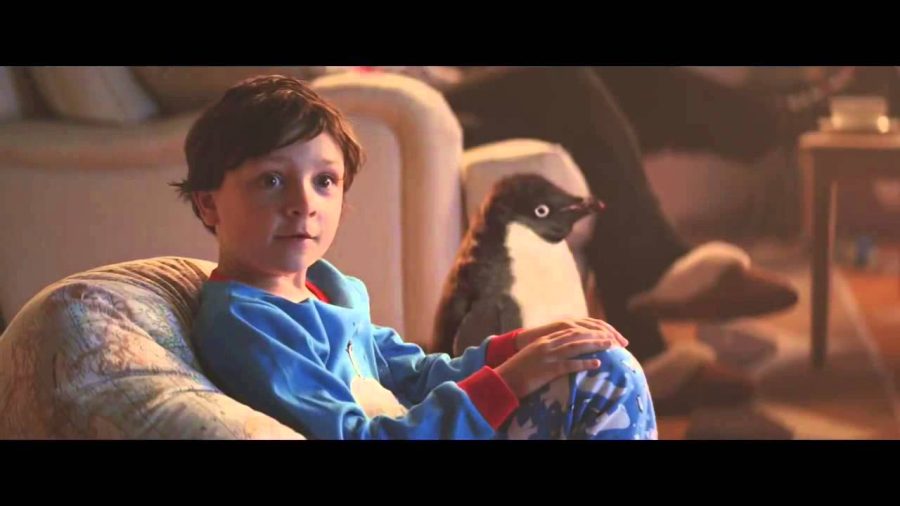
Brief in January, director in May, shoot in September, air in early November. The timeline, the £1m-to-£6m budget split, the music, the charity, the toy and the testing that now shapes the films.
A character you invent is a freehold asset; a celebrity is a rental. The evidence on fluent devices, the twelve points of share of voice most brands leave on the table, and the mascots that failed.