

The 20 best sports adverts ever made, ranked
Twenty sports adverts ranked on idea, craft, bravery and evidence, from Nike's Just Do It launch and Tag to Channel 4's Superhumans, This Girl Can and Be Like Mike, with verified credits.
73 campaigns reviewed
Every review scored out of 100, with full credits and the evidence behind the result.
All campaigns29 Christmas adverts so far
Every UK Christmas advert of 2026 in one place, with the films, the credits and our verdicts.
Watch all 2922 rankings
The best adverts by brand, decade and season, argued properly and kept up to date.
All rankings157 stories
The advertising stories that matter, published every weekday, with what each one means.
All news 10 Nov, 09:53 JD Sports Christmas advert 2026: Create The New swaps festive nostalgia for young creatives
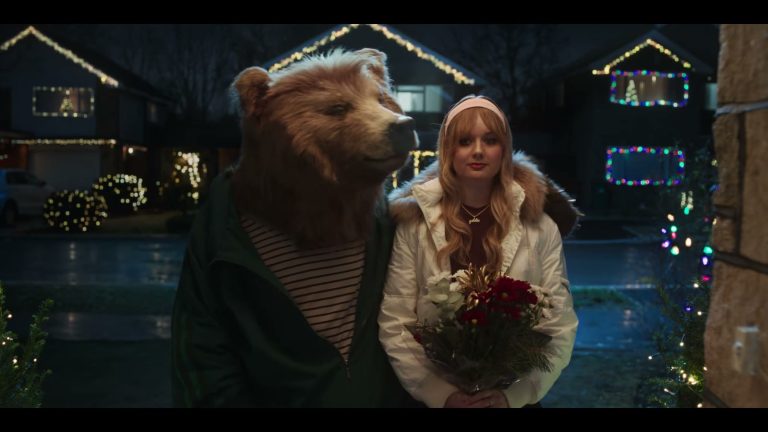 10 Nov, 09:53 Morrisons Christmas advert 2026: Goldilocks meets the Three Bears in Christmas Made Just Right
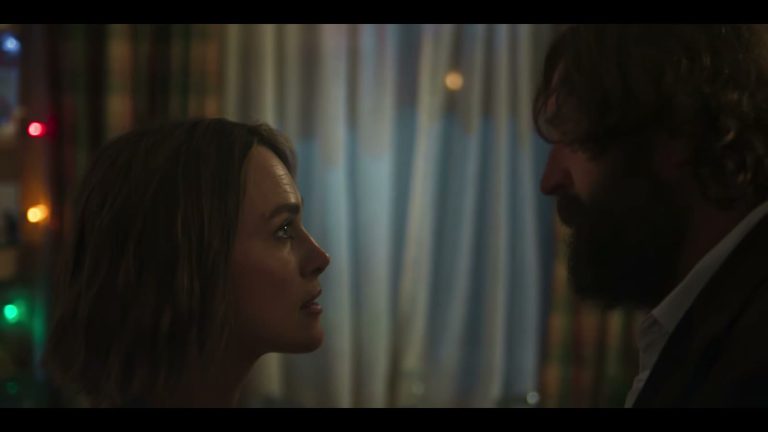 10 Nov, 09:52 Waitrose Christmas advert 2026: Keira Knightley and Joe Wilkinson return in The Perfect Gift 2
13 guides and rulings
ASA rulings and the UK advertising rules, explained in plain English and checked against the source.
All policy19 explainers
How great advertising gets made, from the brief to the media plan, and how to make your own.
All craft147 brands tracked
Every brand we have reviewed or reported on, with its best work and its latest news.
Brands A to Z97 agencies credited
The agencies behind the work, with every campaign we have credited to them.
Agencies A to ZTwenty of the best 80s adverts ranked on idea, craft, bravery and evidence, from Hamlet's Photo Booth and J R Hartley to Nike, Audi and Carling Dambusters, with verified credits.
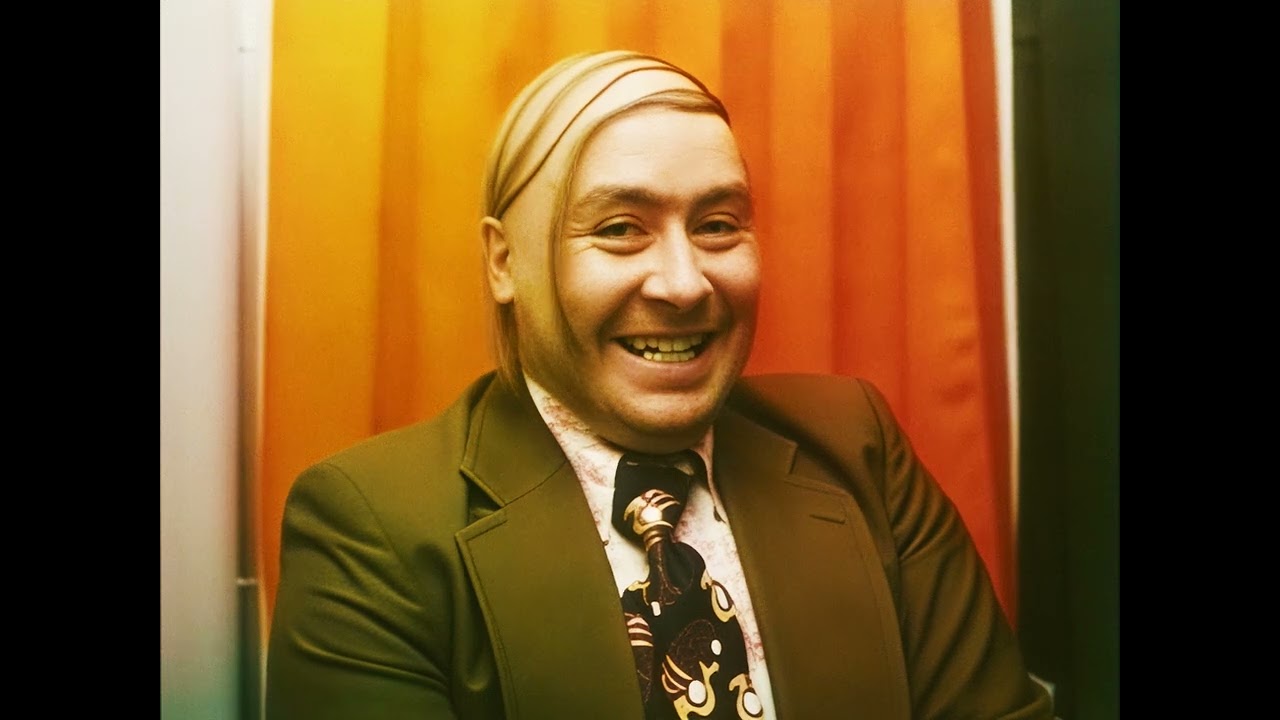
A bald man loses a fight with a passport photo booth, lights a cigar, and the chair collapses under him. That is a whole advert, it is from 1987, and when Britain is asked to name the commercials it loves it is still one of the first out of the hat. The 1980s were the decade when British advertising stopped apologising for being entertainment and started winning the argument that entertainment sells.
This is Ad Ranking’s list of the twenty best adverts of the 1980s. It leans British, because the decade did, but it makes room for the American work that changed the rules everywhere. The tests are the four we apply to everything: is there one idea a stranger could retell, does the craft survive knowing the joke, did the brand risk anything, and is there published evidence it worked. Agency and year have been checked for every entry, and where a credit could not be stood up it has been left out rather than guessed.
Some giants are missing on purpose because they already have full reviews here: Levi’s Launderette, Apple’s 1984 and British Airways Face, plus Yorkie and the decade’s Guinness work. Two others fell to the calendar. Coca-Cola’s Mean Joe Greene first aired in October 1979, and Hovis’s boy on the bike is a 1973 film, however many 1980s tea-times it interrupted.
A chain that sells exhausts and tyres put its own fitters, in overalls, into a song-and-dance number, and the jingle did the work a positioning statement normally does. First shown in 1984 and run across the main commercial channels, it is the least sophisticated entry on this list and one of the most durable: a claim about service quality sung by the people who deliver it, with a hook that a customer could still hum at the counter a decade later. The proof of its grip came in August 2008, when the company brought the Fitter back to television under the line “You’ll be amazed at what we do” rather than replace him. Crown verdict: a jingle that turned a low-interest category into a brand you could sing, which is rarer than it sounds.
DDB Needham’s first Energizer Bunny spot in 1988 was a direct parody of Duracell’s drumming bunny, a character that had been on American television since 1973 and whose trademark had lapsed. The pink bunny wandered into the frame mid-advert, thumping a bass drum, and in later films kept wandering onto the sets of realistic-looking commercials for fictional products and interrupting them. The joke about batteries became a joke about advertising, and “still going” entered North American speech as shorthand for anything with stamina. The original claim that nothing outlasts the Energizer was toned down after legal action by Duracell, which also claimed, without evidence, that four in ten viewers thought the adverts were for its own product. Crown verdict: the smartest way anyone has found to sell a commodity, and a warning about branding a parody too lightly.
Hal Riney invented two old men on a porch to launch a wine cooler for E & J Gallo, then cast a retired Air Force veteran and cattle rancher from Oregon, David Rufkahr, and a general contractor from Santa Rosa, Dick Maugg, to play them. Frank did the talking and Ed never spoke, and every film closed with the same deadpan sign-off: “and thank you for your support”. The characters were modelled on the Gallo brothers themselves, neither actor was an actor, and Rufkahr came in through a talent search. It ran from 1984 to 1991, long enough for Riney to resign the account and go on to launch Saturn. Crown verdict: proof that a made-up founder story, told straight, beats a real one told badly.
Della Femina, Travisano & Partners gave a Japanese car brand a salesman who lied about everything, and let the subtitles tell the truth. When David Leisure’s Joe claimed the Trooper II could hold the whole state of Texas, the caption read “78.2 cubic feet of it”. It is a product demonstration disguised as a character study of every car salesman the audience had ever mistrusted, and Isuzu’s sales rose in the year it launched and kept rising. The campaign ran from 1986 to 1990, peaking after Super Bowl XXI in 1987, and was revived between 1999 and 2001 to sell the Axiom. Crown verdict: a spec sheet delivered by a liar, and the funniest honest car advert of its decade.
Hitachi Maxell commissioned HHCL, an agency less than two years old, to make two adverts for audio cassettes, and got the best misheard-lyrics joke ever put on film. A music fan peels away cue cards in the style of Bob Dylan’s Don’t Look Back, showing what he thinks Desmond Dekker is singing in “Israelites”, and every line is wrong. The second film did the same to The Skids’ “Into the Valley”. The payoff is a functional claim: record it on Maxell and you would hear the proper words. Channel 4’s 2000 poll placed it 61st under the title most people know it by, “Ears Are Alight”. Crown verdict: a product benefit hidden inside a pub argument, and an early sign of what HHCL would do to the 1990s.
Collett Dickenson Pearce’s “refreshes the parts other beers cannot reach” was written in 1974, and by 1985 it had become a format that could carry any story. Water in Majorca is Pygmalion in reverse: a Sloane elocution student cannot get her vowels down to the required “the water in Majorca don’t taste like what it oughta” until a bottle of lager relaxes her into it. It is a joke about class told against the grain of every other beer advert of the period, which were mostly about men being good at things. Channel 4’s poll placed it 29th in 2000, the highest of any Heineken execution. Crown verdict: the best single episode of the most useful line ever written for a beer.
Two boys in Liverpool shirts, Carl Rice and Kevin Spaine, argue about milk in a kitchen. It is what Ian Rush drinks, says one, and if you do not drink it you will only be good enough to play for Accrington Stanley. “Accrington Stanley, who are they?” “Exactly.” Shot at Shepperton, the joke was originally aimed at Tottenham Hotspur, who objected, so a non-league club from Lancashire got the line, a reported £10,000, and a place in football folklore that outlived the Milk Marketing Board itself. Soccer AM was still quoting it decades later and the club reached the Football League in 2006. Crown verdict: a health message that became a playground catchphrase, which is the only kind of health message that works.
Maureen Lipman was cast in 1987 as Beatrice Bellman, a Jewish grandmother with a telephone permanently in her hand, and the 1988 film in which her grandson admits he has failed every exam but pottery and sociology is the one the country kept. “You get an ology, you’re a scientist” turned a privatised utility’s plea to make more calls into a character piece about family pride. Channel 4’s poll placed “Ology” 14th in 2000, the character carried a 1989 book, You Got an Ology, co-written with Richard Phillips, and a quarter of a century later Nigel Farage was still blaming Beattie for the nation’s attitude to qualifications. Crown verdict: a phone company selling conversation by writing one worth having, and the best comic character British advertising built for a woman.
Ten films, five years, one joke: Rossiter spills a drink over Collins, usually while trying to impress her. The music hall gag was Rossiter’s own suggestion, Alan Parker’s production company made the series and Terry Lovelock directed two of them, and the airline execution, in which Rossiter reclines Collins’s seat and tips a glass of vermouth down her front, is the one everyone can describe. Rossiter reportedly referred to his co-star as “the prop”. Channel 4’s 2000 poll placed the campaign 11th, ahead of almost everything made after it. Crown verdict: a single physical joke told ten different ways without once running out of timing, which is the definition of craft.
John Webster at Boase Massimi Pollitt gave an unremarkable lager a bear in a yellow jacket and a pork-pie hat, and George walked into pubs with more swagger than anyone drinking in them. There is no product claim at all. The bear is cooler than the humans, the humans know it, and the beer is simply what he drinks, which is the purest statement of badge advertising British television has produced. Channel 4’s 2000 poll placed it 58th, one of the eleven Webster films in that hundred. Crown verdict: a character who outlived the product he was hired to sell, and a lesson in selling attitude when there is nothing else.
Dancer Fitzgerald Sample put Clara Peller in front of a bun the size of a hubcap and let Joe Sedelmaier direct her fury. Cliff Freeman wrote the line, and Peller’s emphysema is why it is three words rather than the scripted “where is all the beef”, which is the best argument ever made for casting the voice before the script. Within weeks Walter Mondale was using it against Gary Hart in the 1984 Democratic primary debates, and it has never left American speech as a way of asking whether an idea has any substance. Crown verdict: the rarest result in the business, a line that escaped the advert and went into the dictionary.
The island of Manhattan is lifted off the Hudson, flown across the Atlantic, and brought in low over English rooftops to land at Heathrow, while a voice explains that British Airways carries more people across the Atlantic each year than the entire population of the borough. It was Saatchi & Saatchi’s opening statement for an account it would hold for 23 years, and it introduced the phrase “the world’s favourite airline”, first used in 1983 and only retired in 2001 when Lufthansa overtook BA on passenger numbers. The scale of the film matched the scale of the claim, and in 1983 that was new. Crown verdict: the moment a state airline started advertising like a global brand, and the film that made Face possible six years later.
Paula Hamilton, styled to look like the Princess of Wales, walks out of a marriage at dawn. The ring goes through the letterbox, the pearls and brooch go to the cat, the fur coat goes in a bin, and she keeps the car keys. David Bailey directed for BMP, Alan Price’s “Changes” plays, and the film ends on “If only everything in life was as reliable as a Volkswagen”, the line that carried the brand in Britain for the next quarter century. Channel 4’s viewers placed it 42nd in 2000. Crown verdict: fifty seconds of a woman leaving a man, sold as a reliability claim, and the moment car advertising discovered character.
Pepsi signed Michael Jackson and his brothers in November 1983 for $5 million, a record for a celebrity endorsement, and BBDO’s Phil Dusenberry built the New Generation platform around him. The commercial that mattered was staged as a concert at the Shrine Auditorium in Los Angeles on 27 January 1984, and it is remembered as much for what went wrong as for what went right: the pyrotechnics set Jackson’s hair alight and he suffered second-degree burns to his scalp. Pepsi settled for $1.5 million, which he gave to a burn centre, and then signed him again for $10 million later in the decade to support Bad across twenty countries. Crown verdict: the advert that invented the modern pop endorsement, at a cost nobody would accept now.
An Audi 100 CS quattro drives up the 37.5 degree incline of the ski jump at Kaipola in Finland. That is the whole film, and it is the single best argument four-wheel drive ever made for itself: a demonstration, not a metaphor. It belongs to the campaign that gave Britain Vorsprung durch Technik, a phrase John Hegarty of Bartle Bogle Hegarty found on a visit to the Audi factory in 1982 and refused to translate, and which Geoffrey Palmer voiced in the original British films in a tone of mild superiority. The words went on into Only Fools and Horses, a U2 song and Blur’s “Parklife”. Crown verdict: the bravest media decision of the decade, an untranslated German slogan, justified by the plainest product proof.
WCRS took the 1955 war film, put Mark Arden and Stephen Frost in the Lancaster, and gave the Germans a goalkeeper. As the bouncing bombs skip down the reservoir, a lone sentry tips, palms and catches them away one by one, until his comrade delivers the campaign line: I bet he drinks Carling Black Label. It is an England versus Germany penalty shoot-out hidden inside a war picture, and it lands in under thirty seconds without a word of setup. Channel 4 placed it 17th in 2000, ITV 12th in 2005, and Campaign fifth among the funniest adverts ever made in 2008. Crown verdict: the best joke of the decade, told entirely in pictures.
Dan Wieden took the line from the last words of the executed murderer Gary Gilmore, “Let’s do it”, removed the first word, and put it at the end of a film about Walt Stack, an eighty-year-old San Francisco runner who jogs across the Golden Gate Bridge every morning. Nothing about the shoe is mentioned. Over the next decade Nike’s share of the North American sports shoe market rose from 18 to 43 per cent and worldwide sales went from $877 million to $9.2 billion, and the three words are still the company’s signature nearly forty years on. Crown verdict: a slogan that made a shoe company the world’s authority on effort, launched by a film about an old man.
A skinhead runs at a man in a suit and appears to wrestle the briefcase out of his hands. Cut to a wider angle and he is dragging the man out of the path of falling bricks. The narration explains that an event seen from one point of view gives one impression, from another quite a different one, and only the whole picture tells you what is going on. It is a newspaper’s entire editorial promise made as a thirty-second thriller, in black and white, without a headline in sight.
The Guardian still keeps the film on its own channel and still calls it award-winning, which is the right description. It is the reason a generation of planners talk about “the whole picture” as if the phrase were theirs. Crown verdict: the most quoted piece of thinking ever put in a newspaper advert, and it never mentions a single story.
An old man trudges from bookshop to bookshop asking for Fly Fishing by J R Hartley, and nobody has it. His daughter hands him the Yellow Pages, he finds a copy from his armchair, and when the bookseller asks his name he gives it: J R Hartley. Abbott Mead Vickers wrote it, Norman Lumsden played him and Joss Ackland voiced the close.
The proof of its hold is what happened next. A real Fly Fishing by J R Hartley, written by Michael Russell, was published in 1991 and became a bestseller with two sequels, and Lumsden was hired to promote it in character. Channel 4’s poll put it 13th in 2000, a 2015 poll marking sixty years of British television advertising put it fifth, and when Lumsden died in 2001 the film was rebroadcast as a tribute. Crown verdict: the gentlest hard sell ever filmed, and the only advert whose fictional product became a real one because the public wanted it to exist.
Gregor Fisher, as the Baldy Man from Naked Video, sits in a photo booth and tries to arrange his last few strands of hair before the flash. The flash beats him twice. On the third attempt the seat gives way, and as Jacques Loussier’s version of Bach’s Air on the G String comes in he lights a small cigar. Collett Dickenson Pearce had been running “Happiness is a cigar called Hamlet” since the 1960s, and this is the execution that perfected it.
Everything in it is shared memory: the booth, the curtain, the flash that fires a beat early. ITV’s own retrospective quotes System1’s Jon Evans, a non-smoker, admitting Hamlet is the only cigar slogan he can name, and the campaign as a whole placed eighth in Channel 4’s 100 Greatest TV Ads in 2000. Tobacco left British television in the 1990s and the line survived the product. Crown verdict: thirty seconds of failure, one consolation, and the most complete comic structure British advertising has produced.
Four tests, in the order we apply them to everything we score. Idea first: can a stranger retell it in a sentence, which every entry in the top ten passes. Craft second: does the film hold up once you know the ending, which is why Hamlet, with the least production of the three, sits above two more elaborate films. Bravery third: an untranslated German slogan, a skinhead hero, a wine cooler fronted by two men who could not act. Effectiveness last, and only on published evidence, which is why Nike outranks work that is funnier and why several British favourites sit lower than sentiment would put them.
The public polls, Channel 4’s in 2000 and ITV’s in 2005, were used as evidence of memory rather than as the ranking itself, because both reward the recent and the repeated. Credits were checked individually and anything unverifiable was omitted, which is why some entries name an agency and a director and others name neither. Decade boundaries were applied strictly to first broadcast, which cost the list a famous Coke ad and a famous loaf.

He plans, buys and reviews advertising for a living, and helps score campaigns on the site against the same five Crown Score criteria alongside other authors and contributors.
Twenty sports adverts ranked on idea, craft, bravery and evidence, from Nike's Just Do It launch and Tag to Channel 4's Superhumans, This Girl Can and Be Like Mike, with verified credits.
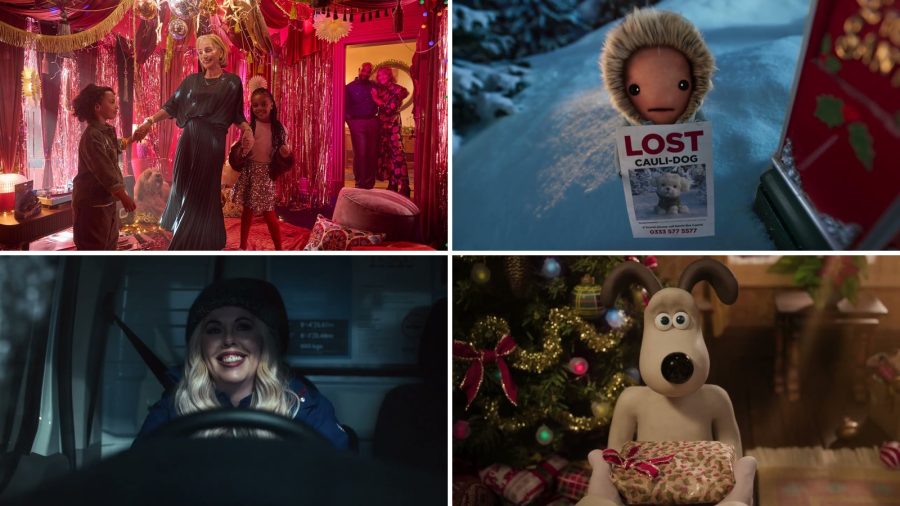
Every UK Christmas advert of 2026 so far, newest first, with each brand's own film, the verified credits and our verdict, from John Lewis, M&S and Amazon to Aldi, Tesco and Argos.
The most annoying adverts ever made, from Crazy Frog and Halifax's Howard to Sheilas' Wheels, HeadOn and Kars4Kids, ranked on the gap between how much they grated and how well they worked.