

The 20 best sports adverts ever made, ranked
Twenty sports adverts ranked on idea, craft, bravery and evidence, from Nike's Just Do It launch and Tag to Channel 4's Superhumans, This Girl Can and Be Like Mike, with verified credits.
73 campaigns reviewed
Every review scored out of 100, with full credits and the evidence behind the result.
All campaigns29 Christmas adverts so far
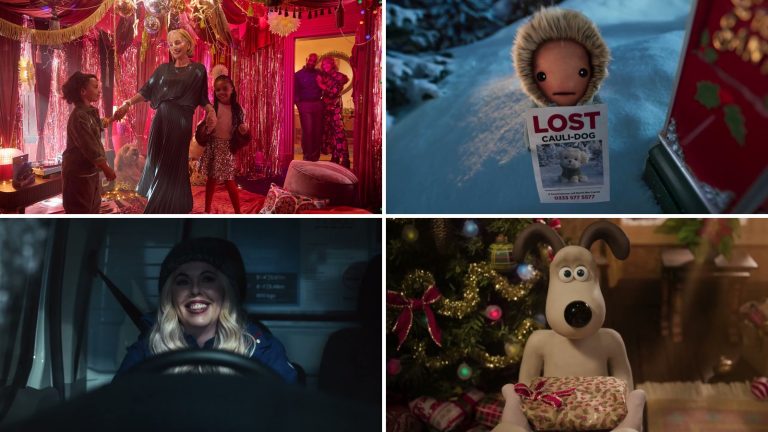
Every UK Christmas advert of 2026 in one place, with the films, the credits and our verdicts.
Watch all 2922 rankings
The best adverts by brand, decade and season, argued properly and kept up to date.
All rankings157 stories
The advertising stories that matter, published every weekday, with what each one means.
All news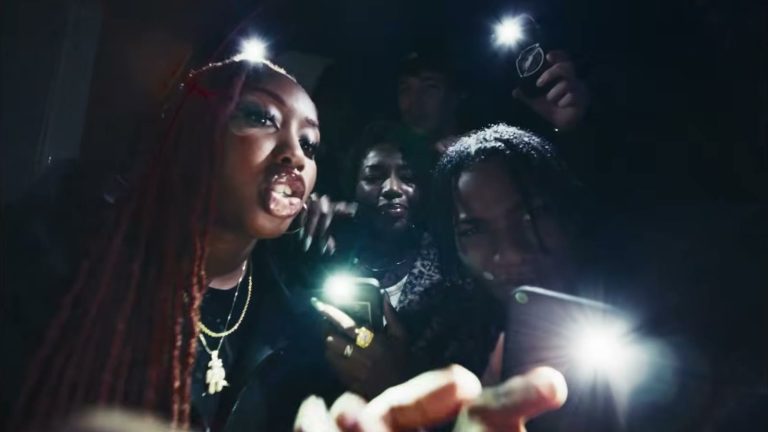 10 Nov, 09:53 JD Sports Christmas advert 2026: Create The New swaps festive nostalgia for young creatives
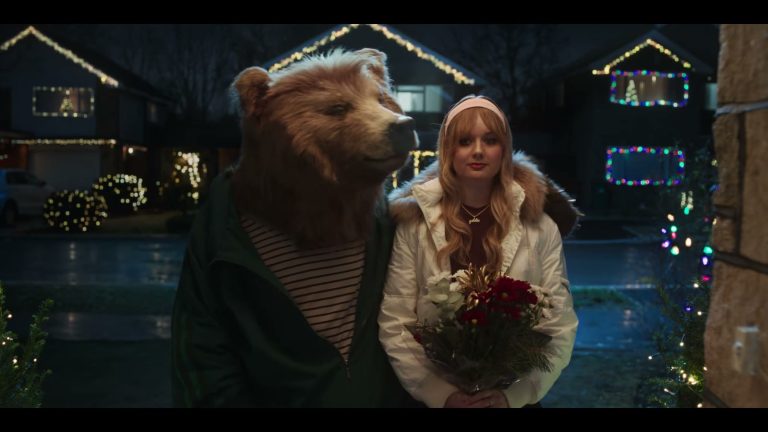 10 Nov, 09:53 Morrisons Christmas advert 2026: Goldilocks meets the Three Bears in Christmas Made Just Right
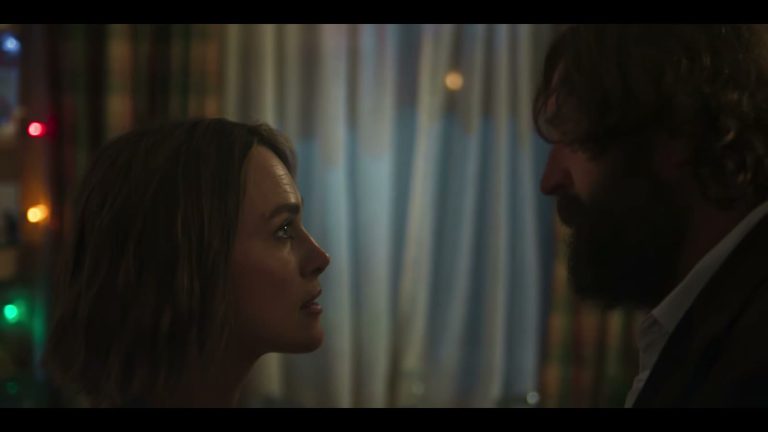 10 Nov, 09:52 Waitrose Christmas advert 2026: Keira Knightley and Joe Wilkinson return in The Perfect Gift 2
13 guides and rulings
ASA rulings and the UK advertising rules, explained in plain English and checked against the source.
All policy19 explainers
How great advertising gets made, from the brief to the media plan, and how to make your own.
All craft147 brands tracked
Every brand we have reviewed or reported on, with its best work and its latest news.
Brands A to Z97 agencies credited
The agencies behind the work, with every campaign we have credited to them.
Agencies A to ZTwenty of the best 90s adverts ranked on idea, craft, bravery and evidence, from Blackcurrant Tango's St George and PlayStation Double Life to Flat Eric, Nike Airport and Creature Comforts.
A customer service man in purple boxing shorts stands in a ring on the White Cliffs of Dover and challenges France, Europe and the world to a fight over a soft drink, while three Harrier jump jets hover behind him. It cost £400,000, it ran on national television about ten times, and it is still the film British creatives mention first when the 1990s come up. The decade had money, confidence and a new generation of agencies that treated the thirty-second slot as short cinema, and the best of it has aged better than the decade’s films.
This is Ad Ranking’s list of the twenty best adverts of the 1990s. It is British-led, because the 1990s were the peak of British television advertising, with room for the American work that changed the rules everywhere. Every entry has been tested the same way: is there one idea a stranger could retell, does the craft survive a second viewing, did the brand risk anything, and is there published evidence it worked. Agency and year were checked for each, and any credit that could not be stood up has been left out.
The decade’s most famous work is missing because it already has a full review on this site: Tango’s Orange Man, Guinness Surfer and Anticipation and Budweiser’s Whassup, plus Wonderbra, Boddingtons, Renault Clio, Marmite, Walkers, BT and Coca-Cola’s Holidays Are Coming. Three suggestions fell to the calendar: John West’s bear is from 2000, Pot Noodle’s Slag of All Snacks from 2002, and Reebok’s best British work arrived in 2000 too.
Tony Kaye sent a car through a surreal obstacle course to the Velvet Underground’s “Venus in Furs”, and turned a tyre advert into something closer to an art film. There is no voiceover argument and no product shot to speak of, just the line and a sequence of hazards staged like a fever dream, which is the point: the road is strange, so the tyre had better be ready. Kaye had already made British Rail’s Relax and the Solid Fuel Advisory Council’s Furry Friends in 1988, and by 1996 he held 23 D&AD awards; in 2012 the organisation named him jointly its most awarded director with Frank Budgen. Crown verdict: the most beautiful thing ever made about a tyre, and proof the category could afford ambition.
Full moon, half moon, total eclipse. A teacher bites a Jaffa Cake through three phases of the moon in front of a class, and a product demonstration becomes a piece of astronomy that every British child of the period can still recite. There is no story, no celebrity and no music worth mentioning. When Channel 4 and The Sunday Times polled the public for the 100 Greatest TV Ads in April 2000 it came first, ahead of the Smash Martians and the Orange Man, which says something about recency and something about the power of a demonstration you can copy in a kitchen. It sits third in our food ranking. Crown verdict: the cheapest number one in the history of British polling, and deservedly so.
Lowe Howard-Spink put Naomi Campbell, Linda Evangelista, Kate Moss and Christy Turlington in a small car and hired Tarsem to direct, at the exact moment supermodels were the most expensive faces on earth. The premise is that the Corsa is the one thing in the frame getting more attention than they are. It is a period piece now, and not an entirely comfortable one, but it understood something most supermini advertising still misses: a small car is bought as personal style, not as transport, and the launch needed a fashion shoot rather than a road test. Crown verdict: the 1990s in one frame, with the car winning the staring contest.
BETC took over an entire three-minute break in ITV’s News at Ten for a montage of small heroisms, a stranger giving CPR, a child snatched from the path of a jackknifing tanker, set to M People’s “Search for the Hero”. The song had been released almost a year earlier; in May 1996 it re-entered the airplay chart at 33 and climbed for five weeks to 20. The film also switched Peugeot’s line from “The lion goes from strength to strength” to “The drive of your life”. Crown verdict: the moment a mid-market saloon was sold as a moral choice, and the model for every emotional car advert since.
Lowe & Partners/SMS, holding a $70 million account, wrote a film in which a floor of office women gather at the window every morning to watch a construction worker, Lucky Vanous, take off his shirt and drink a Diet Coke to Etta James. Lee Garfinkel, Clive Pickering and Neil Dawson wrote it and the success caught The Coca-Cola Company by surprise; the brand was aimed primarily at women from that point on. The 1997 sequel with a window cleaner and an 11.30 appointment won Most Popular Advertisement at the 1998 National Television Awards, and the format ran to six films by 2013. Crown verdict: the male gaze reversed for a fizzy drink, and a format with two decades of legs.
Young & Rubicam composited Steve McQueen out of Bullitt and into a new Ford Puma on the hills of San Francisco, 27 years after his last chase there and 17 after his death. Paul Street directed through Streetlight, and it took a British Arrows Silver in the vehicles category. The technique has aged and the idea has not: a small, cheap coupé borrowed the most famous driving performance in cinema and made a claim about character that no specification sheet could support. Crown verdict: the best use of a dead film star in advertising, because the star’s own film does the selling.
A small boy teases a young elephant with a Rolo he never hands over. Decades later the grown man is watching a parade go by, and the elephant, who has never forgotten, walks past and knocks him flat. It won the Film Grand Prix at Cannes in 1996, and it is the logic of Rolo’s long-running British line, “Do you love anyone enough to give them your last Rolo?”, which ran from 1980 to 2003, turned into a revenge story with a punchline. No dialogue, one proverb, perfect timing. Crown verdict: a Grand Prix earned with a joke your grandmother could tell, which is the hardest kind to write.
Sunday league footballers on muddy park pitches produce the tricks of professionals, and Eric Cantona, Ian Wright and Robbie Fowler turn up among them, all to Blur’s “Parklife”. It is a British answer to Nike’s global gladiator epics, and it is better than most of them because it is about the game people actually play rather than the game they watch. Channel 4’s poll placed it 15th in 2000 and ITV’s 14th in 2005, higher than any other football advert of the decade. Crown verdict: the moment Nike learned to speak British, by putting its stars in a park with everyone else.
Lowe gave a salami snack a manic, stop-motion sausage voiced by Adrian Edmondson, animated by Loose Moose, and a line that described both the product and the mascot: “It’s a bit of an animal.” The character is unpleasant on purpose. He shouts, he bites, he is the snack’s own appetite made flesh, and he stayed on air continuously from 1993 to 2014 before returning in computer animation in 2015, with a beef version and a chicken version following. A point-and-click PC game called Animal came out in 1996. Crown verdict: the best proof that a mascot does not need to be likeable, only impossible to ignore.
Prunella Scales played Dotty Turnbull, a customer who treated every Tesco visit as an inspection, with Jane Horrocks as her long-suffering daughter Kate, for around ten years. The device was simple: the most demanding shopper in Britain tests the store’s promises one by one, so every product story becomes a sitcom scene. The execution known as “Dotty on bus” won Most Popular Advert at the National Television Awards on 26 October 1999, beating Levi’s Flat Eric, Rolo and Budweiser in the same year, which is company few supermarket adverts have kept. Crown verdict: the “Every little helps” era given a face, and the longest-running retail comedy British television has had.
McCann Erickson turned a jar of instant coffee into twelve forty-five-second episodes of a romantic serial, starring Anthony Head and Sharon Maughan as neighbours who kept borrowing coffee and never quite saying it. It began in 1987, and the 1993 conclusion, in which they finally admitted what six years of viewers already knew, was the decade’s one advertising cliffhanger. Sales rose by more than half in the UK, Susan Moody wrote a novelisation, Love Over Gold, and an American version ran as Taster’s Choice from 1990. It tops our food ranking for the campaign as a whole. Crown verdict: the only advert people made a date to watch, and it sold coffee by the tonne.
WCRS launched a fourth mobile network with a rule the category has never matched since: no phones in the adverts. “In any Orange ad, you’ll see a total absence of a mobile phone,” said Robin Wight of WCRS, and Frank Budgen’s launch film sold a feeling of spontaneity and a colour rather than a handset. The line stayed until 2008, when a new chief executive, Tom Alexander, retired it for “I am”, and Wight’s own verdict on effectiveness was to ask the competition, since Orange became the number one network in the UK. Crown verdict: the bravest launch of the decade, a technology brand sold entirely on optimism.
Three frogs on lily pads croak “Bud”, “weis” and “er” in turn until the rhythm becomes the brand name. David Swaine, Michael Smith and Mark Choate at D’Arcy Masius Benton & Bowles in St Louis wrote it and Gore Verbinski, later of Pirates of the Caribbean, directed it for Super Bowl XXIX. A 1996 study found American children recognised the frogs at a rate second only to Bugs Bunny, which delighted the brand and alarmed everyone else, and Budweiser eventually replaced them with two wisecracking lizards to move the joke upmarket. Crown verdict: a brand name as a sound effect, and the campaign that taught Budweiser the Super Bowl formula it used for Whassup four years later.
TBWAChiatDay’s Rob Siltanen wrote the script, Craig Tanimoto wrote the two-word line, and Lee Clow oversaw a black-and-white roll call of Einstein, Gandhi and Picasso that greeted Steve Jobs’s return to a company most people had written off. Richard Dreyfuss narrated; Jobs recorded his own version and shelved it. There is no product in it because in 1997 there was no product worth showing, and the campaign held the brand together until the iMac arrived. It won the 1998 Emmy for best commercial and the 2000 Grand Effie. Crown verdict: a manifesto that rebuilt a company’s self-belief before it had earned it, and it worked.
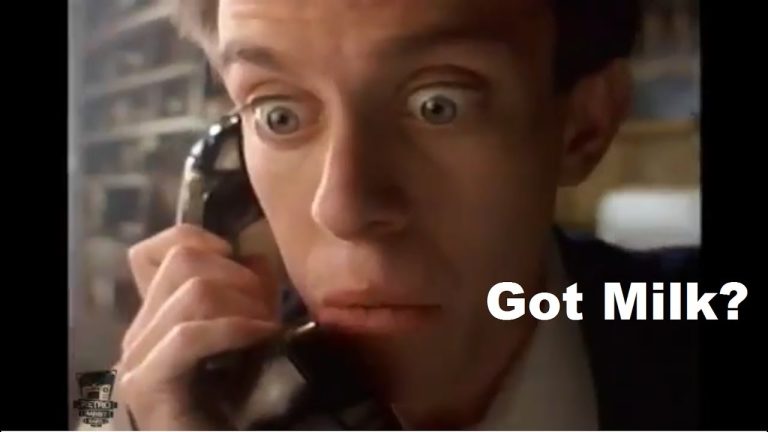
Goodby Silverstein & Partners launched on 29 October 1993 with a Michael Bay film about a history obsessive who cannot answer a $10,000 radio phone-in, “Who shot Alexander Hamilton?”, because his mouth is full of peanut butter and there is no milk. Deprivation, not benefit, was the strategy, colleagues at the agency thought the line lazy and ungrammatical, and Bay took a Grand Prix Clio for the film. Awareness passed 90 per cent, sales rose in California even if the national effect was thinner, and the slogan outlived its own retirement: dropped nationally in February 2014, kept by California, revived in 2020. Crown verdict: the best example of selling a commodity by showing life without it.
GGK saw Nick Park’s Oscar-winning short and asked him to do it for the electricity boards: record real people talking about their homes and heating, then put the voices into the mouths of clay animals. Park, Phil Rylance and Paul Cardwell made three thirty-second films to start, Aardman produced them, and the run stretched to three years. It won Best Commercial of the Year at the 1991 British Television Advertising Awards and Most Outstanding European Campaign at D&AD Europe the same year, and Channel 4’s poll placed it fourth in 2000. Crown verdict: a utility selling warmth with a tortoise and a talking sofa-full of cats, and the most charming thing the decade produced.
Wieden+Kennedy put the Brazil squad in a departure lounge before the 1998 World Cup, got bored on their behalf, and had John Woo film them playing the ball through check-in, baggage reclaim and the security scanner, Romário chipping it through the x-ray machine in one take. FourFourTwo’s oral history records that the shoot was in Rio, that Sergio Mendes’s “Mas Que Nada” was a last-minute choice, and that in the words of one of the Nike team, the shoes cleared the shelves and the song became a worldwide hit again. Ronaldo, Romário and Roberto Carlos play themselves at their most joyful. Crown verdict: the film that turned football advertising from war into play, and still the one every World Cup campaign is measured against.
A yellow puppet and his friend Angel drive around California in a beaten-up Chevelle, evading the police as wanted men, and the puppet nods along to a bass loop. That is Bartle Bogle Hegarty’s launch for Sta-Prest One Crease Denim, and nothing in it explains anything. Quentin Dupieux, recording as Mr Oizo, created Flat Eric and the track; Jim Henson’s Creature Shop built him, with Janet Knechtel designing and Drew Massey performing.
“Flat Beat”, released on 22 March 1999, went to number one in the UK, the seventh song from a Levi’s advert to do so, topped charts across Europe and sold around three million copies. The campaign was shortlisted for Most Popular Advert at the 1999 National Television Awards, and the puppet is still Dupieux’s mascot a quarter of a century on. Crown verdict: the last great Levi’s music launch, and the strangest thing to sell a trouser crease in the history of the trade.
“For years, I’ve lived a double life. In the day, I do my job.” Nineteen people, from a schoolgirl to a pensioner, take turns delivering one monologue about what they become when the console goes on: conquerors, killers, gods. Frank Budgen directed for TBWALondon, Trevor Beattie was creative director, James Sinclair wrote it and Ed Morris art directed, with Gorgeous Enterprises producing. Nobody holds a controller and no game is shown.
It was one of the most awarded commercials in the world that year, entered the Clio Hall of Fame in 2007 and made it into the Guinness World Records gamer’s edition. More to the point, it set the tone that made PlayStation an adult brand at exactly the moment games were still being sold as toys. Crown verdict: a manifesto for a hobby, written as a confession, and the best piece of casting in British advertising of the decade.
Ray Gardner, a real member of Tango’s customer service staff, reads a complaint from a French exchange student who does not like the new blackcurrant flavour. His reply escalates into a jingoistic tirade, delivered while he strips to purple boxing shorts, marches out through the car park, gathers a flag-waving crowd and climbs into a boxing ring perched on the White Cliffs of Dover, three Harrier jump jets hovering behind. Chas Bayfield and Jim Bolton wrote it at HHCL, Colin Gregg directed for Eclipse, and digital editing stitches the tracking shots into one apparently continuous take.
It was shot in three days in April 1996 and went out on 1 October 1996. Most of the £400,000 budget went on production, so it ran nationally only around ten times, mostly in TFI Friday, and still won a Cannes Gold Lion and a D&AD Silver Pencil in 1997; Gardner took ITV’s award for best actor in a commercial, and in 2007 Film4 voted it the best long commercial of the previous half century. Crown verdict: the most ambitious ninety seconds British advertising has made, sold ten airings at a time.
Four tests, in the order we apply them to everything we score. Idea first: a stranger should be able to retell it, which is why a talking sausage and three frogs sit above more polished work. Craft second: does the film survive a second viewing, which decides the top three, since St George, Double Life and Flat Eric are all films you can watch for the making as much as the joke. Bravery third: no phones in a phone advert, no product in a computer advert, ten airings for the most expensive film a soft drink had made. Effectiveness last and only on published evidence, which is why Nike and Gold Blend outrank work that is funnier.
The public polls of 2000 and 2005 were used as evidence of memory, not as the ranking, because both reward whatever was on air most recently. Where a start year could not be verified, as with Tesco’s Dotty, the entry carries the decade rather than a guess, and where an agency could not be stood up it is not named. First broadcast decided the decade, which is why the John West bear and the slag of all snacks will have to wait for the 2000s.

He plans, buys and reviews advertising for a living, and helps score campaigns on the site against the same five Crown Score criteria alongside other authors and contributors.
Twenty sports adverts ranked on idea, craft, bravery and evidence, from Nike's Just Do It launch and Tag to Channel 4's Superhumans, This Girl Can and Be Like Mike, with verified credits.
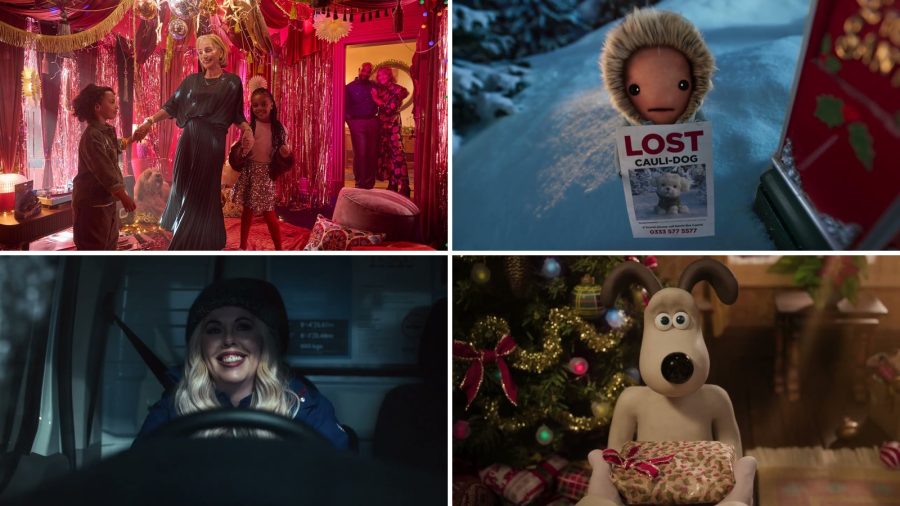
Every UK Christmas advert of 2026 so far, newest first, with each brand's own film, the verified credits and our verdict, from John Lewis, M&S and Amazon to Aldi, Tesco and Argos.
The most annoying adverts ever made, from Crazy Frog and Halifax's Howard to Sheilas' Wheels, HeadOn and Kars4Kids, ranked on the gap between how much they grated and how well they worked.