

Distinctive brand assets: what they are, why they beat differentiation, and how to build one
Romaniuk's fame and uniqueness grid, the six kinds of asset, the brands that own a colour, a shape or a sound, and the redesigns that threw an asset away.
73 campaigns reviewed
Every review scored out of 100, with full credits and the evidence behind the result.
All campaigns29 Christmas adverts so far
Every UK Christmas advert of 2026 in one place, with the films, the credits and our verdicts.
Watch all 2922 rankings
The best adverts by brand, decade and season, argued properly and kept up to date.
All rankings157 stories
The advertising stories that matter, published every weekday, with what each one means.
All news 10 Nov, 09:53 JD Sports Christmas advert 2026: Create The New swaps festive nostalgia for young creatives
 10 Nov, 09:53 Morrisons Christmas advert 2026: Goldilocks meets the Three Bears in Christmas Made Just Right
 10 Nov, 09:52 Waitrose Christmas advert 2026: Keira Knightley and Joe Wilkinson return in The Perfect Gift 2
13 guides and rulings
ASA rulings and the UK advertising rules, explained in plain English and checked against the source.
All policy19 explainers
How great advertising gets made, from the brief to the media plan, and how to make your own.
All craft147 brands tracked
Every brand we have reviewed or reported on, with its best work and its latest news.
Brands A to Z97 agencies credited
The agencies behind the work, with every campaign we have credited to them.
Agencies A to ZBrief in January, director in May, shoot in September, air in early November. The timeline, the £1m-to-£6m budget split, the music, the charity, the toy and the testing that now shapes the films.
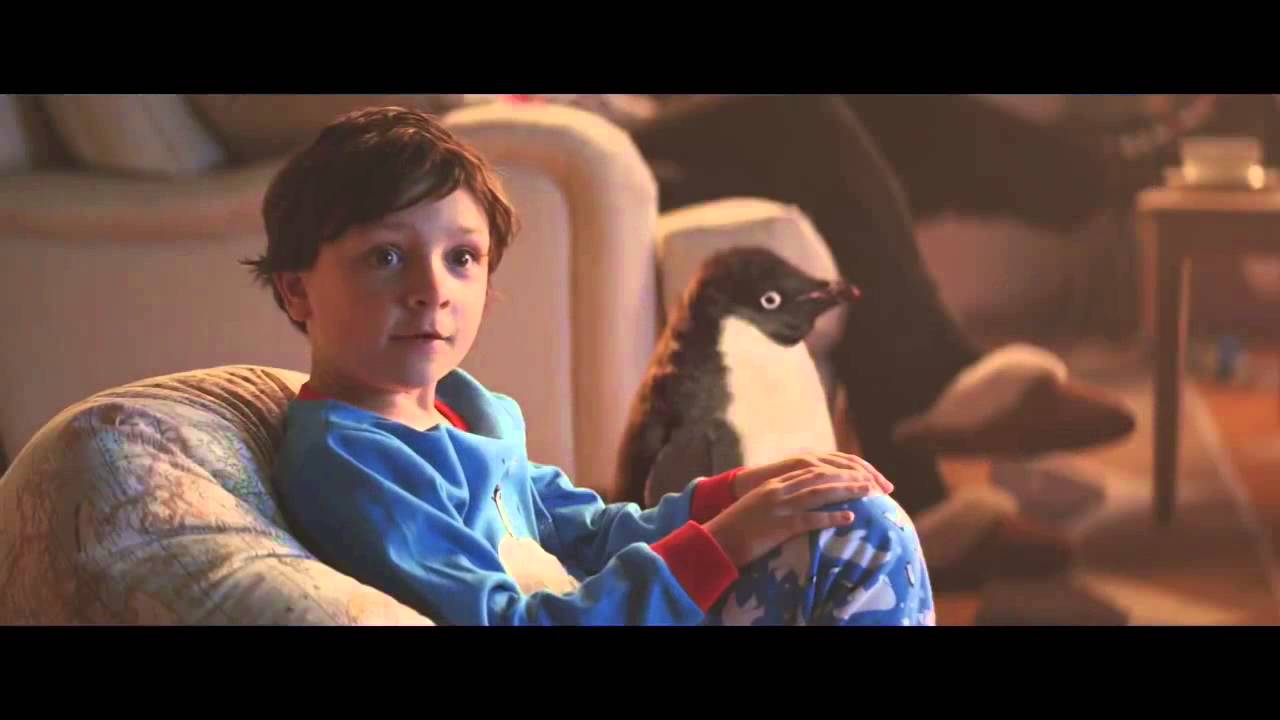
The John Lewis Christmas advert that aired in November 2019 was briefed in January 2019. Court documents from a plagiarism case the retailer later won set out the whole calendar: brief to adam&eveDDB in January, roughly 40 creative teams working on it, around 300 proposals sifted by chief creative officer Richard Brim, a shortlist of five to the client, a director chosen in May, a shoot in September and a dragon called Edgar on television in November.
Looking for this year’s ads? See every UK Christmas advert of 2026 so far, with the films, updated as each one launches.
That is the shape of the modern Christmas advert. It is not a film so much as a ten-month production line with a six-week window at the end, and by now the line is standard enough across British retail to be written down. Here is how the pieces fit, using only campaigns that have already aired.
The brief for the next film is usually written while the current one is still on air, because the trading review of one Christmas is the strategy document for the next. John Lewis’s 2019 brief, according to senior advertising manager Holly Kicul in the same court case, asked for work that was “greater than the sum of the parts” for John Lewis and Waitrose together and was built on “thoughtfulness at Christmas”.
Spring is for scripts and animatics, and for the argument about which of the shortlist gets made. Early summer is for the director. Dougal Wilson, who made The Long Wait in 2011, was selected for Excitable Edgar in May 2019. Summer and early autumn are for the shoot and the effects: Edgar was shot in September for a mid-November launch.
Changing agencies does not shorten the cycle, it compresses it. When Saatchi & Saatchi won the John Lewis account in May 2023, after adam&eveDDB declined to repitch following 14 years, the Christmas campaign brief was already part of the pitch. Chief creative officer Franki Goodwin described it to The Drum as being “a little bit like taking the reins of a movie franchise”, and Snapper, directed by Megaforce, aired on 9 November 2023.
Look at the John Lewis air dates and the pattern is a metronome: 7 November 2014, 6 November 2015, 10 November 2016, 10 November 2017, 15 November 2018, 14 November 2019, 13 November 2020, 4 November 2021, 10 November 2022, 9 November 2023, 14 November 2024, 4 November 2025. Aldi introduced Kevin the Carrot on 7 November 2016. Sainsbury’s aired its First World War truce film on 12 November 2014.
The reason is arithmetic rather than sentiment. The advert has to build fame before people do their shopping, and a large share of the shopping now happens around Black Friday in the last week of November. A film that lands in early November gets three weeks of television, social sharing and press before the discounting starts, and another four weeks of reminder after it. A film that lands on 1 December has missed the point where gift decisions are made.
The public’s view of this timing is more mixed than the industry’s. Kantar’s pre-season survey in October 2024 found 59% of people saying they love Christmas television advertising, up from 51% a year earlier, and two-thirds saying the ads arrive too early. Retailers have concluded that the second number is a complaint people enjoy making.
The figure that circulates for John Lewis is around £7m a year, and the one detailed breakdown that was reported, for Man on the Moon in 2015, put it at roughly £1m to make and £6m to run, across television and in-store, over seven months of work. The ratio matters more than the total. Even the most cinematic Christmas film is a small fraction of the money spent making sure people see it.
Whether that money is well spent is one of the better documented questions in British advertising. The John Lewis work won the IPA Effectiveness Grand Prix in 2012, when Adam & Eve and Manning Gottlieb OMD claimed £1,074m of incremental sales and £261m of profit over two years, and again in 2016, when the paper covering 2012 to 2015 reported a profit return of more than £8 for every £1 invested.
The John Lewis sound was fixed early: a familiar song, slowed down, sung by a woman with a small voice, over strings. Ellie Goulding’s “Your Song” in 2010 reached number two in December, held off the top only by the X Factor finalists. Gabrielle Aplin’s “The Power of Love” reached number one in 2012, and Lily Allen’s “Somewhere Only We Know” for The Bear and the Hare went to number one on 24 November 2013 and stayed there for three non-consecutive weeks, selling more than 600,000 copies.
The cover version does three jobs at once. It borrows an emotion the audience already owns, it makes the film recognisable from the next room, and it produces a second piece of media, the single, that promotes the first. The formula was so successful that John Lewis had to keep escaping it: Elton John himself in 2018, a commissioned Andrea Bocelli piece called “Festa” in 2023, and Richard Ashcroft’s “Sonnet” in 2024, which the retailer turned into a public cover-version competition on TikTok.
Two other components arrived within a few years of each other and have not left. The first is the charity partner. Sainsbury’s sold a chocolate bar from its 1914 film for the Royal British Legion.
John Lewis paired Man on the Moon with Age UK in 2015, Buster the Boxer with The Wildlife Trusts in 2016, and in 2020 replaced the single-story film with Give a Little Love, aimed at raising £5m for FareShare and Home-Start. The 2024 film’s cover-version competition fed the retailer’s own Building Happier Futures programme for care-experienced people.
The charity partner gives a £7m fairy tale a purpose that is not the sale, and gives the press a second headline. It has also become expected, which is the point at which any device stops earning its keep.
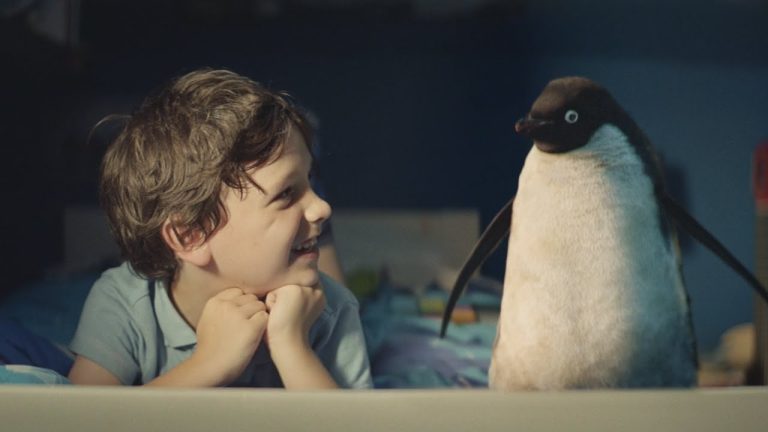
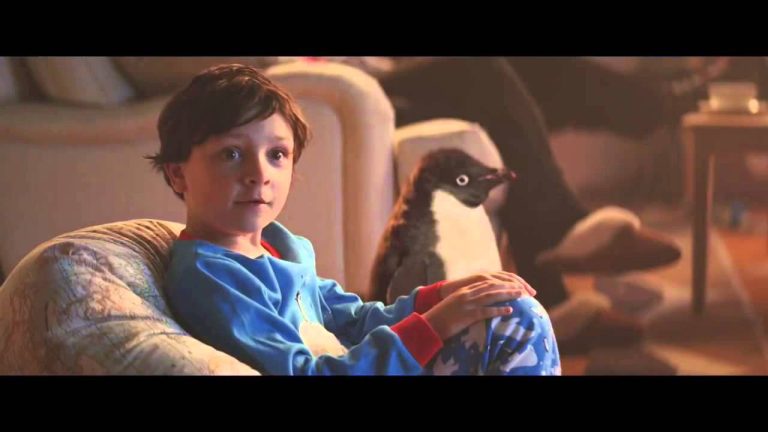
The second component is the toy. Monty the Penguin in 2014 was the moment the Christmas advert became a product line: the large Monty sold out at £95 and was followed into the shops by books, ties, onesies, slippers, tablecloths and napkins, all in Monty bags to carry the character round the store. Snapper the Venus flytrap got the same treatment in 2023, with toy versions, a 15ft billboard on Oxford Street and a place in the Christmas at Kew light trail.
Since the late 2010s two research companies have turned Christmas into a league table, and the league table has started to change what gets made. System1 scores every major festive film on a scale up to 5.9 Stars, based on the emotion viewers report. In 2024 six adverts hit the ceiling: Cadbury, Amazon, Lidl, Sainsbury’s, Aldi and M&S Food.
The more important finding was underneath. Campaigns that returned a character or re-ran a previous film averaged 5.6 Stars against 3.9 for new creative, and 14 brands chose consistency that year, roughly double the number in 2023.
John Lewis’s own trajectory on that scale is instructive. Excitable Edgar scored the maximum 5.9 in 2019, Give a Little Love 4.4 in 2020, An Unexpected Guest 3.1 in 2021, The Beginner 3.3 in 2022 and Snapper 3.6 in 2023. The brand that invented the formula was being outscored by the brands that had copied it and then kept the same character for eight years.
Kantar reaches the same conclusion by a different route, surveying thousands of consumers against its advertising database. Its 2024 ranking put Cadbury’s Secret Santa on top and found that two-thirds of the best performers were continuations of existing platforms. Lynne Deason, Kantar’s head of creative excellence, put it plainly: people look forward to the next instalment, and only Cadbury could have made that advert.
The effect on the playbook is visible. Aldi has run Kevin the Carrot every year since 2016. Cadbury has kept Secret Santa since 2018. Very re-aired its flamingos, TK Maxx re-aired its film, and Barbour brought back Shaun the Sheep.
When the two biggest testing houses tell the industry that repetition scores higher than novelty, the rational retailer stops paying for novelty.
Here is the problem. The formula was built by a brand that broke the formula. When The Long Wait aired in 2011 there was no rule that a Christmas advert should be a two-minute short story with a twist and a slow cover, because John Lewis had only just written it. The emotional charge came from the surprise, and surprise is the one thing a template cannot supply.
Fifteen years on, a viewer can identify a Christmas advert in the first three seconds, predict the reveal and name the charity, and the research shows the scores of new stories falling while returning characters hold up. That is not proof that stories are dead. It is proof that a story told in the same shape as fifty others has to be exceptional to register.
The deeper risk is that testing rewards what tested well last year. Nothing in the process now favours the retailer that turns up with a drum-playing gorilla, which is roughly what John Lewis did in 2011.
Our ranking of the best Christmas adverts is the long version of this answer. The short version is a checklist to run a script against before the shoot is booked.

He plans, buys and reviews advertising for a living, and helps score campaigns on the site against the same five Crown Score criteria alongside other authors and contributors.
Romaniuk's fame and uniqueness grid, the six kinds of asset, the brands that own a colour, a shape or a sound, and the redesigns that threw an asset away.
What a brief is for, the single-minded proposition, and what the Levi's 501, Cadbury Gorilla, Compare the Market and Nike Dream Crazy briefs actually said. Plus a one-page template.
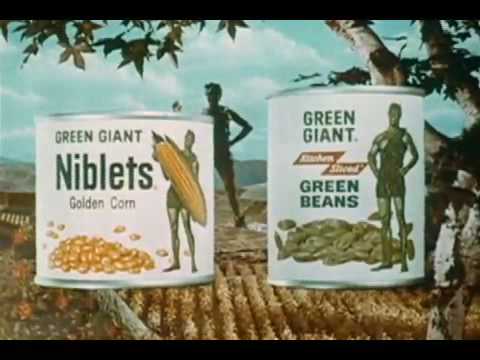
A character you invent is a freehold asset; a celebrity is a rental. The evidence on fluent devices, the twelve points of share of voice most brands leave on the table, and the mascots that failed.