


The 20 best sports adverts ever made, ranked
Twenty sports adverts ranked on idea, craft, bravery and evidence, from Nike's Just Do It launch and Tag to Channel 4's Superhumans, This Girl Can and Be Like Mike, with verified credits.
73 campaigns reviewed
Every review scored out of 100, with full credits and the evidence behind the result.
All campaigns29 Christmas adverts so far
Every UK Christmas advert of 2026 in one place, with the films, the credits and our verdicts.
Watch all 2922 rankings
The best adverts by brand, decade and season, argued properly and kept up to date.
All rankings157 stories
The advertising stories that matter, published every weekday, with what each one means.
All news 10 Nov, 09:53 JD Sports Christmas advert 2026: Create The New swaps festive nostalgia for young creatives
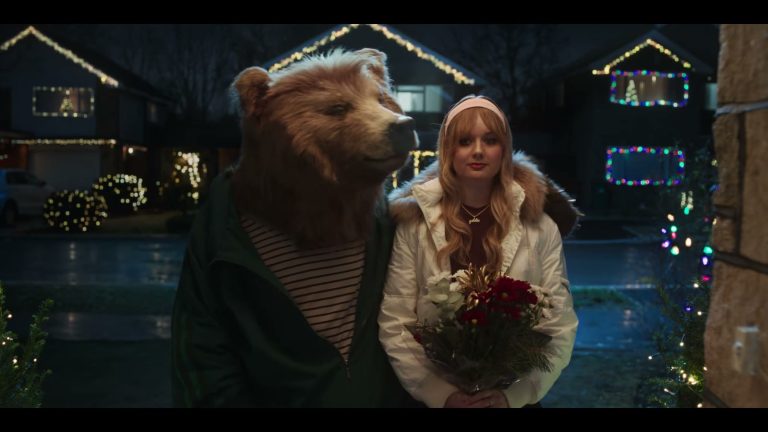 10 Nov, 09:53 Morrisons Christmas advert 2026: Goldilocks meets the Three Bears in Christmas Made Just Right
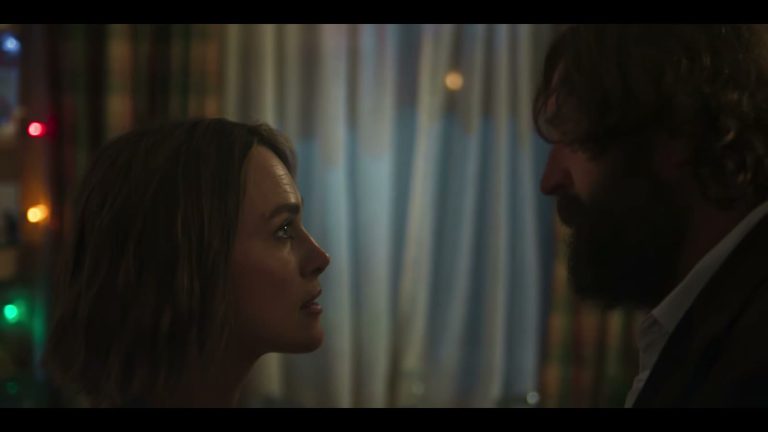 10 Nov, 09:52 Waitrose Christmas advert 2026: Keira Knightley and Joe Wilkinson return in The Perfect Gift 2
13 guides and rulings
ASA rulings and the UK advertising rules, explained in plain English and checked against the source.
All policy19 explainers
How great advertising gets made, from the brief to the media plan, and how to make your own.
All craft147 brands tracked
Every brand we have reviewed or reported on, with its best work and its latest news.
Brands A to Z97 agencies credited
The agencies behind the work, with every campaign we have credited to them.
Agencies A to ZThe most annoying adverts ever made, from Crazy Frog and Halifax's Howard to Sheilas' Wheels, HeadOn and Kars4Kids, ranked on the gap between how much they grated and how well they worked.
In May 2005 a computer-animated frog with a visible anatomy problem was reportedly shown on British television 73,716 times in a single month, at a cost of around £8 million, and 87 per cent of the population saw it an average of 26 times. Viewers complained to the regulator about its body, its frequency and its subscription small print. The same month, its ringtone went to number one in the singles chart and stayed there for four weeks, outselling Coldplay. That is the whole argument of this list in one amphibian.
Irritation is not the opposite of effectiveness. It is often the mechanism. An advert that a household groans at is an advert the household has noticed, remembered and discussed, which is three of the four things any media plan is paying for. This is Ad Ranking’s list of the fifteen most annoying adverts ever made, ranked not on how much they grated but on the gap between how much they grated and how well they worked, using complaint records, industry surveys, chart data and published results wherever they exist.
Three of the usual suspects are missing because they already have their own reviews here: Go Compare’s Gio Compario, voted the country’s most irritating advert in 2015, Cillit Bang’s Barry Scott and MoneySuperMarket’s strutting Dave. Take them as read, and take this as the rest of the noise.
A pyramid of gold-wrapped chocolates is carried into a European ambassador’s residence and the assembled diplomats gasp with delight. Everything about it is wrong: the dubbing, the lighting, the idea that anyone in black tie has ever been excited by a confectionery display. It has been parodied continuously for thirty years, and Channel 4’s 2000 poll placed it 21st among the greatest adverts ever made, which is the paradox of this whole list in miniature: mockery is a form of memory. No agency credit for the British campaign could be verified. Crown verdict: so bad it became a permanent fixture, and a brand that has never dared replace it with anything good.
Fitters in overalls sing and dance about exhausts, and the jingle refuses to leave. First shown in 1984 across the main commercial channels, “You can’t get better than a Kwik-Fit fitter” is the kind of line that a customer finds themselves humming at the counter while resenting it. That resentment is the mechanism: a low-interest purchase made once every couple of years needs a brand that surfaces unbidden, and this one did for a generation. When Kwik-Fit returned the Fitter to television in August 2008 under “You’ll be amazed at what we do”, it was admitting nothing since had stuck as hard. Crown verdict: the purest British earworm, and proof that a jingle you hate is still a jingle you know.
Ocean Finance’s daytime commercials of the late 1990s and early 2000s were the wallpaper of satellite television: relentless, repetitive and delivered with the enthusiasm of a hostage video, offering to consolidate your debts into one convenient loan secured on your house. The company went as far as sponsoring its own channel on Sky, and the adverts were parodied widely enough to become a shorthand for a certain kind of cheap airtime. They also worked. Riding the credit boom and rising house prices, Ocean was a leading player in a UK secured loan market worth more than £14 billion by 2002. Crown verdict: the advertising equivalent of a dripping tap, and the tap filled the bath.
WCRS and the PR agency Brazil invented two men with droopy moustaches, 1970s running vests and the number 118 across their chests, and put them everywhere in the months before directory enquiries was deregulated in August 2003 and the old 192 number was switched off. The line was “Got your number!”, and the country did. The runners were so ubiquitous that the record-breaking distance runner David Bedford took legal action over the likeness, the company replying that the inspiration was partly the American runner Steve Prefontaine, and the pair went on to parody The A-Team in 2006 and Ghostbusters, with Ray Parker Jr, in 2009. Crown verdict: an irritant built for a single deadline that captured a market on the day it opened.
The 2010 television advert did one thing: it sang the web address, over and over, with a chorus of “any, any, any, any”, until the URL and the tune were the same object. There is no idea, no character and no joke, which is precisely why it works as direct response. The audience for a car-buying service is anyone who happens to be selling a car this month, and the only job is to be the name that surfaces when that day comes. The company reported revenue of £1.1 billion in 2019 and operates from more than 550 sites, which is a lot of hummed URLs converted. Crown verdict: the least creative advert on the list and possibly the most efficient, and the trade should be honest about that.
A man in a suit stands in front of some windows and shouts “You buy one, you get one free!”, then, in case you missed it, shouts it again. Jeff Brown fronted Safestyle’s regional-television-style adverts from 1999 to 2006, and they were shouted precisely because the product, replacement double glazing, is sold on a single price mechanic to people who will only ever buy it once. The regulator did catch up with the small print: in March 2007 the ASA upheld a complaint that a September 2006 advert had misled viewers about its “buy now, pay next year” credit terms. Safestyle entered administration in October 2023 and Anglian bought the brand. Crown verdict: the loudest man in British advertising, selling the quietest product, for seven years.
Confused.com introduced Cara, a wild-haired animated version of its old logo, in September 2010, and in February 2011, during the BRIT Awards, she started singing. Louise Dearman’s Cara belted Diana Ross’s “Chain Reaction” and then a karaoke “YMCA”, and the price-comparison category settled into the war of singing mascots it never fully left. The company’s marketing director, Mike Hoban, claimed the campaign had brought in two million customers, though Confused.com has since slipped from market leader to fourth among British car insurance comparison sites, behind rivals with louder mascots still. Crown verdict: proof that in a category with no product, the annoying jingle is the product, and someone else’s was more annoying.
Purplebricks coined “commisery” in 2016 for the misery of paying an estate agent’s commission, then in 2017 ran a campaign of homeowners weeping, wailing and howling at the sums they had handed over, extensively, in Britain, the United States and Australia. The word is ugly and the acting is broad. The Institute of Practitioners in Advertising gave the campaign an Effectiveness Award in 2018 for demonstrating payback on the spend, which is the trade’s hardest evidence. What came after was less flattering: by 2024 the BBC was reporting on clients who had paid for a supposedly free service and never sold. Crown verdict: an irritating word that did its job, attached to a business model that did not.
Michael Winner directed himself, in a series of insurance commercials for esure that ran from 2002 to 2009, delivering a catchphrase to an exasperated woman: “Calm down, dear! It’s just a commercial!” The film director’s condescension was the joke and the joke was the irritation, and the line escaped the campaign into everyday speech in a way most insurance advertising can only dream of. Esure’s founder, Peter Wood, went on to launch Sheilas’ Wheels three years later with the same instinct for a jingle you cannot shake. Crown verdict: a phrase the country still uses, mostly to complain about the man who said it, which is a strange kind of triumph.
Jenny Logan dances around a living room in high heels, shaking powder onto the carpet and vacuuming it up, to a 1950s rock and roll pastiche whose hook, “do the Shake n’ Vac and put the freshness back”, has been in British heads for 45 years. Benton and Bowles made it, Peter West and Guy Winston oversaw the creative, and it was shot in 1979, delayed by ITV strike action and then ran from 1980 to 1986. Channel 4’s 2000 poll placed it 18th, ITV named it among its best ever in 2005, and a 2006 Daily Telegraph report counted the jingle among Britain’s most popular. Crown verdict: the jingle that outlived the product category, and the template for every earworm that followed.
A children’s choir spells out a phone number to a tune adapted from a Jewish children’s song, and America has been trying to get it out of its head since it first aired on New York radio in 1999, went national in 2004 and reached television in 2014. The San Francisco Chronicle called it an assault on the senses, Don Imus was caught on a hot mic telling the charity to go to hell, and a 2014 Saturday Night Live sketch listed it among the CIA’s torture methods. The charity takes more than 40,000 donated cars a year and reported revenue of $65.6 million in 2018, though CharityWatch listed it among America’s worst charities in 2024 and a California court banned its existing advertising in the state in May 2026 for failing to disclose its religious affiliation. Crown verdict: the most hated jingle in America, and one of the most profitable.
A woman rubs a stick of wax on her forehead while a voice barks “HeadOn. Apply directly to the forehead” three times, a yellow arrow points at the forehead, and the advert ends. Miralus Healthcare had stripped out every efficacy claim after the Better Business Bureau objected to an earlier version, and focus groups told it that repetition was recalled better than anything else, so repetition was all that was left. The Today Show ranked it among the worst commercials of 2006, a Los Angeles Times writer compared it to North Korean propaganda, and sales doubled between 2005 and 2006 while Saturday Night Live and The Daily Show parodied it for free. Crown verdict: the purest experiment in annoyance as strategy ever run, and it doubled the business.
Three women in pink sequinned dresses drive a pink convertible singing about car insurance for women, in Australian accents, to a jingle John Altman composed and Jeff Wayne’s music company arranged. Peter Wood of esure launched the brand in October 2005; its creators were the copywriter Chris Wilkins and his creative partner and wife Sian Vickers, and Wilkins had written the Smash Martians, so the annoyance was engineered by someone who knew exactly what he was doing.
The Sheilas, Cathi Ogden, Carly Romain and Emma Robbins, have featured regularly in polls of irritating but effective advertising, spawned more than a hundred YouTube parodies and toured as a live act. By 2012 the company insured more than 450,000 women and fewer than 50,000 men, exactly the split the jingle was written to produce, until EU gender-neutral pricing rules arrived that December. Crown verdict: a jingle designed to be hated by half the population and bought by the other half, and it hit its target precisely.
A Halifax branch worker sings “Extra”, a rewrite of Tom Jones and Mousse T’s “Sex Bomb”, surrounded by dancing colleagues, on Boxing Day 2000. DLKW’s creative directors Malcolm Green and Gary Betts built the campaign on real staff rather than actors, Green wrote the lyrics, and Howard Brown became Britain’s most famous bank clerk. The advert topped the Adwatch survey, the first time a bank had managed it, and ITV placed it 13th among the best adverts ever made in 2005.
The irritation is on the record too. Bank of Scotland dropped Howard from its own versions in 2004 because Scottish customers found him, in the bank’s words, too in-your-face and particularly annoying, and in April 2008, after a review judged the singing too upbeat for a gloomy economy, he was moved into public relations. Crown verdict: the campaign that proved a real employee singing badly beats a professional singing well, and the only entry here whose critics were the client’s own customers.
A blue frog in a crash helmet rides an invisible motorbike, making engine noises, to sell a subscription ringtone. Jamba, trading in Britain as Jamster, bought so much airtime that complaints reached the Advertising Standards Authority in February 2005 about the character’s apparent anatomy and about a frequency of up to twice an hour, with some channels showing it twice in one break. Those were not upheld, since the spot was already barred from children’s programming, but in April 2005 complaints that viewers were not told they were buying a subscription were.
The reported May 2005 numbers, 73,716 spots and around £8 million, half of it on ITV, meant that on 21 September 2005 the ASA ruled the Jamster adverts could run only after 9pm. By then the frog’s cover of “Axel F”, released on 17 May, had entered the chart at number one ahead of Coldplay, stayed four weeks, and reached 694,000 certified UK sales as the year’s third best-selling single. Crown verdict: the most complained-about, most restricted, most hated advert of its decade, and the only one on this list that put its jingle at number one.
This list inverts one of the four tests we apply to everything we score. Craft is scored in reverse: the worse the film, the higher it climbs, provided it is bad on purpose. Idea and bravery are scored as normal, because repetition is a strategy and shouting is a choice. Effectiveness decides the order, and only on evidence: ASA records, industry surveys such as Adwatch, chart positions, published customer numbers and the IPA’s awards. Where an advert is merely hated and nothing measurable followed, it sits lower, and where a much-hated campaign has no verifiable record at all it is not here.
Two cautions for anyone planning to copy the method. Annoyance buys attention, not affection, and every brand on this list that could afford to eventually bought something nicer: esure moved on, Halifax stopped singing when the recession arrived, Go Compare spent a campaign apologising. And regulators count complaints, not chart positions. The frog is number one here because it is the one case where the irritation, the restriction and the sales all peaked in the same month, and that is not a trick that has been pulled twice.

He plans, buys and reviews advertising for a living, and helps score campaigns on the site against the same five Crown Score criteria alongside other authors and contributors.
Twenty sports adverts ranked on idea, craft, bravery and evidence, from Nike's Just Do It launch and Tag to Channel 4's Superhumans, This Girl Can and Be Like Mike, with verified credits.
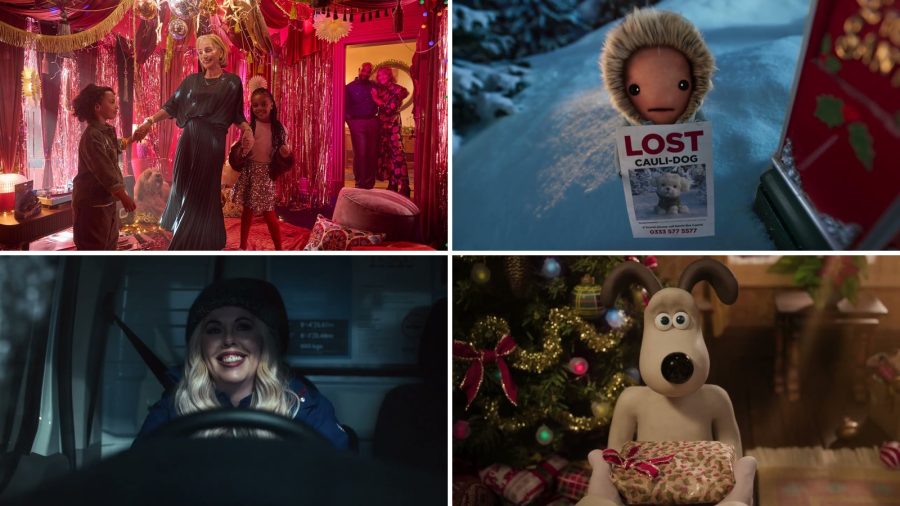
Every UK Christmas advert of 2026 so far, newest first, with each brand's own film, the verified credits and our verdict, from John Lewis, M&S and Amazon to Aldi, Tesco and Argos.
Twenty of the best 90s adverts ranked on idea, craft, bravery and evidence, from Blackcurrant Tango's St George and PlayStation Double Life to Flat Eric, Nike Airport and Creature Comforts.