

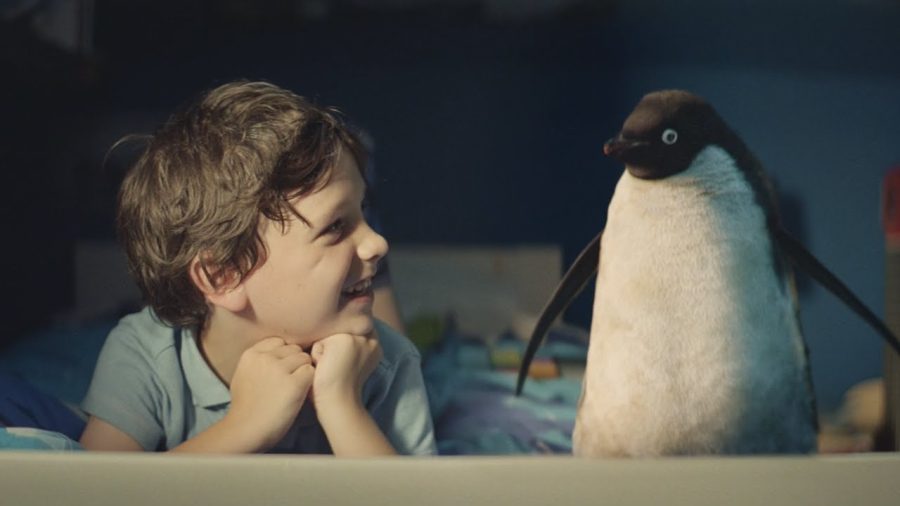
 81/100
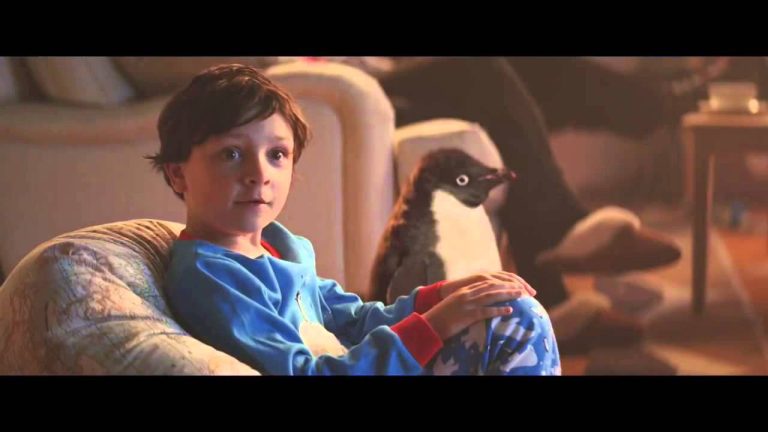
John Lewis, Monty the Penguin: the Christmas advert that became a shop
Dougal Wilson's 2014 film for John Lewis gave a boy's toy penguin a mate, sold out a £95 plush in days and won a Cannes Creative Effectiveness Grand Prix. A look back.
73 campaigns reviewed
Every review scored out of 100, with full credits and the evidence behind the result.
All campaigns29 Christmas adverts so far
Every UK Christmas advert of 2026 in one place, with the films, the credits and our verdicts.
Watch all 2922 rankings
The best adverts by brand, decade and season, argued properly and kept up to date.
All rankings157 stories
The advertising stories that matter, published every weekday, with what each one means.
All news 10 Nov, 09:53 JD Sports Christmas advert 2026: Create The New swaps festive nostalgia for young creatives
 10 Nov, 09:53 Morrisons Christmas advert 2026: Goldilocks meets the Three Bears in Christmas Made Just Right
 10 Nov, 09:52 Waitrose Christmas advert 2026: Keira Knightley and Joe Wilkinson return in The Perfect Gift 2
13 guides and rulings
ASA rulings and the UK advertising rules, explained in plain English and checked against the source.
All policy19 explainers
How great advertising gets made, from the brief to the media plan, and how to make your own.
All craft147 brands tracked
Every brand we have reviewed or reported on, with its best work and its latest news.
Brands A to Z97 agencies credited
The agencies behind the work, with every campaign we have credited to them.
Agencies A to Z
A single strategic decision, taken against the research in 1982 and defended by the client, that has compounded for over forty years into the most documented effectiveness record in the car category.
Most advertising lines are written. Audi’s was found, in a language its audience could not speak, on the wall of a factory in Bavaria, and it has now outlasted every campaign built around it for more than forty years. “Vorsprung durch Technik” is the rare slogan a stranger can repeat without being able to translate it.
Our take: the best strategic decision in British car advertising, carried by a line, a voice and a pair of clients with nerve, and backed by an effectiveness record that no rival marque can match.
In 1982 Audi was not a prestige car in Britain. Contagious describes it as an unloved Volkswagen sub-brand more likely to be compared with Renault than with BMW, rescued as a product by the four-wheel-drive quattro of 1980 but still lacking a reason for anyone to want one. Mercedes already owned sophisticated prestige and BMW owned sport, which left Audi with very little German engineering pinhead to stand on.
The agency that took the brief did not yet exist in January of that year. John Bartle, Nigel Bogle and John Hegarty left TBWA London to found Bartle Bogle Hegarty in 1982, and Campaign lists Audi, Levi’s and Whitbread as its first three clients. The IPA’s record of the agency’s 1982 to 1987 work states the problem plainly: Audi had quality products but no clear identity, and was emotionally unattractive next to BMW and Mercedes.
BBH’s answer was to make Audi the marque of progressive engineering. A BMW driver could feel sporty and a Mercedes driver could feel established; an Audi driver would feel ahead. That positioning needed a signature, and the signature came from an unusual place.
Hegarty’s own account, given to Creative Review, is that BBH was building its first real Audi campaign in 1982 with several cars to launch and no emotional thread to tie them together. On a tour of the Ingolstadt factory he noticed an old piece of publicity on the wall carrying the words “Vorsprung durch Technik”. The Audi people told him it was an old advertising line they no longer used, and it stuck.
His proposal was to sign every ad off with the German line, untranslated. Barbara Nokes, a BBH founding partner and its copywriter on the account, added the four words that turned it into a joke: “as they say in Germany”. The reasoning was double. Britain thought of Audi as a vague Euro-car, so the line fixed it as German, and delivered deadpan it could be funny.
Research came back and said not to do it, on the grounds that it was too German and would put buyers off. Contagious records that the line tested terribly. What saved it was the client: Hegarty credits Bowler and Meszaros with the reply that they were German and had no reason to be ashamed of it, and telling the agency to run it.
Hegarty adds a point that explains the line’s durability. English has no word for “Vorsprung”, so people guessed at the meaning from “spring” and “technik”, and never quite pinned it down. A line that says everything and nothing lets each listener supply their own definition, which is why it has survived four decades of changing cars.
The first television film sent three German families, the Schmidts, the Müllers and the Reinhardts, off to their holiday villas in an Audi 100, with Geoffrey Palmer observing that anyone who wanted to reach the beach before the Germans had better buy one. Campaign dates the birth of the “Vorsprung” idea on television to “Villas” in 1984.
Palmer was Hegarty’s choice for the early films and the casting is the campaign’s first piece of craft. The line lands as a weary English aside about German efficiency, so the joke is on British self-regard rather than on the car.
Contagious is candid that BBH took time to get the creative right, and only hit its stride in the 1990s with “Number One”, in which an obnoxious yuppie rejects an Audi as not really his style. That film set the tone for the marque’s British advertising for two decades: understated, wry and confident enough to let the wrong sort of customer walk away.
The 2015 to 2017 period broke the pattern deliberately. “Birth”, a two-minute cinema film from April 2015, showed an R8 giving noisy birth to an RS 3, and Contagious quotes BBH’s Ian Heartfield admitting he was still unsure whether he liked it. It was a rebirth for the brand rather than a launch for a car, and it cleared the ground for the work that followed.
“Clowns” is the modern high point. Written by Doug Fridlund and art directed by Mikael Alcock, it was directed by Ringan Ledwidge, who had shot “Duel” for the brand in 2016, and Campaign records its debut on 1 October 2017 during Victoria on ITV. Circus clowns wreak havoc on the roads while Audi safety technologies calmly avoid them, to a cover of Stephen Sondheim’s “Send in the Clowns” performed by Lisa Hannigan and arranged by David Kosten, ending on “Audi Technology. Clown Proof”.
The film won Campaign’s Creative Grand Prix of the Year for 2017 and, by Campaign’s count a year later, awards at every global show it entered in the following eighteen months.
The first evidence arrived by telephone. Hegarty says Audi knew the line was working because dealers rang to report customers asking to see a bit of that “Vorsprung”, and within a couple of years the words had entered the language. Contagious notes that the phrase turned up in Only Fools and Horses and in Blur’s “Parklife”.
The hard evidence sits in the IPA Effectiveness Awards, where Audi and BBH have entered more often, and over a longer span, than any other pairing. The IPA’s 2020 announcement lists the run: a second-place prize in 1990, Bronze in 1998, Silver in 2008 and 2010, Bronze in 2012, and Gold with the Grand Prix in 2018. The earliest paper, covering 1982 to 1987, used attitude surveys to show that the campaign had established Audi as a prestige car.
The 2018 Grand Prix paper, “Beauty and brains: How we supercharged the Audi premium 2015-2018”, is the most detailed. Campaign reports that Audi’s premium vehicle sales grew three times faster than the UK market, that the brand recorded its highest ever profit return on marketing investment at £2.07 for every £1, and that an estimated £1.78bn of incremental value was generated between 2015 and 2017. Over the same period the price gap to Audi’s highest-priced competitors fell by 10 per cent and lifetime customer value rose by 6 per cent.
Dame Carolyn McCall, who chaired the judges, called it a unanimous decision. BBH was also named Effectiveness Company of the Year, with one gold, three silvers and a bronze across its clients.
Two years later the IPA awarded Audi another Gold and the Simon Broadbent Prize for Best Dedication to Effectiveness for a paper covering the whole four decades. Its headline claims are that Audi grew at 7.6 times the rate of the UK car market and that communications returned £2.33 for every £1 invested since 1982, with the agency relationship itself worth £34 of sales for every £1 spent with BBH. On the terms we set out in how we score, that is as complete an effectiveness file as a campaign can have.
The slogan became valuable enough to litigate over. The Drum records that in 2010 Audi won a seven-year legal battle to take full control of the phrase as a trademark, a rare case of a manufacturer fighting for ownership of an advertising line rather than a product name.
The relationship behind it has been tested too. In April 2019 Audi put its UK creative account into a procurement-led review for the first time in 37 years, and that November it hired 72andSunny in Amsterdam to run a global 2020 brand campaign that would, in Audi’s words, redefine what the line meant. Audi’s head of brand, Sven Schuwirth, framed “Vorsprung” as a question of perspective and inner attitude, which is a long way from a quattro on a ski slope.
BBH survived the review. In August 2024 Marketing Beat reported the agency’s “Love At First Light” film for the SQ6 e-tron, animated by The Berry Boys, as the latest chapter of a partnership then in its 43rd year. Whether a line born of engineering pride can carry a brand whose future is software and batteries is the next decade’s question, and it is worth reading our ranking of the best car adverts to see how few rivals have kept one thought for even ten years.
“Vorsprung durch Technik” is not the funniest British car advertising or the most beautiful, and its early films were competent rather than great. It is something rarer: a single strategic decision, taken against the research in 1982 and defended by the client, that has compounded for over forty years into the most documented effectiveness record in the category. The line gets a nine for idea, the body of films an eight for craft, the decision to run it an eight for bravery, the IPA file a nine for effectiveness, and its longevity a ten for legs, for a total of 88.

He plans, buys and reviews advertising for a living, and helps score campaigns on the site against the same five Crown Score criteria alongside other authors and contributors.
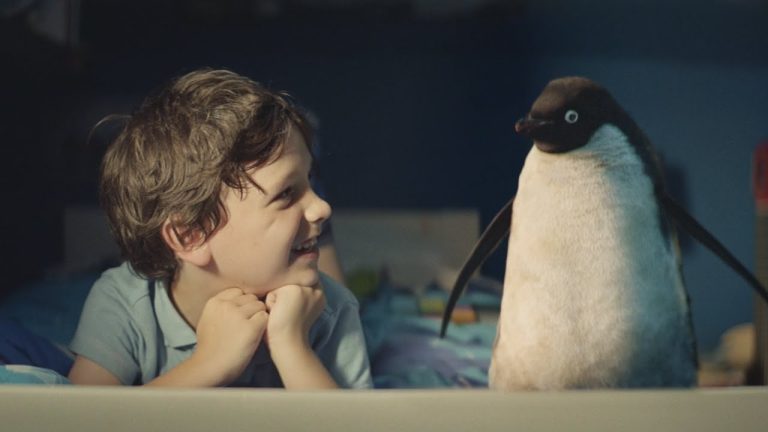
81/100Dougal Wilson's 2014 film for John Lewis gave a boy's toy penguin a mate, sold out a £95 plush in days and won a Cannes Creative Effectiveness Grand Prix. A look back.
 83/100
WCRS launched a fourth mobile network in 1994 with a Philip Glass score, an orange square and a line about the future. The Future's Bright, The Future's Orange, reviewed.
 81/100
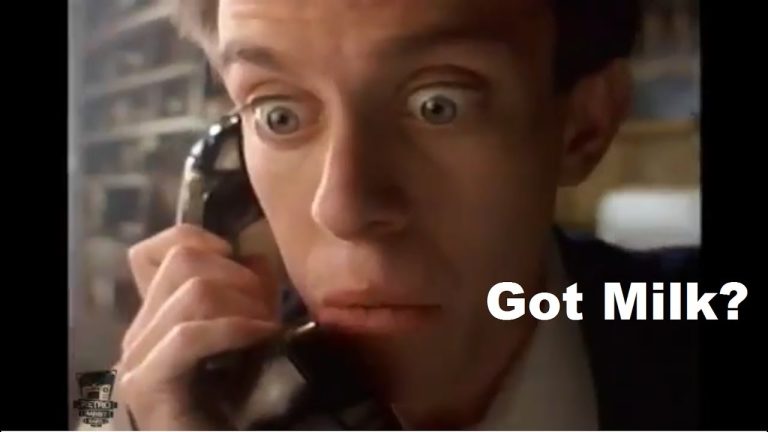
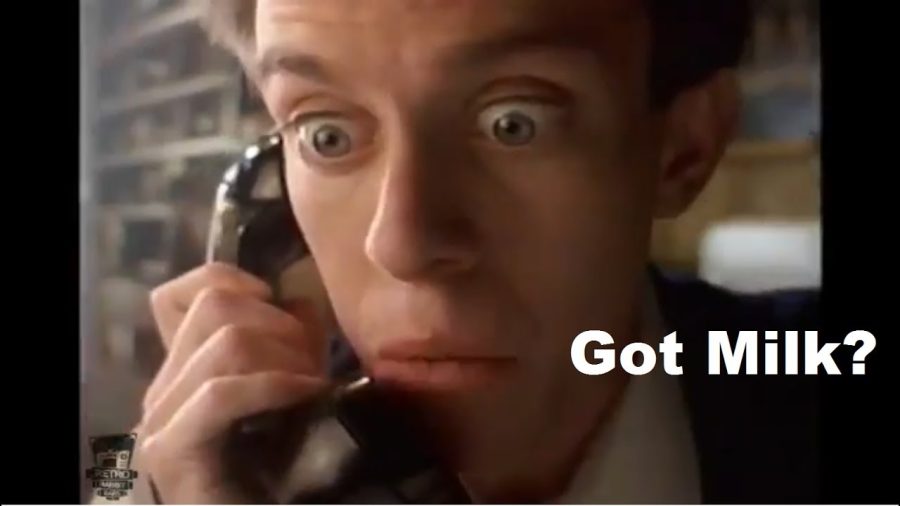
Goodby Silverstein's 1993 launch film for the California Milk Processor Board, directed by Michael Bay, turned an empty carton into the most repeated two words in American advertising.