Tesco “Dotty”: the customer from hell who won the IPA Grand Prix
Prunella Scales tested Tesco to destruction in some 70 films from 1995, took Every Little Helps to the IPA Grand Prix and was retired while still working. A full review.
74/100
7 min read
Crown Score
74/100
Idea7
Craft7
Bravery4
Effectiveness10
Legs9
A modest idea executed some seventy times with sitcom discipline, and the best-evidenced piece of retail advertising Britain has produced, from an IPA Grand Prix to a line that won the same prize again twenty years later.
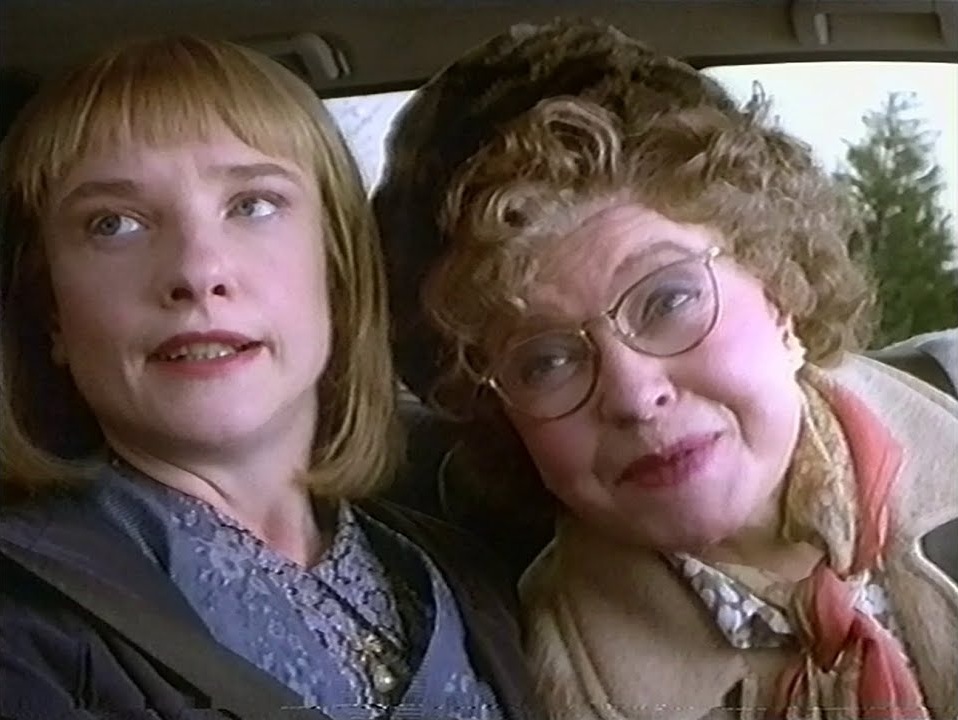
A woman in a headscarf takes a fish back to the counter because she does not like the look on its face, and the assistant changes it without a murmur while her daughter dies of embarrassment behind her. That is the whole Tesco Dotty advert, repeated with variations some seventy times over nine years, and it carried “Every Little Helps” from a strapline into the operating philosophy of Britain’s biggest retailer. Our take: the most commercially effective character campaign in British retail history, and the one with the best-documented case for it.
Credits
Client: Tesco
Agency: Lowe Howard-Spink (later Lowe Lintas, then Lowe)
Creative lead: Paul Weinberger, who coined “Every Little Helps”
Director: David Garfath (many of the films), through the Paul Weiland Film Company
Cast: Prunella Scales as Dotty Turnbull, Jane Horrocks as her daughter Kate, John Gordon Sinclair as Kate’s husband
Media agency: Initiative Media (2000s)
First film aired 15 May 1995; the character was phased out from 2004
The problem: second to Sainsbury’s
In the early 1990s Tesco was stuck behind Sainsbury’s, and the gap was one of reputation as much as share. Lowe Howard-Spink’s first answer was a run of films with Dudley Moore as a Tesco buyer scouring France for free-range chickens, a campaign conceived, as Caroline Marshall wrote in the Telegraph, by the agency’s Paul Weinberger. It raised awareness. It did not change what people thought a trip to Tesco was like.
The turn came from research. Tesco’s Carolyn Bradley, quoted in Creative Review, recalls a study asking customers what the company could do better, and the answer was simply a better shopping trip. Out of that came a stream of small in-store initiatives, baby-changing rooms, a no-quibble returns policy, and in 1993 the line Weinberger wrote to cover all of them: “Every Little Helps”. The first films advertised the initiatives one at a time.
The idea: the mother of all shoppers
A list of initiatives is not a campaign, so in 1995 Lowe invented a customer to test them. Dotty Turnbull is a fussy, suspicious, relentlessly demanding shopper, and every film puts a Tesco service or member of staff in front of her to see whether it survives. It always does, which is the point: the brand’s promise is demonstrated under hostile conditions rather than asserted. Her daughter Kate, played by Jane Horrocks, stands in for the viewer, mortified but unable to disagree.
The device is elastic in a way that most character campaigns are not. Clubcard, launched the same year, is a “thank you” that Dotty can interrogate; a new scanner, a fish counter, a vegetable display or a Christmas shop can each be put to her test. The Grocer reported the campaign ran at eight to ten executions a year, and The Guardian counted 70 films by the time the campaign was under review in 2004. Few advertising ideas can absorb that much product news without wearing out.
The craft: sitcom timing in forty seconds
The casting is the craft. Prunella Scales brought Sybil Fawlty’s precision to a woman who is never rude, only impossible, and Horrocks played exasperation in reaction shots that the films are cut around. The first film, which aired on 15 May 1995, sets the template: Dotty, a fish she is not happy with, and a daughter who would rather be anywhere else. Everything that followed kept that shape.
The writing is built on the mother-in-law joke, and it is honest about it. Marshall’s Telegraph piece describes the films as a heightened version of everyday life in which Dotty appeals to the older woman proud of her skills as a housewife, and Kate to the younger woman with better things to do than exchange fresh trout because she does not like its sullen expression. Nothing is exaggerated beyond what a real branch might see on a Saturday morning, which is why the staff come out of it looking competent rather than saintly.
David Garfath, who directed many of the films, shot them like a sitcom rather than a commercial, with the camera holding on the reaction and the product news delivered as dialogue. The store is always a real store, lit as a real store. The sound is ambient, the music barely there, and the endline is spoken rather than sung, which keeps the whole thing at the level of overheard conversation.
The results: the IPA Grand Prix and £130m of profit
This is the rare famous campaign with an audited case behind it. Tesco’s paper “How Every Little Helps was a great help to Tesco” won the Grand Prix at the 2000 IPA Effectiveness Awards. It sets out the period from 1990 to 1999, in which turnover rose from £8 billion to £17.4 billion, market share from 9.1 per cent to 15.4 per cent, and Tesco overtook Sainsbury’s to become market leader in 1995, the year Dotty and Clubcard both launched.
The paper’s structure is worth knowing. It credits the Dudley Moore films with raising awareness, the early Every Little Helps executions with improving image, and the Dotty campaign with consolidating leadership, and it reports effects on staff morale and on the share price as well as on sales. The Telegraph summarised the claim as an incremental operating profit of £130 million over the period. Tesco took a further IPA Silver in 2002, and viewers voted the campaign the most popular television commercial at the National Television Awards.
By 2004 Tesco was spending £38 million a year on advertising, most of it on Dotty. On our scorecard effectiveness is the easiest mark to give here, because the evidence is published, peer-judged and covers the whole decade rather than a launch quarter.
Why it ended: the shop outgrew the shopper
Dotty was retired for a reason that had nothing to do with the films getting worse. In July 2004 The Guardian reported that Tesco was considering dropping her, that industry insiders believed a series of 40 new ads without Scales was already in the works to focus on a simpler low-price message, and that the retailer had already run films without her: animated talking trolleys for its financial services, and dancing youngsters for the Cherokee clothing range. A character built around the weekly grocery shop could not credibly sell a credit card or a pair of jeans.
Tesco denied it at first, telling The Grocer the reports were “complete rubbish” and that Dotty remained central to its advertising. Four days later Marshall wrote in the Telegraph that Scales and Horrocks were being phased out over the following year, and that Sir Terry Leahy was said to be nervous about endorsing an alternative. Brand consultants quoted by The Grocer said she no longer appealed to the under-50s. The honest summary is that the campaign was still working and was retired anyway, because the business had changed shape.
The legacy: a line that outlived its character
“Every Little Helps” survived Dotty by two decades, four agencies and one near-death experience. Red Brick Road, set up by the creatives who had worked on the account at Lowe, held it until Wieden and Kennedy took over in 2012, and in 2020 BBH and MediaCom won the IPA Effectiveness Grand Prix again for putting the same line back at the centre of Tesco’s turnaround. Two Grand Prix for one strapline, twenty years apart, is a record no other British retailer can match.
The lesson about retiring a character is the one the Guardian drew at the time: BT gave up Maureen Lipman’s Beattie to move the brand on, and we cover what came next in our review of BT “It’s Good to Talk”. Dotty belongs in the same file as the great British advertising characters in our piece on brand mascots, with one difference: she was never a mascot, she was a customer. Prunella Scales died on 27 October 2025 at the age of 93, having played Dotty for a decade.
What to steal
Invent the hardest customer you can and let the service win in front of her. Demonstration under hostile conditions beats assertion.
Write a line that is also an operating principle. “Every Little Helps” ran the company as well as the advertising.
Build a format that takes product news as dialogue, so seventy films feel like one campaign.
Cast for reaction shots. Horrocks’s embarrassment is the viewer’s permission to laugh.
Enter the IPA. A published, judged case is the difference between a famous campaign and an effective one.
Retire a character when the business outgrows them, not when the films get tired, and keep the line.
The verdict
Dotty is a modest idea executed some seventy times with sitcom discipline, and it is the best-evidenced piece of retail advertising Britain has produced: an IPA Grand Prix, a decade of share gain, and a line that went on to win the same prize again twenty years later. It scores highest where most famous campaigns score lowest, on effectiveness and on legs, and lower on bravery, because putting a national treasure in a supermarket was never a risk. What it proves is that a service brand’s best advertising is a demonstration, and that the right character is not a mascot for the company but a stand-in for its most difficult customer. Tesco retired her while she was still working, which is the only way a campaign like this should ever end.
What to steal
Invent the hardest customer you can and let the service win in front of her
Write a line that is also an operating principle
Build a format that takes product news as dialogue
Cast for reaction shots
Enter the IPA; a judged case separates famous from effective
Retire a character when the business outgrows them, and keep the line
Max Rottier
He plans, buys and reviews advertising for a living, and helps score campaigns on the site against the same five Crown Score criteria alongside other authors and contributors.
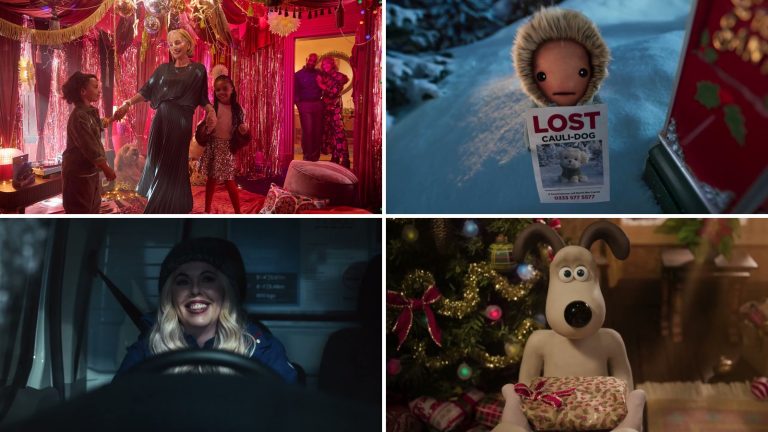
Tesco's Christmas advert for 2026 is The Wrong Address, a three-minute BBH London film in which a misdirected delivery reunites two old school friends, played by Roisin Conaty and Anna Maxwell Martin.
Tesco Media's new self-service Ad Manager, built with Kevel, lets brands book retail media directly, while approved creator content moves onto Tesco.com, the app and store screens.
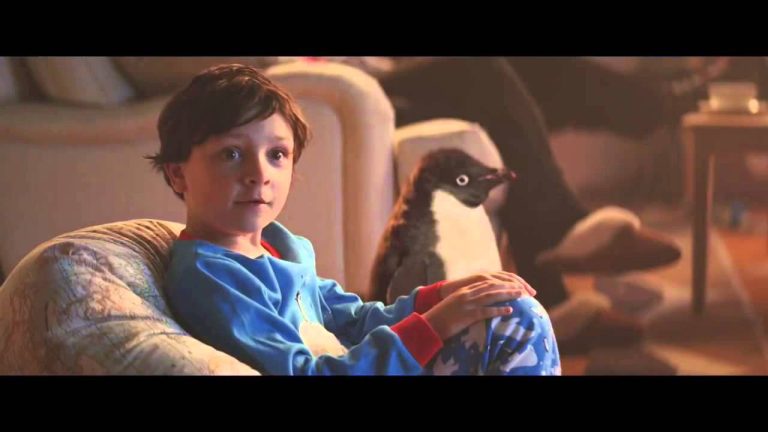
Dougal Wilson's 2014 film for John Lewis gave a boy's toy penguin a mate, sold out a £95 plush in days and won a Cannes Creative Effectiveness Grand Prix. A look back.
The Ad Ranking letter
One campaign worth stealing from, every week.
A review like this one, with the credits and the evidence, plus the ASA ruling worth knowing. Every Thursday, free.
One email a week. Unsubscribe in one click. We never share your address.