

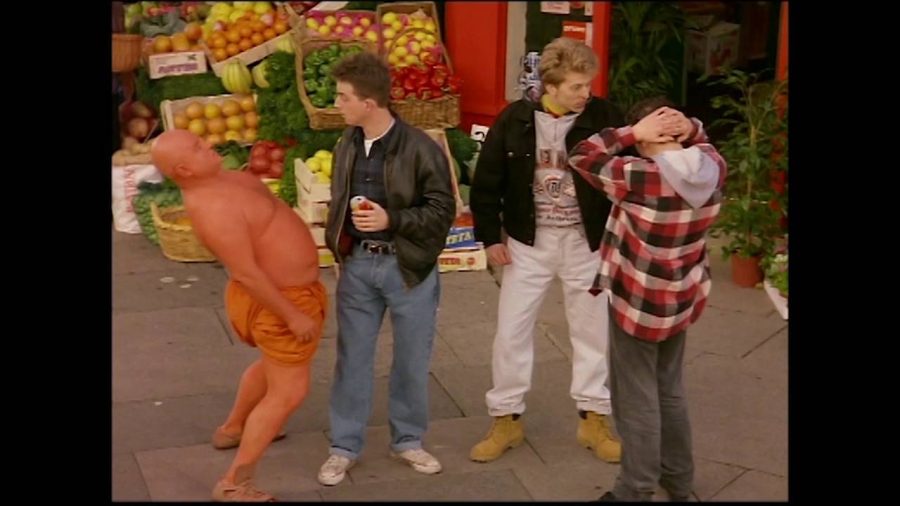
 80/100
Tango “Orange Man”: the slap that got pulled in an afternoon
HHCL's 1992 Tango advert staged the hit of real oranges as an assault, started a playground craze and was withdrawn the day a surgeon rang. A full review.
73 campaigns reviewed
Every review scored out of 100, with full credits and the evidence behind the result.
All campaigns29 Christmas adverts so far
Every UK Christmas advert of 2026 in one place, with the films, the credits and our verdicts.
Watch all 2922 rankings
The best adverts by brand, decade and season, argued properly and kept up to date.
All rankings157 stories
The advertising stories that matter, published every weekday, with what each one means.
All news 10 Nov, 09:53 JD Sports Christmas advert 2026: Create The New swaps festive nostalgia for young creatives
 10 Nov, 09:53 Morrisons Christmas advert 2026: Goldilocks meets the Three Bears in Christmas Made Just Right
 10 Nov, 09:52 Waitrose Christmas advert 2026: Keira Knightley and Joe Wilkinson return in The Perfect Gift 2
13 guides and rulings
ASA rulings and the UK advertising rules, explained in plain English and checked against the source.
All policy19 explainers
How great advertising gets made, from the brief to the media plan, and how to make your own.
All craft147 brands tracked
Every brand we have reviewed or reported on, with its best work and its latest news.
Brands A to Z97 agencies credited
The agencies behind the work, with every campaign we have credited to them.
Agencies A to ZHHCL's 90 second answer to a French exchange student's complaint aired ten times, won a Cannes Gold Lion and is still the best-made film the agency produced. A full review.
70/100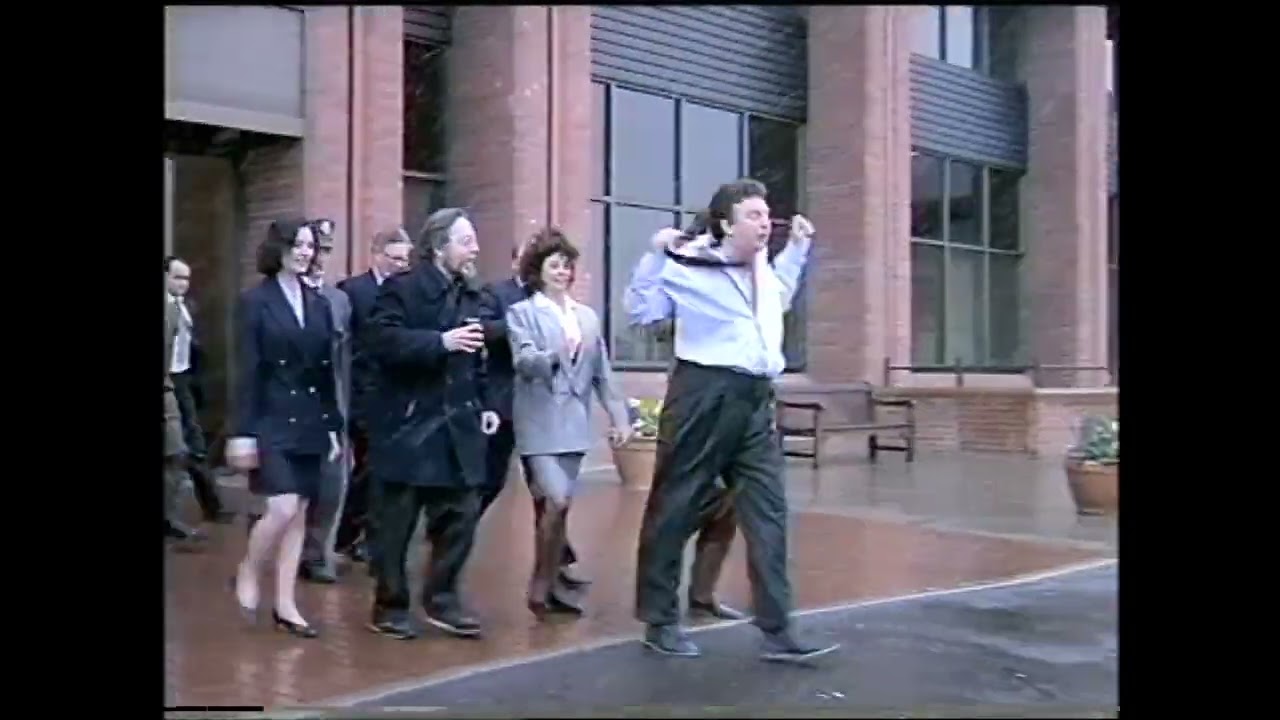
The best-made film HHCL ever produced and one of the finest pieces of comic writing in British advertising, marked down because Britvic published no sales case and ten airings is a plan for winning awards rather than shifting cans.
A Tango spokesman in a bad suit reads out a letter from a French exchange student who did not like the new blackcurrant flavour, takes his jacket off and starts walking. Ninety seconds later he is in a boxing ring on the cliffs of Dover, backed by a crowd, a marching band and three Harrier jump jets, challenging France and the rest of Europe to a fight. Our take: the Blackcurrant Tango advert is the most ambitious single-camera film British advertising has made, and the rare case where a flavour launch got a better idea than the brand’s main campaign.
By 1996 Tango was the most talked-about soft drink in Britain, and the talk was all about the orange one. HHCL’s “Orange Man” had made the brand famous, been pulled from air, and had spawned a run of sequels, a story we tell in full in our review of Tango “Orange Man”. Britvic now wanted to launch a blackcurrant variant, and a flavour extension is the least glamorous brief in soft drinks: the parent brand has the personality, the new flavour has a colour.
The agency’s answer was not to borrow the slap. Blackcurrant would get its own character and its own register, and the humour would come from pomposity rather than violence. That was a braver choice than it sounds, because the easy route was a purple man and a new sound effect.
Chas Bayfield and Jim Bolton’s script begins as a corporate video. Ray Gardner, introduced as a Tango spokesman, sits in an office and reads a letter from a French exchange student, Sebastien, who has tried Blackcurrant Tango and was not impressed. Gardner’s reply escalates line by line, from polite regret to national pride to a formal challenge, and as it escalates he leaves the office, crosses a car park, picks up an entourage and arrives on the cliffs at Dover, where the boxing ring is waiting.
The structure is the idea. The film starts as the cheapest kind of television, a man at a desk talking to camera, and ends as the most expensive kind, a helicopter shot over a crowd with jets overhead, and it makes the journey without a visible cut. Bayfield has recalled in Campaign that the “do it in one shot” device was originally a thought for a different client, Mercury Communications, which is a reminder that good mechanics outlive the brief they were written for. Here it turns a rant into a pilgrimage, and the last line, “I’m Ray Gardner, and I drink Blackcurrant Tango”, lands like a battle cry.
It is usually described as a single take, and it is not quite one. The office is a high-rise overlooking East Croydon station, the car park belongs to Tesco’s head office in Welwyn Garden City, and the cliffs are at St Margaret’s at Cliffe in Kent, and the three were shot on different days in different weather. The Campaign and Thinkbox account puts it precisely: the ad appears to be a continuous shot but consists of tracking and helicopter shots from different days, with the locations seamlessly linked. The craft is in the joins, matched on movement so that the eye never finds them.
The director was a deliberate piece of casting. Colin Gregg was not a commercials director but a television drama director, with the 1983 BBC adaptation of To the Lighthouse and episodes of Inspector Morse and Kavanagh QC behind him, and HHCL chose him for his skill with dialogue and with cranes. Both show. Gardner’s monologue is delivered as acting rather than as voiceover, and the camera’s slow lift from the car park to the cliff crowd is drama blocking, not advertising blocking.
The picture also changes grade as it goes. The opening is deliberately flat and corporate, the middle section warms up, and the finale is shot and lit like a feature film, so the escalation in the writing is mirrored by an escalation in production value. The Harriers were added afterwards by Framestore CFC, and the music, a 1996 “Pugilist Mix” of Felix’s “Don’t You Want Me”, was released as a single by Deconstruction three days after the first airing and reached number 17 in the UK chart, according to the film’s Wikipedia entry. A soft drink advert with its own chart single was still a novelty in 1996.
The media plan was almost a joke of its own. Despite being Tango’s biggest film to date, St George aired on national television only ten times, mostly once a week in Channel 4’s TFI Friday, which suited a 90 second commercial that could not be trimmed without losing the point. It did the job that a small plan can do for a big film, which is to make the airing itself an event.
The awards then did the rest. It won a Gold Lion at Cannes in 1997 and a D&AD Silver Pencil, took the Grand Prize at the London International Advertising Awards in November 1997, and won gold at the British Television Advertising Awards. Sky Magazine readers voted it ad of the decade in May 1997, and in 2008 Campaign readers placed it second in a poll of the funniest television adverts of all time. It also drew 68 complaints to the Independent Television Commission for being insulting and xenophobic, which the regulator dismissed with a comparison to Fawlty Towers.
What there is not is sales evidence. Britvic never published a results case for Blackcurrant Tango and there is no IPA Effectiveness paper for the launch, so the film is scored on fame rather than on a number it moved, and that is reflected on our scorecard. A launch film can be judged on whether it made the launch famous, and this one did; what it did for the flavour’s sales is not on the public record.
St George arrived five years into HHCL’s run with Tango and is, on craft, the peak of it. Orange Man is the more influential film, because it invented the brand’s whole manner, but St George is the better-made one, and the two together are a large part of why Campaign named HHCL its Agency of the Decade for the 1990s. The agency was bought by Chime in 1997, folded into Red Cell in 2002 and closed as United London in 2007, so the film is also a record of an agency at the moment before its decline.
Its influence runs through every “long-form” commercial that followed and every single-take film that trusts the audience to stay for ninety seconds. It is also one of the earliest examples of an ad whose making became part of its fame: a making-of film still circulates alongside it. Where we place it against the rest of the canon is set out in our ranking of the best advertising campaigns.
St George is the best-made film HHCL ever produced and one of the finest pieces of comic writing in British advertising, a 90 second escalation that turns a complaint letter into a national crusade without a visible cut and without a wasted line. It is marked down where the evidence is missing: Britvic published no sales case, the flavour it launched did not last, and ten airings is a media plan for winning awards rather than for shifting cans. As craft, direction and nerve it is close to unbeatable, and it did something the brand’s more famous film never managed, which was to be funny without hurting anyone.

He plans, buys and reviews advertising for a living, and helps score campaigns on the site against the same five Crown Score criteria alongside other authors and contributors.
80/100HHCL's 1992 Tango advert staged the hit of real oranges as an assault, started a playground craze and was withdrawn the day a surgeon rang. A full review.
 81/100
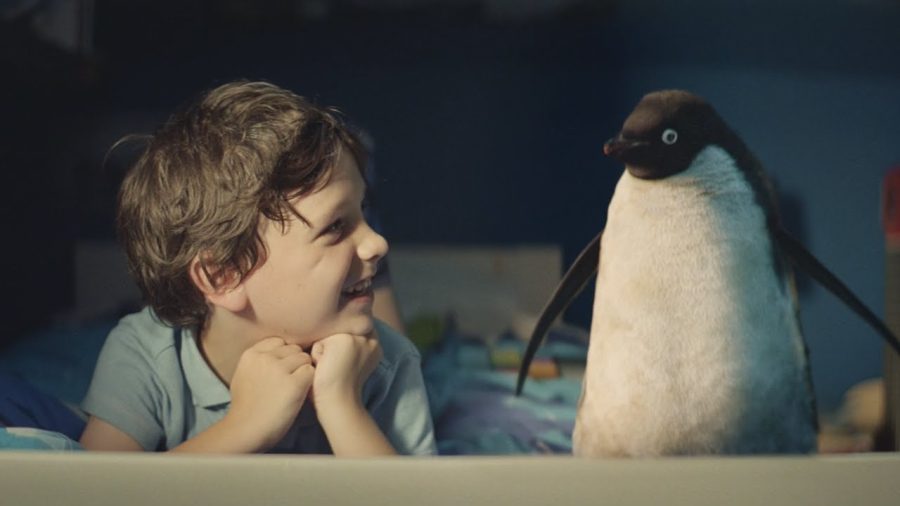
Dougal Wilson's 2014 film for John Lewis gave a boy's toy penguin a mate, sold out a £95 plush in days and won a Cannes Creative Effectiveness Grand Prix. A look back.
 83/100
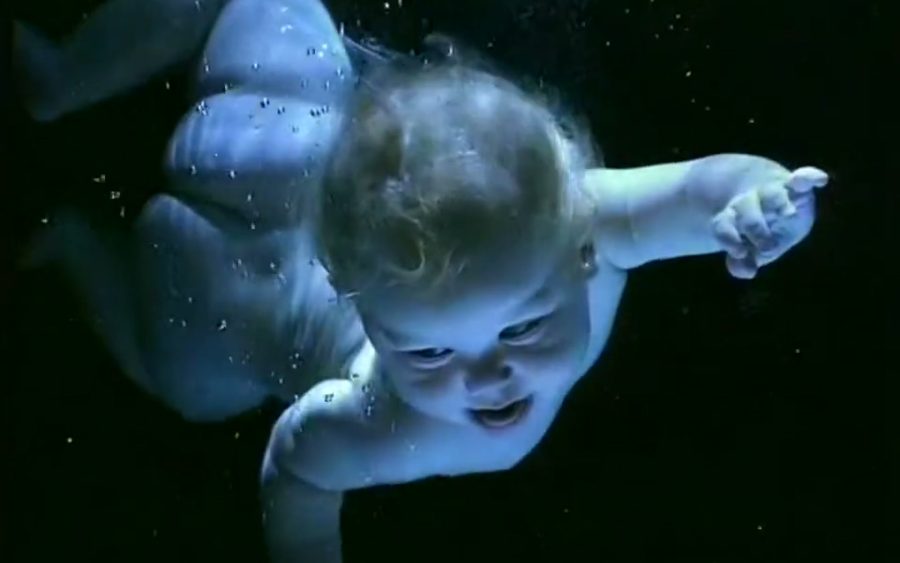
WCRS launched a fourth mobile network in 1994 with a Philip Glass score, an orange square and a line about the future. The Future's Bright, The Future's Orange, reviewed.