

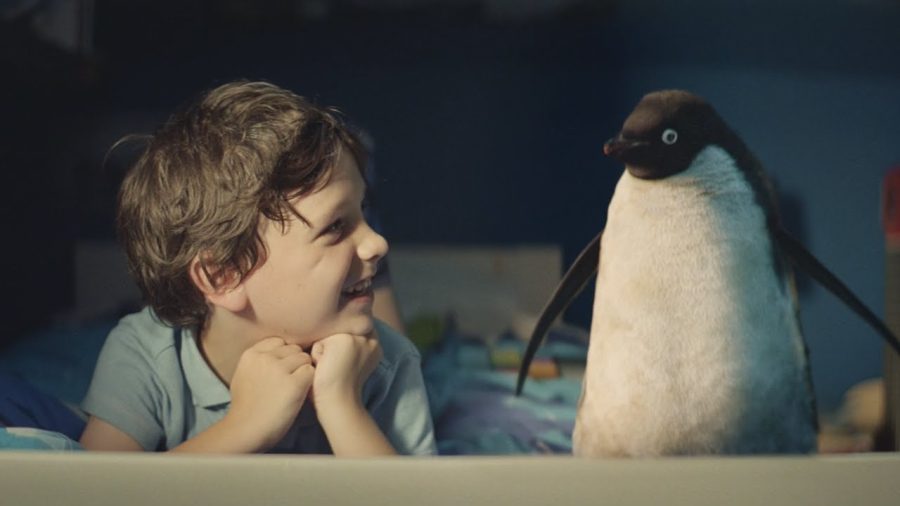
 81/100
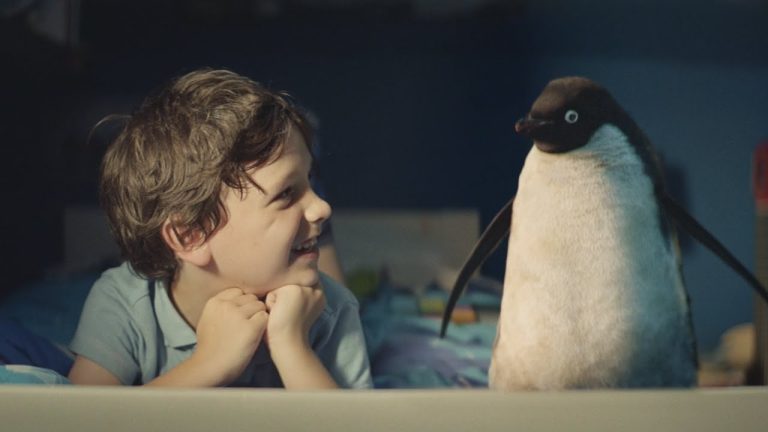
John Lewis, Monty the Penguin: the Christmas advert that became a shop
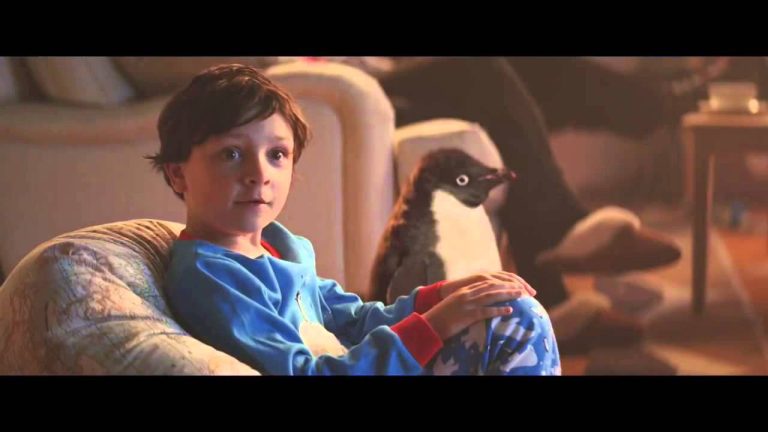
Dougal Wilson's 2014 film for John Lewis gave a boy's toy penguin a mate, sold out a £95 plush in days and won a Cannes Creative Effectiveness Grand Prix. A look back.
73 campaigns reviewed
Every review scored out of 100, with full credits and the evidence behind the result.
All campaigns29 Christmas adverts so far
Every UK Christmas advert of 2026 in one place, with the films, the credits and our verdicts.
Watch all 2922 rankings
The best adverts by brand, decade and season, argued properly and kept up to date.
All rankings157 stories
The advertising stories that matter, published every weekday, with what each one means.
All news 10 Nov, 09:53 JD Sports Christmas advert 2026: Create The New swaps festive nostalgia for young creatives
 10 Nov, 09:53 Morrisons Christmas advert 2026: Goldilocks meets the Three Bears in Christmas Made Just Right
 10 Nov, 09:52 Waitrose Christmas advert 2026: Keira Knightley and Joe Wilkinson return in The Perfect Gift 2
13 guides and rulings
ASA rulings and the UK advertising rules, explained in plain English and checked against the source.
All policy19 explainers
How great advertising gets made, from the brief to the media plan, and how to make your own.
All craft147 brands tracked
Every brand we have reviewed or reported on, with its best work and its latest news.
Brands A to Z97 agencies credited
The agencies behind the work, with every campaign we have credited to them.
Agencies A to Z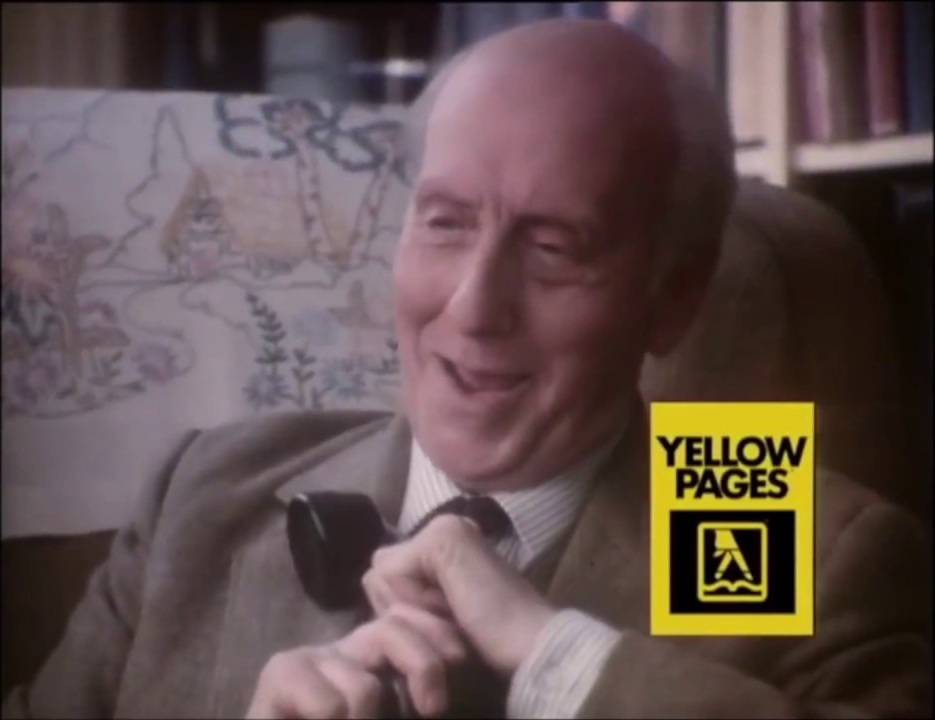
Close to a perfect piece of writing and casting that did the one thing the two-word brief asked, with an effect documented only in the client's memory and a product that has since disappeared.
An old man walks into a second-hand bookshop and asks for “Fly Fishing” by J. R. Hartley. Sixty seconds later, having found a copy by telephone from his armchair, he gives the shop his name, and the country realises it has been watching the author. Eight years after that, the book that never existed topped the Christmas bestseller list.
Our take: the finest sixty seconds of storytelling in 1980s British advertising, and a rare case where a piece of film changed how a whole product was used, even if the numbers that prove it were never audited.
By 1983 Yellow Pages had a problem of its own making. Its long-running line “Let your fingers do the walking” had trained the nation to reach for the directory only when a window broke or the plumbing failed, and John Condron, who ran marketing and later became chief executive, told Marketing Week that usage had gone fairly stagnant. The book lived in a cupboard or under a table leg.
Condron’s logic for fixing it was a virtuous circle. More usage meant more advertisers, more advertisers meant more information in the book, and more information made it more useful. With the economy showing signs of recovery from the 1980 recession, he put the account out to pitch with a brief of two words: increase usage.
Abbott Mead Vickers was an odd choice. Condron describes the agency as a curiosity at the time, known for print and posters rather than television, and recalls David Abbott sitting through the strategy presentation leaning back in his chair and looking out of the window. Then Abbott interrupted, said the work was more of the same, and asked to be left alone to write an ad over the weekend.
Abbott’s strategic move came before the script. He argued that if people only used the book in emergencies they would never feel anything positive about it, so the positioning had to shift from distress to pleasure. The voiceover says it outright: Yellow Pages does not just help with the nasty things in life, like a blocked drain, it is there for the nice things too.
The trigger for the story was mundane. Peter Mead had spent days wandering into shops looking for a CD player, found them all sold out, and then remembered to use the directory; he told Abbott and Butterfield, and something clicked. Abbott’s first script was about a book on European butterflies, with a second film about a man buying his daughter a pony, until research suggested both were a little elitist. Fly fishing and, for the 1985 sequel, a boy’s bicycle replaced them.
The structure is the idea. A gentle old man is refused in shop after shop, goes home dejected, and is handed the directory by his daughter. The phone call finds the book, the shop asks for his name, and he gives it at dictation speed: J. R. Hartley. Only then does the viewer understand that he is not a collector but the author, hunting for a copy of his own out-of-print life.
The casting is the reason the twist lands. Norman Lumsden was 77 when he played Hartley and had spent his working life as a singer rather than a screen actor. His record shows a bass who was an original member of Benjamin Britten’s English Opera Group and for whom Britten wrote the part of Quince in “A Midsummer Night’s Dream” in 1960. That training shows in the ad’s most quoted moment, the unhurried giving of a name.
The writing is Abbott at his most economical. There is almost no dialogue beyond the requests and refusals, and the reveal is carried by a single phrase rather than a caption. The film then hands over to Joss Ackland’s voiceover, whose warmth matches the character rather than selling over him.
Dick Walter composed the music in 1983, and on his own account the theme served the campaign for thirteen years, becoming the sound of the brand in the way the pictures changed but the piano did not. It is a piece of quiet craft that gets no credit in the polls and did much of the work.
Abbott’s reputation was on the line too. Campaign’s archive note on the film recalls that many in the industry believed AMV would never crack television because Abbott’s literary style did not suit the medium. This was his television debut for the account, and it created one of British advertising’s most recognisable characters at the first attempt.
Condron’s account of the effect is unambiguous, if unaudited. He says usage rose almost immediately and that the sales force reported a response it had never seen before. Yellow Pages’ penetration of non-emergency classifications had sat between 5 and 6 per cent in the 1970s; in the years after the ad it rose to between 15 and 20 per cent.
Those figures come from the client in a 2018 interview rather than from an IPA paper, and there is no published effectiveness case for the campaign, which caps the score we can give it under how we score. What is documented is recall. A Marketing Week and YouGov poll in 2018 found that 65 per cent of the public still remembered the ad, rising to 91 per cent among 45 to 54 year olds, and that it was the nation’s favourite ad of the 1980s with 24 per cent of the vote, ahead of the Oxo family on 18 per cent and Levi’s “Launderette” on 15.
The stranger evidence is what happened to bookshops. Requests for the non-existent title reached shops and the British Library, and in 1991 the angling writer Michael Russell published “Fly Fishing: Memories of Angling Days” under the Hartley name with Stanley Paul. It sold 130,000 copies over that Christmas alone in the UK and topped the Christmas bestseller list, with Lumsden hired by the publisher as the author’s public face, followed by “J. R. Hartley Casts Again” in 1992 and “Golfing” in 1995.
Channel 4’s 100 Greatest TV Ads placed the film thirteenth in 2000. When Lumsden died on 28 November 2001, aged 95, Campaign noted that AMV still held the account eighteen years on, and the ad was broadcast again in his memory. He had joked that he had a better career as J. R. Hartley than he ever had as Norman Lumsden, and by his own admission he did not take up fishing until he was 85.
Hartley set the template for the whole campaign. Campaign’s survey of thirty years of Yellow Pages advertising runs from “Bike” and “Signal Box” in 1985 through “French Polishers” in 1991 and “Mistletoe” in 1992 to James Nesbitt in 2003, and every one of them is a small human problem solved by the same yellow book. AMV and the client parted in 2006 after more than two decades together.
The film was parodied by Fry and Laurie, Jasper Carrott, Smith and Jones and Harry Enfield, which is the truest measure of penetration a campaign can get. In February 2011 Yell remade it as “Day V Lately”, in which a former DJ hunts for his 1992 trance mix “Pulse and Thunder” using the Yell app, written by John O’Donnell at Rapier, art directed by Ed Morris and directed by Chris Palmer through Gorgeous Enterprises. The remake was a tribute to the original’s structure and a tacit admission that nothing since had matched it.
The product did not survive. The printed Yellow Pages ceased publication in 2019, which leaves Hartley in the odd position of being a beloved ad for a thing that no longer exists, kept alive by a book he never wrote. It belongs in any serious list of the best advertising campaigns for that reason alone.
J. R. Hartley is close to a perfect piece of writing and casting, and it did the one thing the two-word brief asked. Its weaknesses are the ones of its era: the effect is documented only in the client’s memory, the format could not be stretched beyond gentle domestic problems, and the product it made lovable has since disappeared. Eight for idea, nine for craft, six for bravery, seven for effectiveness and seven for legs gives a total of 74, and a place in the archive that no audit could improve.

He plans, buys and reviews advertising for a living, and helps score campaigns on the site against the same five Crown Score criteria alongside other authors and contributors.
81/100Dougal Wilson's 2014 film for John Lewis gave a boy's toy penguin a mate, sold out a £95 plush in days and won a Cannes Creative Effectiveness Grand Prix. A look back.
 83/100
WCRS launched a fourth mobile network in 1994 with a Philip Glass score, an orange square and a line about the future. The Future's Bright, The Future's Orange, reviewed.
 81/100
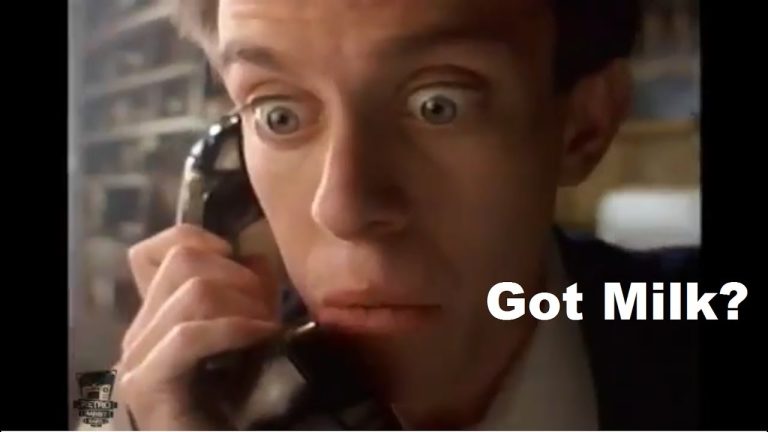
Goodby Silverstein's 1993 launch film for the California Milk Processor Board, directed by Michael Bay, turned an empty carton into the most repeated two words in American advertising.